Prime Minister Datuk Seri Anwar Ibrahim has emerged from his Kazan mission with a landmark achievement: Russia's formal pledge to guarantee Malaysia's long-term supply of petrol, oil, and gas through stable multi-year frameworks rather than the conventional annual or seasonal renewal cycles that have traditionally constrained energy security planning. The breakthrough represents a significant recalibration of Malaysia-Russia relations, moving beyond traditional diplomatic courtesies to forge concrete institutional arrangements that address one of Southeast Asia's most pressing economic vulnerabilities. This development carries profound implications not only for Malaysia's energy independence but for the broader regional stability of ASEAN nations increasingly concerned about supply chain fragility and geopolitical volatility in global energy markets.
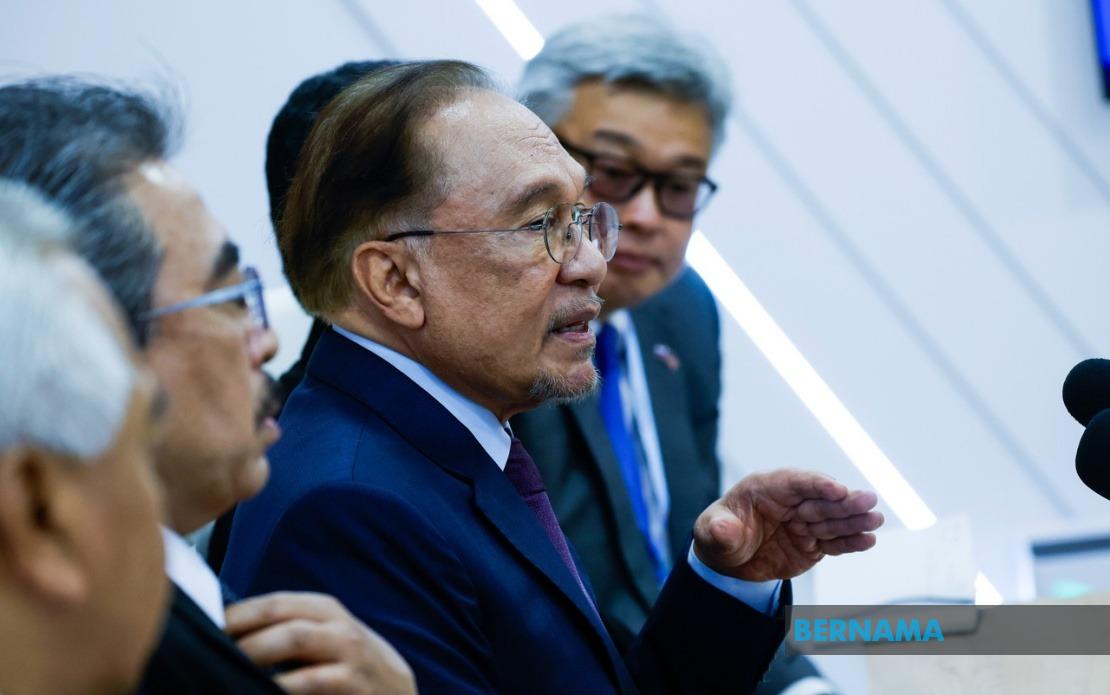
The energy accord, which emerged as the centrepiece of the ASEAN-Russia Commemorative Summit, reflects the culmination of months of technical negotiations involving Petronas and Russian counterparts. During his closing media briefing, Anwar outlined the mechanics of the arrangement with precision: company delegations have already travelled to Kazan, preliminary principles have been negotiated and approved, and draft agreements now await final review and signature. The Prime Minister indicated that upon returning to Kuala Lumpur, he would personally expedite the signing process, demonstrating the political will underpinning the arrangement. This is not merely symbolic rhetoric but rather a concrete acknowledgment that energy security commands the highest echelon of Malaysian government attention.
What distinguishes this energy compact from previous bilateral agreements is its structural foundation in predictability and duration. Multi-year supply contracts provide Malaysian refineries, power plants, and petrochemical facilities with the certainty required for long-term capital investment and production planning. In contrast, annual renewals inject constant uncertainty into industrial strategy and leave purchasing decisions vulnerable to price volatility and geopolitical disruptions. By anchoring energy supplies through extended agreements, Malaysia reduces its exposure to sudden supply shocks or price spikes that could cascade through the economy, particularly affecting manufacturing competitiveness and household energy costs. This approach aligns with broader regional anxieties following recent Middle Eastern tensions and ongoing geopolitical competitions affecting traditional supply corridors.
Beyond energy logistics, Anwar articulated a broader foreign policy reorientation toward what he termed greater boldness and proactivity in economic engagement with emerging partners. He explicitly cautioned against excessive caution constraining Malaysia's international economic strategy, suggesting that historical defensiveness has resulted in missed opportunities. This rhetorical shift signals a deliberate pivot toward Russia and other non-Western economic partners, reflecting Malaysia's strategy of strategic hedging in an increasingly multipolar world. Rather than remaining tethered to established Western-dominated trade frameworks, the Malaysian government is actively cultivating alternative partnerships that diversify economic exposure and reduce systemic vulnerability to any single bloc's policy fluctuations.
The Kazan summit also catalysed commitments on facilitation measures that could substantially enhance bilateral people-to-people exchanges and tourism flows. Anwar specifically called for expedited implementation of visa-free travel arrangements between Malaysia and Russia, alongside the establishment of direct flight services connecting the two nations. These infrastructure and bureaucratic improvements reflect recognition that energy cooperation and economic partnership require supporting ecosystems of human mobility and institutional familiarity. Direct flights reduce transaction costs and travel friction, making business delegations, academic exchanges, and tourist arrivals more feasible. Visa-free arrangements similarly lower barriers to informal commerce and cultural exposure, gradually building the social foundations upon which deeper economic relationships depend.
At the multilateral level, Anwar welcomed finalisation of the ASEAN-Russia Strategic Programme on Trade and Investment Cooperation 2026-2035, describing it as a catalyst for the next decade of regional economic collaboration. This framework signals ASEAN's commitment to strengthening ties with Russia despite international sanctions and geopolitical isolation, positioning the bloc as a pragmatic economic actor unbounded by Cold War alignments. The statistics underscore the commercial significance of this strategic programme: ASEAN-Russia trade totalled US$18.1 billion in 2024, while Russian direct investment in Southeast Asia reached RM367.90 million (US$92.97 million). These figures, while substantial, also reveal significant untapped potential given the economic scale of ASEAN and Russia's resource endowments.
Malaysia's specific position within this broader ASEAN-Russia framework warrants emphasis. As Russia's ninth-largest European trading partner, Malaysia commands RM8.72 billion (US$2.04 billion) in bilateral trade, making it a significant commercial node in the relationship. Malaysian exports to Russia concentrate in electrical and electronic products, machinery, equipment and components, and processed foods—sectors characterised by higher value-added processing rather than raw commodities. Conversely, Malaysian imports from Russia centre on petroleum products, minerals, chemicals, and chemical derivatives, reflecting Russia's resource endowments and Malaysia's refining and petrochemical capabilities. This complementary trade structure provides logical foundation for deepening economic integration, particularly in downstream energy sectors where Malaysia possesses established refining infrastructure and technical expertise.
Anwar's bilateral meeting with Rais of the Republic of Tatarstan, Rustam Minnikhanov, highlighted the subnational dimension of Malaysia-Russia cooperation. Tatarstan, as one of Russia's premier oil-producing regions, offers particular value in energy negotiations and downstream petrochemical opportunities. Beyond oil and gas, both officials identified cooperation prospects in education, tourism, the halal industry, technology, and talent development. This multisectoral approach reflects a sophisticated understanding that durable economic relationships require diversification across multiple domains rather than concentration in single sectors. Educational exchanges build networks of future business leaders and policymakers with mutual understanding; halal industry cooperation positions both nations to capture growing Muslim-majority consumer markets; technology partnerships accelerate digital transformation in both economies.
The Prime Minister also articulated an expanded vision of Malaysia-ASEAN-Russia cooperation spanning cybersecurity, agriculture, digital technology, scientific research, and higher education. These domains reveal recognition that 21st-century economic partnership transcends traditional energy and trade frameworks to encompass technological capacity, human capital development, and food security—concerns increasingly central to national resilience planning. Cybersecurity cooperation becomes particularly salient as digital infrastructure underpins modern economies, while agricultural collaboration addresses regional food security anxieties. Scientific research partnerships facilitate knowledge sharing and technological upgrading, positioning Southeast Asia to move beyond commodity extraction toward innovation-driven development.
Anwar's remarks regarding a potential United States-Iran peace agreement merit contextual attention within this energy security narrative. Reduced Middle Eastern tensions would theoretically stabilise regional energy supplies and reduce geopolitical risk premiums embedded in oil prices. However, Malaysia's deliberate cultivation of Russian energy partnerships simultaneously signals that policymakers cannot depend on Middle Eastern stability or United States diplomatic success to guarantee energy security. Diversification across multiple supplier relationships—Russian, Turkmen, and potentially others—reflects prudent hedging against any single region's political turbulence. This risk management approach underpins the broader rationale for the Kazan summit's achievements.
The immediate sequel to the Kazan visit—Anwar's subsequent two-day official visit to Turkmenistan—extends this energy diversification strategy into Central Asia. Turkmenistan possesses substantial natural gas reserves and has historically supplied regional markets through pipeline infrastructure. By pursuing energy cooperation agreements with multiple Central Asian producers, Malaysia systematically constructs alternative supply channels buffering against reliance on any singular source or corridor. This geographical diversification proves particularly valuable given ongoing geopolitical tensions affecting traditional Middle Eastern and South China Sea supply routes. The tour demonstrates a comprehensive regional energy strategy encompassing multiple partners across Asia's vast geography.
Anwar's assessment of the Kazan visit as productive and successful reflects tangible achievements beyond diplomatic niceties. The long-term energy supply commitment addresses a fundamental economic necessity; the ASEAN-Russia strategic framework charts institutional pathways for the coming decade; and the bilateral arrangements with Tatarstan and subsequent Turkmenistan engagement build specific operational relationships with resource-rich regions. These accomplishments collectively represent strategic reorientation toward a more multipolar economic architecture, where Malaysia actively cultivates partnerships across multiple regions and ideological systems rather than defaulting to established Western alignments. For Malaysian readers navigating an increasingly complex geopolitical environment, these developments signal government recognition that economic resilience requires deliberate diversification and proactive engagement with emerging partners willing to support long-term energy cooperation.