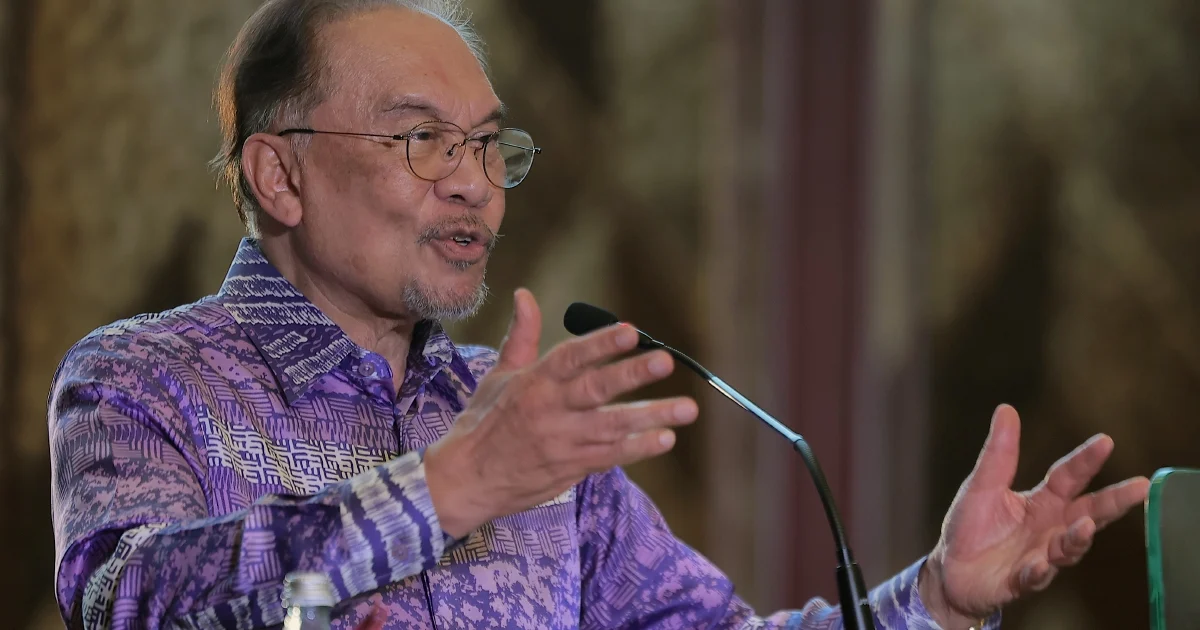
Prime Minister Datuk Seri Anwar Ibrahim will undertake a two-day working visit to Kazan commencing June 17, during which he is expected to hold high-level discussions with Rais of the Republic of Tatarstan Rustam Minnikhanov. The engagement marks another step in Malaysia's efforts to cultivate closer political and economic relations with Moscow at a time when geopolitical alignments are shifting across the Eurasian continent.
The visit comes against a backdrop of Malaysia's traditionally pragmatic foreign policy approach, which has seen the country balance relationships between major powers while maintaining non-alignment principles. Southeast Asia's largest Muslim-majority nation has sought to position itself as a bridge between different blocs, and this engagement with Russian leadership reflects that broader strategic calculus. By engaging directly with regional leaders like Minnikhanov, Anwar's administration signals that Malaysia views Russia not merely through the lens of international controversies but as an important economic and geopolitical actor warranting sustained diplomatic attention.
Kazan, the capital of Tatarstan, has emerged as a significant economic and cultural hub within the Russian Federation. The city's positioning along historic trade routes and its role as a centre for innovation and investment make it a strategically valuable location for bilateral engagements. The choice of venue suggests Malaysian officials view Tatarstan as more than ceremonial, recognising the region's autonomous governance structure and its distinct economic interests as complementary to Malaysian business expansion opportunities.
According to Malaysian diplomatic sources, the discussions are anticipated to encompass trade partnerships, investment opportunities, and sector-specific collaboration in areas ranging from energy to technology and education. The precise contours of these discussions remain undisclosed, yet such ministerial-level visits typically address concrete proposals for economic cooperation alongside broader statements of intent regarding bilateral relationship development. Malaysia's growing engagement with non-traditional partners reflects its recognition that diversifying economic relationships reduces vulnerability to supply chain disruptions and creates competitive advantages in negotiating commercial terms.
Beyond bilateral matters, the visit is expected to strengthen what diplomats describe as Asean-Russia relations at a collective level. Malaysia currently holds considerable influence within the Association of Southeast Asian Nations, and individual member states often test diplomatic initiatives with regional implications through bilateral channels before advancing proposals through formal Asean mechanisms. Anwar's mission to Kazan could serve as a platform for signalling Asean's interest in enhanced cooperation with Russia across multiple dimensions, from maritime security to regional development initiatives.
The timing of this engagement warrants attention, as it occurs within a complex international environment where Asean nations increasingly face pressure to take more explicit positions on geopolitical matters. Malaysia has consistently advocated for Asean centrality in regional affairs and resistance to great power competition that marginalises Southeast Asian agency. By maintaining direct engagement with Russia through high-level visits, Anwar demonstrates his government's commitment to preserving space for independent diplomacy rather than defaulting to alignment with any particular bloc.
Trade relations between Malaysia and Russia have historically remained modest compared to Malaysia's commerce with Western and Asian partners, yet they possess untapped potential. Russian resources, particularly hydrocarbons and mineral wealth, could complement Malaysian industrial and technological capabilities. Conversely, Malaysia's expertise in financial services, palm oil and processed goods production, and manufacturing could address Russian market demands. Enhanced bilateral trade arrangements negotiated during such visits can incrementally shift commercial patterns, particularly when backed by government-to-business facilitation mechanisms.
Educational and cultural exchanges represent another avenue likely to feature in discussions. Malaysian universities and Russian institutions have begun exploring research collaborations, particularly in fields like aerospace technology, petroleum engineering, and Islamic studies. Expanding these academic networks creates long-term foundations for broader bilateral engagement while building constituencies within both societies with vested interests in maintaining positive relations. Young professionals trained through such exchange programs often become ambassadors for bilateral friendship within their respective countries.
The visit also reflects Malaysia's recognition that Russia, despite international sanctions related to its Ukraine policies, remains a consequential actor in global affairs. Rather than adopting a purely transactional approach that abandons engagement during periods of Western-led sanctions, Malaysia views continued diplomatic intercourse as enabling the nation to maintain influence and gather intelligence. This pragmatic stance has defined Malaysian foreign policy across multiple administrations and reflects the belief that dialogue channels, even with states facing international isolation, serve national interests better than complete disengagement.
From an Asean perspective, coordinated engagement with Russia helps the bloc maintain flexibility in its relationships with major powers. Russia seeks to counter perceived Western encroachment through partnerships with Asian nations, while Asean countries desire access to Russian markets and resources without sacrificing relationships with Western democracies. Malaysia's role in mediating and normalising such relationships contributes to a regional equilibrium that suits Asean's preference for non-polarised geopolitics.
Domestically, Anwar's foreign travels carry political significance as well. They demonstrate presidential-level engagement with the wider world and project an image of Malaysia as an active participant in international affairs rather than a passive bystander. For the Prime Minister personally, such missions reinforce his credentials as an internationalist leader capable of managing complex diplomatic relationships, an important consideration given Malaysia's internal political dynamics and the scrutiny applied to executive performance.
Looking ahead, the outcomes of this Kazan visit will likely determine whether Malaysia pursues deeper institutional arrangements with Russia, such as formalised trade agreements or joint development initiatives. If discussions prove fruitful, subsequent visits by trade delegations and sectoral experts may follow, gradually building a more robust bilateral relationship. Should obstacles emerge, Malaysia retains the flexibility to recalibrate its approach without having invested excessive political capital, reflecting the calculated nature of its diplomatic engagements.

