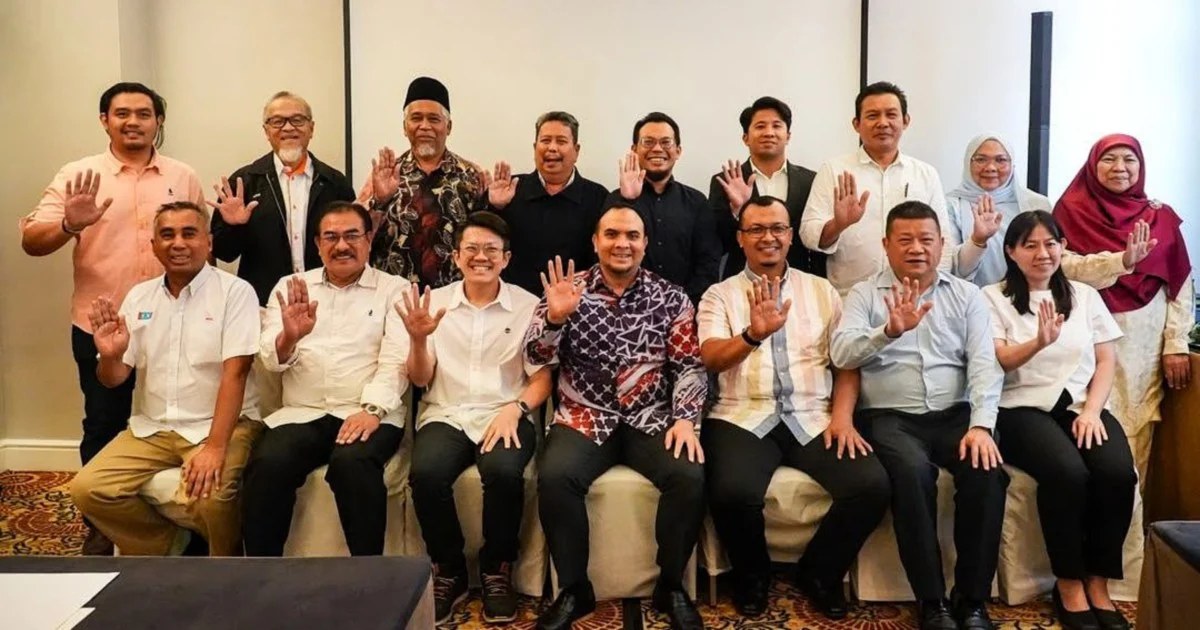
Datuk Ahmad Farhan Fauzi, the prime minister's political secretary, has assumed the helm of Pakatan Harapan's Pahang chapter, marking another significant personnel shift within Prime Minister Datuk Seri Anwar Ibrahim's political machinery. The appointment, announced in Kuantan, represents a consolidation of the coalition's leadership structure ahead of what observers expect will be intensive political contestation across Malaysia's east coast states.
Farhan's elevation to the Pahang PH chairmanship underscores a broader pattern of central coordination emanating from Anwar's office. By placing a trusted aide in such a strategically important position, the prime minister appears intent on ensuring coherent messaging and unified direction across the coalition in a state that has historically been contested between Pakatan Harapan and Perikatan Nasional. Pahang, despite its substantial land area and economic resources, has proven volatile in recent electoral contests, making the choice of leadership particularly consequential.
The political secretary role that Farhan previously held places him at the nexus of daily decision-making within the Prime Minister's Office. Such insiders typically have unmediated access to the prime minister and responsibility for coordinating policy initiatives across government. Farhan's transfer to the Pahang role indicates that Anwar views the state coalition as requiring the personal attention of someone thoroughly versed in the premier's strategic thinking and priorities. This proximity to power often translates into considerably enhanced influence over resource allocation and campaign infrastructure.
Pahang's significance extends beyond its representation in Parliament. The state government, currently under opposition control, has proven a contested arena in recent years. By installing a figure directly connected to the prime minister's inner circle, Pakatan Harapan signals renewed commitment to recapturing state-level governance there. The move also potentially addresses internal coherence challenges, as state party structures sometimes drift from federal coordination, leading to misaligned messaging or inefficient campaign efforts.
The appointment highlights how Malaysian political coalitions operate with considerable hierarchy and personalised networks of loyalty. Rather than relying solely on formal party structures, coalition leaders increasingly depend on placing trusted lieutenants in key positions to enforce coordination and prevent faction-building. Farhan's background and his direct connection to Anwar suggest he brings both technical competence and the legitimacy derived from proximity to the nation's premier decision-maker.
For Malaysian voters and analysts observing coalition dynamics, such personnel changes often foreshadow shifts in strategic direction or resource prioritisation. The fact that the prime minister's office chose to elevate Farhan to this visible state role rather than retaining him in a backstage capacity suggests heightened focus on Pahang's political fortunes over the coming period. This could manifest in increased campaign funding, greater visibility for coalition candidates, or reorganised party structures intended to improve electoral performance.
Regionally, developments in Pahang reverberate across East Coast Malaysian politics more broadly. The state sits adjacent to Terengganu and Kelantan, both currently governed by Perikatan Nasional. Coalition efforts to strengthen governance in Pahang and potentially turn it into a base for broader East Coast recovery hold implications for the broader Malaysian political balance. Anwar's coalition needs to demonstrate electoral viability across diverse regions to sustain its national legitimacy and parliamentary majority.
Farhan's appointment also reflects the reality that technical governance competence and political credibility now frequently intersect in Malaysian politics. The preference for placing someone with demonstrated administrative and coordination experience into a major state party role—rather than selecting someone rooted primarily in grassroots party politics—mirrors broader trends toward technocratic elements gaining influence within traditional party structures. This evolution sometimes generates tensions between career politicians and newly empowered civil-service-derived officials.
The timing of the announcement suggests forward-looking preparation. Political seasoning and constituency-building typically require sustained effort over months or years to become effective. By appointing Farhan now, the coalition provides him runway to consolidate his position, understand state dynamics intimately, and prepare electoral machinery for contests that, while not immediately imminent, require continuous readiness. This approach contrasts with more reactive appointments made in response to immediate crises or urgent needs.
For those tracking Malaysian political structures, Farhan's career trajectory—from senior civil service background to becoming prime ministerial political secretary to now heading a major state coalition chapter—exemplifies how individual careers increasingly span the formal bureaucracy-politics boundary. Such fluidity reflects the growing interconnectedness of governance administration and partisan political strategy within contemporary Malaysian political organisations. Farhan brings institutional memory spanning multiple domains, potentially enhancing Pahang PH's capacity for coordinated action across government and party structures.

