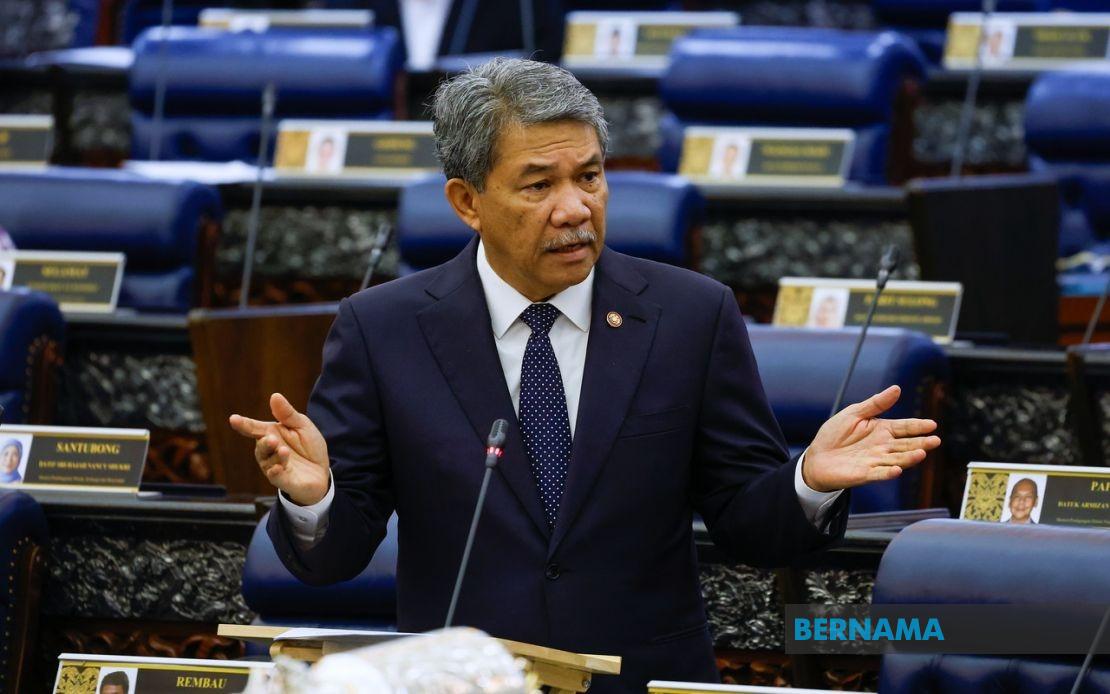
Malaysia's Foreign Minister Datuk Seri Mohamad Hasan has signalled that the regional bloc is preparing to recalibrate its approach to implementing the Five-Point Consensus in Myanmar, moving beyond the original framework to address mounting challenges in the peace process. Speaking during parliamentary proceedings, Mohamad acknowledged that while Myanmar shows patches of encouraging developments, the country has fundamentally failed to meet the benchmarks established by ASEAN leaders when they first adopted the consensus framework. The admission reflects growing frustration within the bloc at stalled diplomatic efforts and the absence of meaningful progress toward resolving the military conflict that has devastated the nation since February 2021.
The Five-Point Consensus, comprising commitments to cessation of violence, humanitarian assistance, constructive dialogue, mediation by ASEAN, and consideration of an ASEAN envoy, was designed as the cornerstone for regional peacemaking efforts. However, repeated non-compliance by Myanmar's military leadership has eroded its effectiveness as a binding diplomatic instrument. Rather than abandoning the framework entirely, ASEAN leaders meeting at the 48th ASEAN Summit in Cebu, Philippines on May 8 determined that foreign ministers should undertake informal consultations with Myanmar authorities to take stock of developments and chart a revised course. This signals ASEAN's commitment to maintaining engagement while acknowledging the need for tactical adjustments.
Mohamad's remarks emphasise that any substantial modifications to the consensus approach must ultimately secure approval from ASEAN heads of state, preserving the bloc's consensus-based decision-making processes. However, he indicated that foreign ministers will be tasked with developing collaborative mechanisms for working alongside Myanmar on implementation details. This distinction between the overarching framework and its operational dimensions suggests ASEAN is seeking to maintain diplomatic flexibility while demonstrating to domestic and international audiences that the organisation remains engaged on the Myanmar crisis. The foreign minister's comments also hint at tensions within ASEAN itself regarding how assertively the bloc should pressure Myanmar, with some members favouring continued dialogue over confrontation.
Malaysia, which currently holds significant diplomatic weight within ASEAN, has advanced several concrete proposals to revitalise peace efforts. Most notably, Malaysia has proposed extending a six-month ceasefire that Myanmar declared in January and which is scheduled to conclude at the end of July. The extension concept envisages a second phase that would transition from temporary military restraint toward more comprehensive peacemaking mechanisms. Beyond the ceasefire extension, Malaysia has urged Myanmar to present an explicit roadmap detailing how the peace process would proceed, encompassing inclusive negotiations with the full spectrum of stakeholders including ethnic armed organisations, the National Unity Government opposition structure, and the People's Defence Force.
Mohamad articulated a strategic concern that has preoccupied ASEAN capitals throughout the Myanmar crisis: the risks posed by external interference and geopolitical competition. The foreign minister explicitly cautioned against allowing Myanmar to become marginalised or isolated, arguing that such circumstances would inevitably create openings for third-party actors with competing strategic interests to exert influence over the situation. This formulation reflects longstanding ASEAN anxiety regarding great power competition in Southeast Asia, particularly given China's proximity to Myanmar and the strategic calculations of other regional powers. The concern appears specifically calibrated to address worries that an isolated Myanmar might gravitate toward external patrons, thereby complicating ASEAN's capacity to shape outcomes.
The emphasis on preventing a diplomatic vacuum underscores a fundamental challenge confronting ASEAN's Myanmar strategy. The bloc has consistently sought to position itself as the primary diplomatic vehicle for resolving Myanmar's conflict, yet lacks enforcement mechanisms to compel compliance with its agreed frameworks. This structural limitation has become increasingly apparent as Myanmar's military government demonstrates limited interest in conforming to international pressure. By framing the issue in terms of preventing external interference, ASEAN leaders are essentially arguing that engagement and revised approaches serve the bloc's collective interests in maintaining regional autonomy and resisting extraregional interference.
Malaysia's broader diplomatic posture reflects a determination to maintain channels of communication with all significant actors in Myanmar's political landscape. Mohamad indicated that Malaysia intends to continue engaging with the Myanmar government, the National Unity Government, the People's Defence Force, and various ethnic armed groups. This inclusive approach distinguishes Malaysia's stance from positions that have effectively frozen out particular actors. By maintaining dialogue across Myanmar's fractious political spectrum, Malaysia seeks to position itself as a trusted intermediary capable of understanding divergent perspectives and potentially brokering compromises. This multipronged engagement strategy acknowledges the pluralistic nature of Myanmar's conflict and the reality that sustainable resolution requires buy-in from multiple stakeholders.
The Myanmar situation has become increasingly consequential for Malaysia and broader ASEAN given the humanitarian dimensions of the ongoing conflict and the potential for refugee flows across borders. For Malaysian policymakers, maintaining stability in Myanmar relates directly to regional security architecture and economic relationships across Southeast Asia. The conflict's persistence threatens to destabilise the border regions shared with Thailand and Laos, potentially generating transnational security challenges that transcend Myanmar's borders. Malaysia's proposal for deepening ASEAN's engagement mechanisms therefore reflects enlightened self-interest alongside humanitarian concern.
The evolution of ASEAN's Myanmar approach also signals recognition that the original Five-Point Consensus, while establishing important principles, may have been insufficiently detailed regarding implementation mechanisms and enforcement procedures. The decision to enable foreign ministers to develop complementary approaches represents an attempt to add operational substance to the overarching framework without formally replacing it. This gradualist methodology aligns with ASEAN's traditional preference for consensus-building and incremental progress, though critics contend it risks appearing ineffectual in the face of Myanmar's intransigence.
Looking forward, the success of ASEAN's revised approach will depend substantially on Myanmar's willingness to reciprocate with genuine commitments to the peace process. The ceasefire extension proposal and roadmap requirements represent tangible benchmarks against which to measure Myanmar's sincerity. If Myanmar accepts these proposals, ASEAN may establish credibility for a modified engagement strategy; rejection would likely intensify pressure within ASEAN for more stringent responses, potentially including consideration of Myanmar's further isolation. The forthcoming months will reveal whether Malaysia's diplomatic initiatives and ASEAN's refined consensus approach can generate momentum toward meaningful conflict resolution or whether the bloc's limited coercive capacity will continue to constrain its effectiveness in addressing one of Southeast Asia's most intractable political crises.

