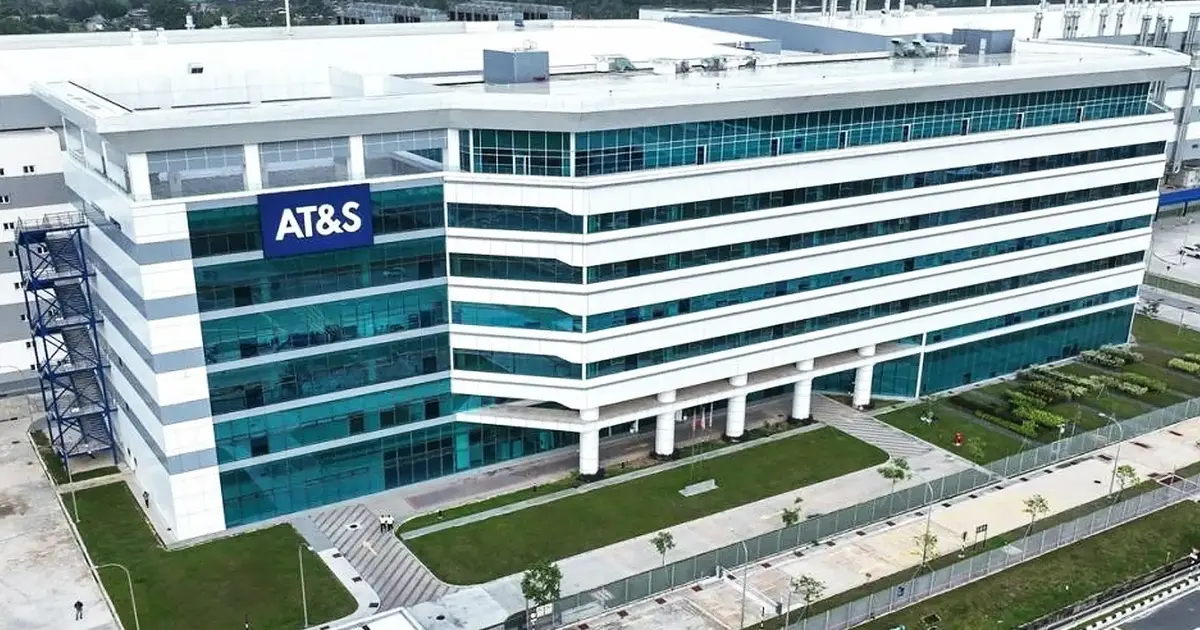
Austria-headquartered electronics manufacturer AT&S has committed RM9.4 billion towards establishing manufacturing operations in Kulim, a decision Prime Minister Anwar Ibrahim characterised as validation of Malaysia's strengthened institutional framework and appeal to multinational capital. The investment represents one of the largest foreign direct investment pledges in Malaysia's semiconductor and electronics manufacturing sector in recent years, underscoring intensifying competition among Southeast Asian nations to capture advanced manufacturing capacity and high-skilled employment.
Anwar's remarks linking the investment to Malaysia's governance trajectory carry particular significance given international perceptions of the country's institutional reforms following recent political transitions. The Prime Minister framed AT&S's choice as evidence that overseas investors increasingly view Malaysia as a stable, predictable jurisdiction for long-term capital commitments in technology-intensive industries. This narrative aligns with broader efforts by the current administration to rebrand Malaysia's investment climate and attract technology-sector capital that generates substantial employment and skills transfer.
AT&S operates across printed circuit boards and interconnection technologies essential to semiconductor manufacturing ecosystems. The company's expansion into Kulim positions it strategically within Malaysia's established electronics manufacturing corridor, which already hosts major semiconductor assembly, testing, and packaging operations. Kulim Industrial Estate itself has evolved into one of Southeast Asia's densest concentrations of semiconductor-related manufacturing, making the location choice logical for a company seeking integration with existing supply chains and workforce capabilities.
The scale of this investment carries implications beyond AT&S's immediate operations. Malaysia competes directly with Thailand, Vietnam, and Indonesia for semiconductor and electronics manufacturing investment, particularly as supply chain diversification accelerates away from traditional concentration in East Asia. RM9.4 billion represents a substantial commitment that could influence investment decisions by other tier-one manufacturers considering regional expansion. Success in attracting such anchor investments reinforces Malaysia's positioning within global semiconductor value chains and potentially triggers follow-on investment from component suppliers and service providers.
The timing of the announcement warrants consideration. Global semiconductor manufacturing has been undergoing significant geographical reconfiguration, driven by geopolitical tensions, pandemic-era supply disruptions, and deliberate industrial policy efforts by major economies to build domestic capacity. Southeast Asia has emerged as a natural beneficiary of this rebalancing, offering manufacturing cost advantages, existing technical expertise, and proximity to end markets. AT&S's investment reflects these structural currents rather than representing an isolated decision.
Kulim's existing infrastructure and workforce capabilities provide clear foundations for AT&S's operations. The industrial estate already houses sophisticated manufacturing facilities operated by established electronics firms, creating agglomeration benefits that reduce operational risk for new entrants. Local workforce availability in semiconductor-related skills, though requiring continuous training and development, represents a significant advantage over greenfield sites lacking such technical human capital.
From a broader Southeast Asian perspective, Malaysia's success in securing this investment may intensify regional competition for foreign semiconductor capital. Thailand, which has positioned itself as a manufacturing alternative and possesses its own semiconductor ecosystem centred on regions like Rayong, could face increased pressure to enhance incentives or streamline regulatory approval processes. Vietnam, increasingly active in semiconductor assembly and testing, presents another competitive pressure point. The region's ability to attract multiple anchor investments simultaneously will determine whether sufficient manufacturing capacity globalises to meaningfully reduce concentration risk in existing semiconductor manufacturing hubs.
The governance dimension emphasised by Anwar merits examination within Malaysia's specific context. International investors conducting due diligence on semiconductor manufacturing facilities require confidence not only in tax incentives and infrastructure but in regulatory consistency, intellectual property protection, and absence of politically-motivated policy reversals. AT&S's decision to commit such substantial capital suggests the company's assessment that Malaysia meets these institutional criteria. This perception, whether objectively warranted or not, influences investor confidence and shapes competitive positioning relative to regional alternatives.
The investment's employment implications extend beyond direct positions at AT&S facilities. Semiconductor manufacturing supports extensive downstream activity in logistics, maintenance services, technical training, and component distribution. Malaysian contractors and service providers will likely expand capacity to service the new facility, creating indirect employment throughout Kulim's industrial ecosystem. Skills development in semiconductor manufacturing also generates spillovers benefiting the broader Malaysian workforce and strengthening the country's position in technology-intensive sectors.
For policymakers, AT&S's commitment provides both opportunity and responsibility. The investment requires accompanying public investment in infrastructure, education, and regulatory frameworks to ensure implementation success. Power supply reliability, particularly critical for semiconductor manufacturing, transportation connectivity, and availability of specialised technical training represent ongoing requirements. Government coordination across multiple agencies becomes essential to translate investor confidence into sustainable competitive advantage.
Longer-term implications concern whether Malaysia can convert large individual investment commitments into sustained clustering effects. Silicon Valley's dominance arose partly through cumulative reinforcement, where each new investment attracted additional suppliers, talent, and complementary businesses. Southeast Asia's semiconductor ecosystem remains nascent compared to established hubs. AT&S's presence could catalyse such clustering, or it could remain an isolated facility lacking deep local integration. The difference depends substantially on policy choices and ecosystem development efforts by Malaysian authorities.

