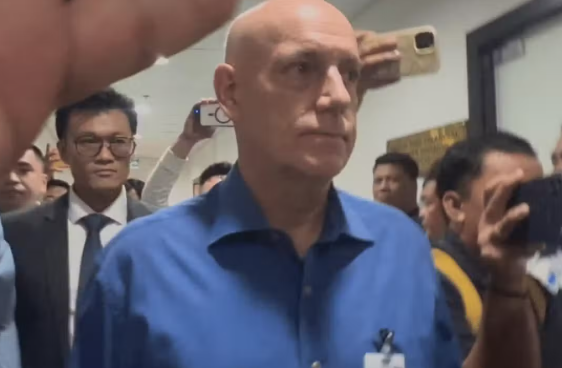
Tab Baldwin, the former head coach of Ateneo de Manila University's men's basketball team, made his long-delayed appearance before the National Bureau of Investigation on Tuesday afternoon, arriving at the agency's Homicide Division shortly before 2pm with his legal representative Karl David. The questioning came after the coach had failed to show up for two previously scheduled investigative sessions, intensifying scrutiny around his role in the circumstances surrounding the deaths of two Ateneo basketball players who lost their lives in a drowning incident earlier in the month.
The deaths of student-athletes Rene Baterbonia and Divine Adili have triggered parallel investigations by both the National Bureau of Investigation and the Philippine National Police-Criminal Investigation and Detection Group. The two players drowned during a team training activity that took place in Dipaculao, Aurora, drawing intense media attention and raising serious questions about the safety protocols and supervision during the fateful exercise.
Baldwin's initial failure to appear on June 16 was explained through his legal counsel, who stated that the coach was in poor health and unable to attend the questioning session. This explanation was accepted at the time, though it meant the investigative process had to be rescheduled. The second scheduled appearance on June 19 was likewise missed, though Baldwin did present himself to the Philippine National Police's Criminal Investigation and Detection Group on the same day, suggesting he was available for at least one investigative body during that period.
The dual investigations being conducted by separate law enforcement agencies reflect the gravity with which authorities are treating the incident. Both the NBI and the PNP have been gathering evidence and taking statements as they work to establish exactly what transpired during the team activity and whether proper safety measures and supervision were in place. The involvement of two major investigative bodies has created a complex procedural landscape for the inquiry.
NBI Director Melvin Matibag has indicated that one of the key objectives of Baldwin's appearance before the bureau is to scrutinise the consistency between the statement he provides to the NBI and the testimony he previously gave to the PNP Criminal Investigation and Detection Group. Any discrepancies or contradictions in his accounts across the two investigative forums could prove significant in determining the circumstances of the deaths and assigning responsibility.
The basketball community in the Philippines has been closely monitoring developments in this case, as it touches on fundamental questions about duty of care, institutional responsibility, and whether appropriate safeguards exist to protect student-athletes during organised team activities. Ateneo de Manila University, one of the country's most prestigious institutions, has faced considerable pressure to account for what happened and to demonstrate that necessary safety measures were implemented.
Baldwin's profile as a basketball figure adds another dimension to the case. His background and professional standing may be relevant to questions about his judgment and decision-making regarding the team activity that culminated in the tragedy. The coach's previous experience and qualifications could factor into assessments of whether he adequately assessed risks and took appropriate precautions.
The investigation is moving on a compressed timeline, with NBI officials indicating they aim to conclude their inquiry by the end of the week. This accelerated schedule suggests that investigative leads have been identified and are being actively pursued, and that authorities may be close to forming conclusions about the incident and determining whether any charges or recommendations for charges should be made.
For Malaysian readers, the case underscores broader Southeast Asian concerns about institutional accountability in universities and sports bodies. Similar incidents in the region have highlighted gaps in safety protocols and questions about who bears responsibility when tragedy strikes during sanctioned activities. The parallel investigations and international media attention have made this a test case for how Philippine institutions handle such crises.
The outcomes of both the NBI and PNP investigations will likely set important precedents not only for Philippine universities but potentially for educational and sporting institutions across Southeast Asia. Questions being raised about liability, duty of care, and institutional transparency have resonance far beyond Ateneo's campus, touching on how educational bodies throughout the region approach student welfare during organised activities.
As Baldwin completed his questioning session with investigators, attention will now shift to what emerges from the comparative analysis of his statements and what conclusions the investigative agencies draw about the broader circumstances surrounding the tragedy. The resolution of this case will likely influence how institutions in the Philippines and the region approach risk management and institutional accountability in future.

