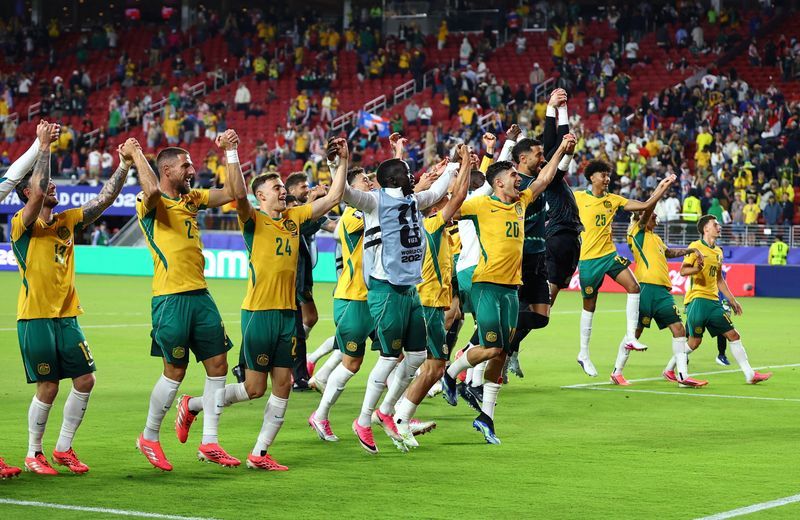
Australia has secured their passage to the World Cup's knockout round following a tense, uneventful encounter with Paraguay in California on Thursday. The scoreless result at San Francisco Bay Area Stadium delivered the Socceroos their third appearance in the tournament's final 32, cementing a remarkable achievement for the Oceania representatives. Manager Tony Popovic's squad will now face the runner-up from Group G, a cluster still to be determined as Egypt and Iran prepare for Friday's fixture, with Belgium taking on New Zealand in the other decisive match.
Paraguay's position remains precarious despite accumulating four points from their campaign thus far. The South American outfit may have done sufficient to advance as one of the tournament's eight highest-placed third-placed finishers, yet they cannot confirm their progression until the remaining group fixtures conclude. The 2010 quarter-finalists now enter an anxious waiting period, reliant on other results going their way as the group stage draws to a close across multiple venues.
The contest itself typified the kind of pragmatic, defensive football that increasingly characterises international tournaments when stakes reach this level. Popovic orchestrated a bold tactical reshuffle, introducing six changes to his starting formation that signalled intent to pursue goals rather than merely defending territory. Among the fresh faces were livewire prospect Nestory Irankunda and forward Cristian Volpato, deployed to provide attacking verve alongside the established structure.
Australia controlled much of the opening period, with the right flank proving particularly productive through the deployment of Jordan Bos in an unfamiliar position, shifted from left back to cover for the injured Jacob Italiano. Early pressure nearly yielded dividends when Volpato's positioning released Jackson Irvine into a dangerous area; his angled effort, however, lacked sufficient precision and travelled directly to Paraguay goalkeeper Orlando Gill. Further opportunities emerged through Bos and Volpato's late-half contributions, yet both drew only routine saves from a goalkeeper who faced minimal genuine examination during the period.
Paraguay's first-half display was characterised by profound passivity, managing merely a solitary shot as coach Gustavo Alfaro's tactical setup prioritised containment over creation. The introduction of Brazilian-born attacker Mauricio at the interval marked an immediate shift in the visitors' approach and aggression. Within five minutes of the restart, Mauricio unleashed a speculative effort from distance that failed to trouble Australian custodian Andrew Redmayne, signalling Paraguay's intention to engage more assertively.
The second half witnessed a gradual transformation in the contest's rhythm as Paraguay grew into the encounter with increasing confidence. Julio Enciso, energetic and dynamic throughout, repeatedly threatened to breach Australia's defensive line with penetrative running and intelligent positioning. The midfielder emerged as Paraguay's primary creative conduit and dangerous presence, though his execution frequently betrayed his team's overall struggle in the final third.
Enciso came closest to breaking the deadlock eight minutes from full-time when space opened up for a low effort that sailed agonisingly wide of the left post, representing one of Paraguay's clearest opportunities. The miss epitomised both teams' inability to translate periods of dominance and opportunity into tangible reward, with neither goalkeeper ultimately facing serious examination during the ninety minutes.
Australia mounted occasional counter-attacks that promised more than they delivered. Bos's incisive run in the 89th minute saw him split two defenders and surge toward the penalty area from the right, yet his subsequent shot whistled past the far post with a hint of fortune about its narrowness. These fleeting moments of promise never quite materialised into clear-cut scoring chances for either side.
The final exchanges remained frantic and competitive as both teams sought a breakthrough without compromising their defensive stability. Mauricio earned an opportunity when discovering space along the box's edge, but his tepid, low shot posed minimal threat to Redmayne. Australia's resilience and organisational discipline ultimately proved sufficient to repel late pressure and secure qualification, though the manner of their passage—cautious rather than commanding—underscored the tournament's increasingly defensive character at the knockout threshold.
Popovic can now prepare his squad for an opponent still unknown, as the Group G outcome between the established nations and emerging challengers unfolds. Australia's achievement in reaching the last 16 for the third time in their World Cup history represents genuine progress for Asian football, though expectations for their knockout performance against a European or other established contender remain tempered by their conservative approach thus far.
For Southeast Asian observers and Australian football enthusiasts in the region, this qualification represents a significant milestone for the Asian confederation's representation at the sport's premier tournament. The Socceroos' advancement, combined with the broader context of Asian participation at this World Cup, demonstrates the continent's growing competitive depth against traditional powerhouses, even as individual nations must still navigate the challenges posed by the tournament's established elites.

