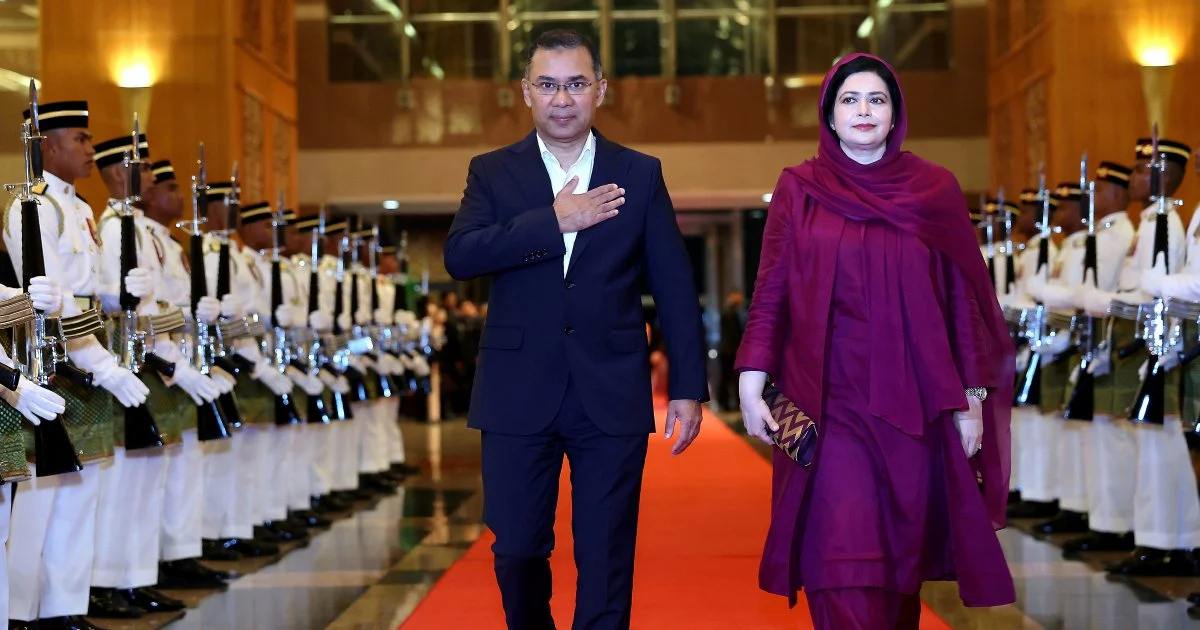
Bangladesh's leadership is actively courting Malaysian capital as it charts a renewed path for economic development. Prime Minister Tarique Rahman has personally extended an invitation to Malaysian entrepreneurs and corporate entities to examine the expanding slate of business prospects emerging across Bangladesh's diversifying economy, signalling a strategic effort to deepen bilateral economic ties between the two nations.
Rahman's overture reflects a broader strategic shift within Bangladesh's governance structure, which has been focused on creating a more conducive operating environment for foreign investors. The appeal comes at a significant juncture for the South Asian nation, as policymakers work to stabilise the economy and attract international capital that could support long-term development goals. For Malaysian firms already familiar with regional markets, Bangladesh presents a contrasting opportunity—a nation with substantial labour resources and growing consumer demand that differs markedly from more saturated Southeast Asian investment destinations.
The Bangladesh Prime Minister's targeting of Malaysian investors is not arbitrary. Malaysia's business community possesses considerable experience in navigating emerging Asian economies, with established supply chains, management expertise, and cultural familiarity that can facilitate smoother market entry. Malaysian companies have historically demonstrated adaptability in South Asian contexts, and Bangladesh's geographic proximity to Southeast Asia makes it an increasingly viable expansion hub for regional firms seeking to diversify operations beyond traditional markets.
Bangladesh's business landscape has undergone substantial reformation, with authorities implementing regulatory reforms designed to streamline administrative processes and reduce operational barriers. These systemic improvements address longstanding investor concerns about bureaucratic complexity and infrastructure constraints. The government has prioritised infrastructure development, particularly in logistics and telecommunications, recognising that such foundational improvements are essential to attracting sophisticated foreign direct investment from technologically advanced economies like Malaysia.
The economic backdrop to this diplomatic overture includes Bangladesh's textile and garment manufacturing sector, which has long dominated the nation's export profile. However, the country is actively pursuing economic diversification into pharmaceuticals, information technology, leather goods, and agro-processing industries. For Malaysian investors, these emerging sectors represent opportunities to establish manufacturing facilities that could serve broader Asian and global markets while leveraging Bangladesh's competitive labour costs and growing technical workforce.
Sector-specific advantages warrant particular attention from Malaysian corporate strategists. Bangladesh's pharmaceutical industry has expanded considerably, with domestic manufacturers now capable of producing both generic and specialised medications. Similarly, the technology services sector is developing rapidly, attracting companies seeking offshore development centres or business process outsourcing capabilities. Malaysian firms with expertise in these domains could find fertile ground for partnership arrangements or subsidiary establishment.
Infrastructure development remains central to Bangladesh's investment narrative. Recent projects and planned initiatives in port facilities, transportation networks, and power generation aim to address historical logistical constraints. The proposed development of special economic zones and dedicated industrial parks creates structured environments where foreign investors can operate with enhanced infrastructure guarantees and preferential regulatory treatment. These initiatives directly address traditional impediments that may have deterred Malaysian investment previously.
From a bilateral perspective, strengthened economic integration would benefit both nations. For Bangladesh, Malaysian investment brings technological transfer, management expertise, and access to regional supply chain networks. Malaysian investors gain exposure to a market of over 170 million consumers with rising purchasing power, plus the ability to establish manufacturing bases for regional distribution. Such complementary advantages form the foundation for mutually beneficial economic partnerships.
Geopolitical considerations also underpin Bangladesh's investment drive. As the nation works to balance external relationships and reduce economic dependency on any single partner, diversifying its foreign investor base across the Asia-Pacific region serves strategic purposes beyond mere capital accumulation. Malaysian participation represents part of a broader effort to strengthen ASEAN-South Asia connectivity and develop alternative investment sources to traditional partners.
The regulatory environment supporting foreign investment has also seen evolution. Bangladesh authorities have reformed foreign exchange policies, improved tax administration frameworks, and strengthened intellectual property protections. These structural changes address investor concerns about repatriation of profits, predictability of government action, and security of business assets—factors that fundamentally shape Malaysian corporate investment decisions.
For Malaysian decision-makers evaluating Bangladesh opportunities, the country's position as the world's seventh most populous nation with rising urbanisation rates presents compelling consumer market dynamics. Additionally, Bangladesh's integration into regional trade arrangements and its strategic location at the intersection of South Asia and Southeast Asia enhance its value within multi-country investment strategies.
The invitation from Prime Minister Tarique Rahman represents more than ceremonial diplomacy—it reflects calculated recognition that Malaysia possesses both the capital capacity and operational expertise that Bangladesh requires for its next development phase. Malaysian investors considering this overture will likely find a government actively working to remove barriers, improve infrastructure, and position the nation as a destination for quality foreign investment rather than merely seeking low-cost production relocation.

