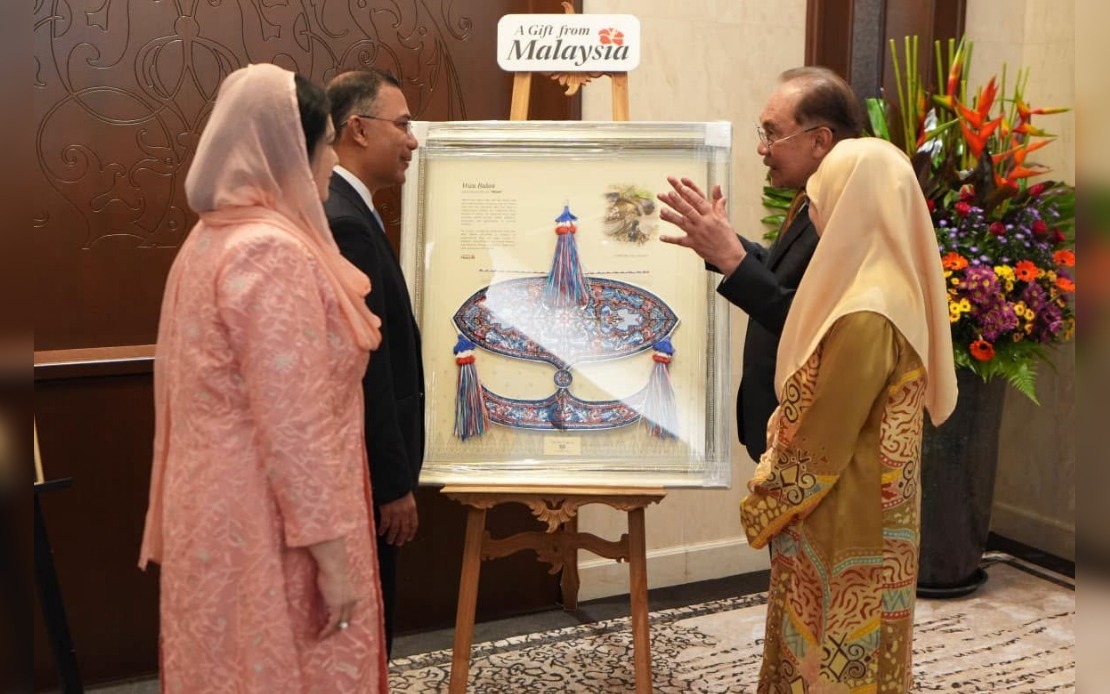
Bangladesh Prime Minister Tarique Rahman departed Malaysia on Monday after concluding his first official state visit as the country's premier, leaving behind assurances of deepened bilateral partnership with his Malaysian counterpart Datuk Seri Anwar Ibrahim. During his time in Kuala Lumpur, Rahman emphasised his administration's determination to nurture closer working relationships across the full spectrum of diplomatic, economic, and social cooperation between the two nations.
Rahman's visit carried particular significance as it marked the highest-level engagement between the two governments under his recent leadership. His remarks underscored Bangladesh's strategic positioning towards Malaysia as a key partner in Southeast Asia, reflecting the importance both nations attach to their regional standing and collaborative initiatives. The premier's public statements through official channels highlighted how bilateral relations extend well beyond conventional diplomatic exchanges, encompassing substantive people-to-people connections that sustain ties across multiple sectors and communities.
Accompanied by his wife Dr Zubaida Rahman, the Bangladesh premier extended formal appreciation to Prime Minister Anwar Ibrahim and Datuk Seri Dr Wan Azizah Wan Ismail for the official reception and hospitality extended during the visit. Rahman characterised the Malaysian government's treatment of the delegation as reflecting the warmth and goodwill inherent in the friendship between both nations, signalling that diplomatic interactions proceeded in a cordial atmosphere conducive to substantive discussions on bilateral matters.
Beyond ceremonial pleasantries, Rahman's visit facilitated substantive conversations with Anwar on matters of mutual concern and shared interest. The discussions reportedly reaffirmed the historical continuity underlying Bangladesh-Malaysia relations, emphasising that contemporary cooperation builds upon decades of established diplomatic foundations. These conversations appear to have reinforced commitment on both sides to elevate engagement across traditional and emerging areas of collaboration, positioning the relationship as enduring rather than transactional.
Rahman also referenced the historical dimensions of Bangladesh-Malaysia ties, invoking his family's political legacy in shaping his nation's international orientation. He noted connections dating back to when his father, Shaheed President Ziaur Rahman, served as Bangladesh's president and his mother, Begum Khaleda Zia, held the office of prime minister. This historical framing suggests continuity in Bangladesh's approach to regional partnerships, with Rahman presenting himself as custodian of policies established during his predecessors' tenures. Such references carry weight in Bangladesh's domestic political context while signalling to Malaysia that contemporary engagements reflect stable, consistent foreign policy positioning.
The visit also included an audience with His Majesty Sultan Ibrahim, King of Malaysia, demonstrating the visit's formal state status and Malaysia's high-level engagement with Bangladeshi leadership. Rahman's acknowledgement of the monarch's reception underscores the ceremonial importance both governments accorded the visit, reflecting respect for institutional hierarchies in both nations' governance structures. Such royal-level engagement typically signals governmental commitment to substantive partnership development rather than routine diplomatic courtesy.
For Malaysian policymakers and regional observers, Bangladesh's reaffirmation of commitment to stronger ties carries implications for ASEAN dynamics and broader regional stability. Bangladesh, as a significant South Asian economy with growing regional influence, represents an important interlocutor for Malaysia's efforts to maintain balanced engagement across Asia. Strengthened Malaysia-Bangladesh cooperation potentially facilitates broader Southeast Asian connectivity with South Asia, an objective aligned with Malaysia's strategic interests in regional integration and economic expansion.
The emphasis on multifaceted partnership reflects contemporary diplomatic language acknowledging that modern bilateral relations encompass far more than political dialogue. Trade relationships, educational exchanges, cultural interactions, tourism, investment flows, and security cooperation constitute the diverse architecture of contemporary state-to-state relations. Rahman's articulation of commitment across these dimensions suggests both governments recognise opportunities for deepening engagement in areas beyond traditional diplomacy, potentially unlocking economic and social benefits for both populations.
For Malaysian readers and businesses, Bangladesh represents a market of 170 million people with growing middle-class consumption and manufacturing capabilities. Closer governmental ties typically facilitate easier commercial relationships, reduced trade barriers, and enhanced investment opportunities. Enhanced bilateral cooperation could benefit Malaysian companies seeking Southeast Asian and South Asian expansion, while creating opportunities for Bangladeshi enterprises to access Malaysian markets and expertise in sectors ranging from technology to finance.
The visit also carries subtle implications for Malaysia's role as a moderate Muslim-majority nation in regional and global affairs. Bangladesh, with its significant Muslim population, shares with Malaysia certain religious and cultural dimensions that can anchor diplomatic relationships during periods of regional tension. Closer ties between both nations contribute to broader patterns of South Asian and Southeast Asian cooperation that benefit from institutional frameworks promoting dialogue, mutual understanding, and collaborative problem-solving on transnational challenges.
Looking ahead, Rahman's commitment to working closely with Anwar Ibrahim provides a foundation for translating diplomatic gestures into concrete cooperative arrangements. Future engagements will likely focus on translating mutual commitments into tangible outcomes through mechanism-building, institutional cooperation, and people-to-people programme development. The extent to which bilateral ties deepen will depend on both governments' ability to identify and pursue shared interests while navigating respective domestic priorities and regional considerations.

