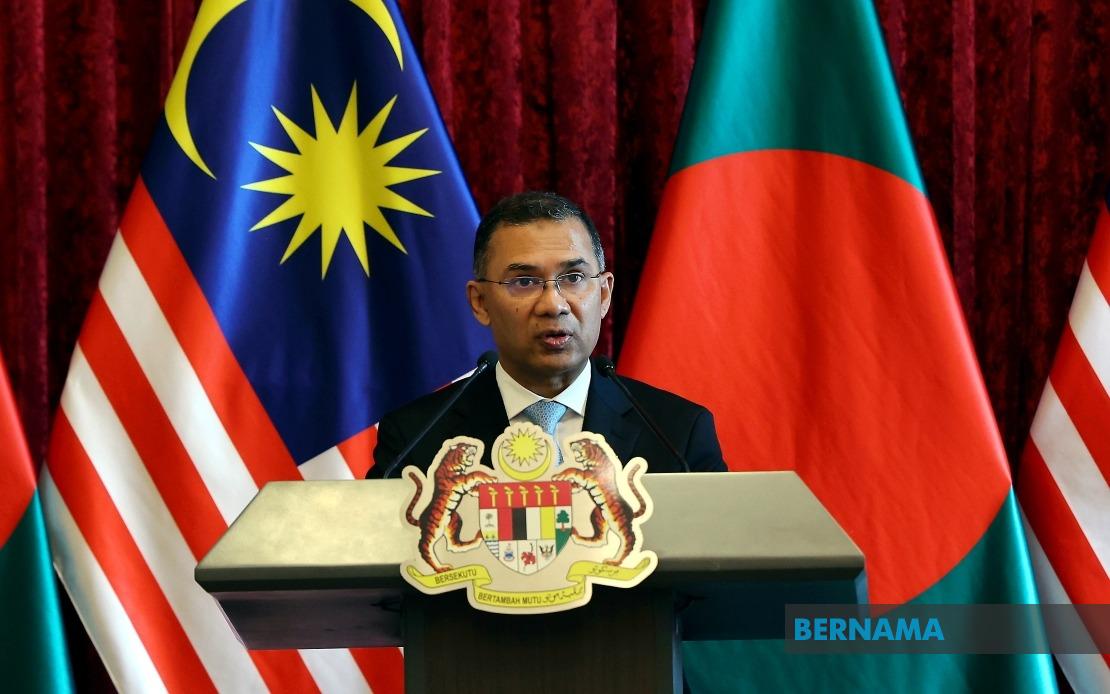
Bangladesh's newly-minted Prime Minister Tarique Rahman has reaffirmed his government's commitment to building a stronger partnership with Malaysia, signalling a diplomatic priority during what marks his first official bilateral journey abroad since taking office in February 2026. Speaking at a joint press conference in Putrajaya alongside Malaysian Prime Minister Datuk Seri Anwar Ibrahim on Monday, Rahman outlined plans to deepen cooperation across multiple spheres, from cultural exchange to counter-terrorism efforts and international coordination.
The visit underscores the strategic importance both nations place on their relationship, particularly as Bangladesh navigates its early months under new leadership. Rahman's decision to undertake this trip as his inaugural international bilateral engagement—rather than attending a multilateral summit—reflects the weight Dhaka now assigns to ties with Kuala Lumpur. The two leaders used the occasion to set concrete institutional mechanisms for future collaboration, acknowledging that deeper coordination requires sustained diplomatic infrastructure and regular high-level dialogue.
During the meeting, Malaysian and Bangladeshi officials formalised three significant bilateral instruments. The signing of a Memorandum of Understanding on Cultural Cooperation creates a framework for people-to-people exchanges and preservation of shared heritage. Simultaneously, two Exchanges of Notes were inked addressing Counter-Terrorism Research and Investment Promotion and Facilitation. These agreements reflect contemporary security challenges facing the region and the mutual economic opportunities both governments wish to capture. The counter-terrorism dimension is particularly resonant for Southeast Asia, where transnational extremist networks continue to pose threats across borders.
Trade relations form a critical foundation of the bilateral dynamic. In 2025, commerce between the two countries reached RM12.18 billion, positioning Bangladesh as Malaysia's 28th largest trading partner globally and its second most significant partner within South Asia after India. The trade composition reveals distinct comparative advantages. Malaysian exports to Bangladesh totalled RM10.08 billion, with petroleum products dominating shipments—reflecting Malaysia's established position as a hydrocarbon exporter and Bangladesh's energy requirements as it pursues industrialisation. Conversely, Malaysian imports from Bangladesh amounted to RM2.10 billion, centred on textiles, apparel, and footwear, sectors where Bangladesh possesses substantial competitive strength given its large labour force and established manufacturing base.
This trade imbalance, while favouring Malaysia numerically, reflects rational specialisation in the regional economy rather than asymmetric advantage. Bangladesh's garment and textile sectors employ millions and generate crucial foreign exchange, making stable access to Malaysian markets important for economic stability in Dhaka. Meanwhile, Malaysia's petroleum exports support Bangladesh's energy security during a period when the country is transitioning its power generation mix. Both nations stand to benefit from enhanced investment flows, particularly as Bangladesh seeks capital and technology for infrastructure development and Malaysia explores manufacturing opportunities in lower-cost environments.
Beyond commerce, the leaders emphasised multilateral cooperation, particularly within the United Nations framework. Rahman specifically thanked Malaysia for endorsing Bangladesh's candidature for the presidency of the 81st session of the UN General Assembly—a prestigious rotating position that reflects international recognition of a country's diplomatic standing. This support carries symbolic weight in South Asian regional politics, where India typically dominates UN affairs among South Asian nations. Malaysia's backing signals confidence in Bangladeshi leadership and willingness to champion smaller regional partners on the global stage.
The discussion of West Asian developments during their talks reflects a broader pattern in Asian diplomacy, where major regional players increasingly coordinate positions on Middle Eastern affairs. Both Bangladesh and Malaysia maintain significant Muslim populations and have strategic interests in Middle Eastern stability, whether through energy supplies, remittances, or religious soft power. Coordinating on such issues through existing mechanisms, as both leaders pledged to do, can amplify their respective voices in international forums and reduce the risk of competing unilaterally for influence.
The institutional mechanisms both countries committed to utilising—the joint commission meeting and bilateral consultations between foreign ministers—provide regular touchpoints for relationship management. Establishing such structures prevents misunderstandings and allows for constructive problem-solving when disagreements arise. For Bangladesh, especially under new leadership still consolidating international relationships, these institutional frameworks offer stability and predictability in relations with a key Southeast Asian neighbour. For Malaysia, they provide insight into Bangladeshi foreign policy priorities and opportunities to coordinate regional positions.
Rahman's selection of Malaysia for his first bilateral foreign visit carries additional significance given Bangladesh's geopolitical positioning. Historically closer to India and China, Bangladesh's outreach to Southeast Asia, particularly Malaysia, reflects efforts to diversify diplomatic partnerships and avoid over-reliance on any single major power. This strategic hedging is consistent with broader regional trends where smaller and medium powers increasingly seek to maintain flexibility in their great power relationships through cultivation of multiple partnerships.
The timing of this visit also matters contextually. Rahman's government is only months old, and international travel during this consolidation period signals confidence in the administration's stability and vision. By investing diplomatic energy in strengthening ties with Malaysia rather than focusing exclusively on managing relationships with traditional anchors like India and China, the Bangladeshi leadership projects a more expansive regional outlook. This approach could enhance Bangladesh's negotiating position in regional bodies like ASEAN and the Bay of Bengal Initiative, where Malaysia is an influential voice.
Looking forward, the real test of these pledges will emerge through implementation. Bilateral instruments and joint statements carry value primarily when they translate into substantive action—increased trade facilitation, genuine investment growth, meaningful security cooperation, and consistent diplomatic coordination. Both governments now face the practical challenge of operationalising their commitments through their respective bureaucracies and financial systems. Success in this implementation phase would cement Bangladesh-Malaysia relations as a genuine partnership and potentially create a model for deeper engagement between South and Southeast Asia.

