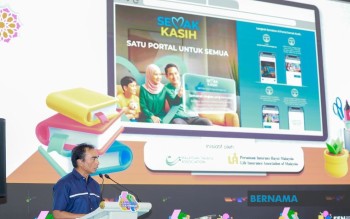
Bank Negara Malaysia introduced the Semak Kasih portal on Wednesday in Kuala Terengganu, a digital platform designed to reconnect beneficiaries with unclaimed insurance and takaful protection left behind by their loved ones. The initiative addresses a persistent gap in Malaysia's financial ecosystem where families remain unaware of coverage that could ease their financial burden during emergencies, medical crises, or accidents. Deputy Governor Adnan Zaylani Mohamad Zahid unveiled the platform at the Terengganu Financial Literacy Carnival, emphasising that insurance and takaful products serve as critical safety nets during life's most challenging moments.
The scale of unclaimed benefits across Malaysia is substantial. According to estimates from the Life Insurance Association of Malaysia and the Malaysian Takaful Association, approximately 50,000 insurance policies and takaful certificates remain unpaid to their designated beneficiaries. These unclaimed funds represent real financial resources that families could access immediately, yet many remain ignorant of their existence. The oversight partly stems from inadequate communication between insurers and beneficiaries, particularly when policyholders pass away without explicit notification to relatives about active coverage. This knowledge gap perpetuates financial hardship among grieving families who could otherwise tap into death benefits to manage funeral expenses, settle outstanding debts, or maintain household stability.
The Semak Kasih portal streamlines the verification process significantly. Rather than relying on traditional channels such as agent visits or postal letters, beneficiaries can now visit a centralised online platform to check whether their deceased relatives held active policies. The system enables users to identify relevant insurance or takaful providers and initiate contact for claims processing. This digital approach reduces friction in the claims pipeline and democratises access to information that was previously scattered across dozens of competing insurers operating nationwide. The portal represents a deliberate shift toward customer-centric financial infrastructure, acknowledging that many Malaysians lack the resources or knowledge to navigate complex claims procedures independently.
Adnan Zaylani stressed that insurance and takaful protections function as essential components of comprehensive financial planning. During unexpected calamities such as severe illnesses, traffic accidents, or house fires, these products provide immediate liquidity and prevent families from spiralling into debt. In Malaysia's context, where many households operate with minimal emergency savings, such coverage offers irreplaceable peace of mind. The deputy governor noted that strengthening financial protection through insurance or takaful must accompany broader efforts to enhance financial literacy, helping Malaysians withstand economic pressures and rising living costs that have strained household budgets across all income brackets.
Beyond the Semak Kasih initiative, Bank Negara is pursuing multiple channels to enhance financial security among Malaysians. The central bank's microfinancing schemes extend credit up to RM100,000 without requiring collateral or guarantors, enabling micro-enterprises to access working capital that traditional banks might refuse. These programmes recognise that Malaysia's MSME sector, which employs millions, often struggles with conventional lending requirements that exclude smaller operators with limited asset bases. Additionally, the RM5 billion SME Stabilisation Relief Facility demonstrates institutional commitment to supporting businesses affected by geopolitical disruptions such as the West Asia conflict, with financing options reaching RM750,000 for working capital needs.
The iTekad initiative exemplifies Bank Negara's grassroots approach to economic resilience. This programme has already benefited over 14,000 participants across Malaysia, including approximately 600 in Terengganu, by equipping them with entrepreneurial skills and market access that measurably raise incomes and living standards. Such targeted interventions acknowledge that financial security extends beyond individual savings habits; it requires systemic support structures that enable productive economic participation. The inclusion of persons with disabilities through the emerging Financial Education Forum website demonstrates institutional recognition that financial inclusion cannot be selective, requiring specific accessibility measures and culturally appropriate content.
Digitalisation of financial services introduces simultaneous risks alongside opportunities. Research cited by Adnan Zaylani reveals troubling consumption patterns: approximately 37 per cent of Malaysians make impulsive online purchases, whilst 26 per cent carry debt burdens they acknowledge as unsustainable. These figures suggest that expanded digital access to credit, while economically beneficial, has outpaced consumer education and self-discipline. The proliferation of mobile payment platforms, buy-now-pay-later schemes, and online shopping has lowered barriers to spending without corresponding increases in financial restraint. Consequently, even as digital channels democratise financial access, they simultaneously amplify behavioural spending risks that undermine long-term wealth accumulation.
Financial literacy initiatives targeting younger generations represent Bank Negara's preventive strategy. The MyDuitStory competition and the FEN Proaktif 2.0 Programme, developed in partnership with Universiti Malaysia Terengganu, embed financial reasoning into educational curricula before young people develop entrenched spending habits. By establishing disciplined saving practices during formative years, these programmes capitalise on compound interest effects that transform modest monthly contributions into substantial retirement assets across decades. This intergenerational approach recognises that transforming national financial behaviour requires beginning with students who have not yet internalised counterproductive economic habits.
Adnan Zaylani's assertion that personal financial agency remains within individual control despite global economic uncertainty carries particular resonance for Malaysian audiences navigating external pressures. Currency fluctuations, commodity price volatility, and geopolitical tensions create macroeconomic headwinds beyond household influence. However, disciplined daily financial decision-making—consistent saving, measured spending, and strategic risk management through insurance—remains entirely within personal purview. This framing empowers Malaysians to focus on controllable variables rather than paralysing themselves with anxiety about international forces. The combination of the Semak Kasih portal, expanded microfinancing, and comprehensive financial education initiatives reflects institutional recognition that economic resilience requires simultaneous attention to immediate crises, medium-term capability building, and long-term behavioural transformation across Malaysian society.

