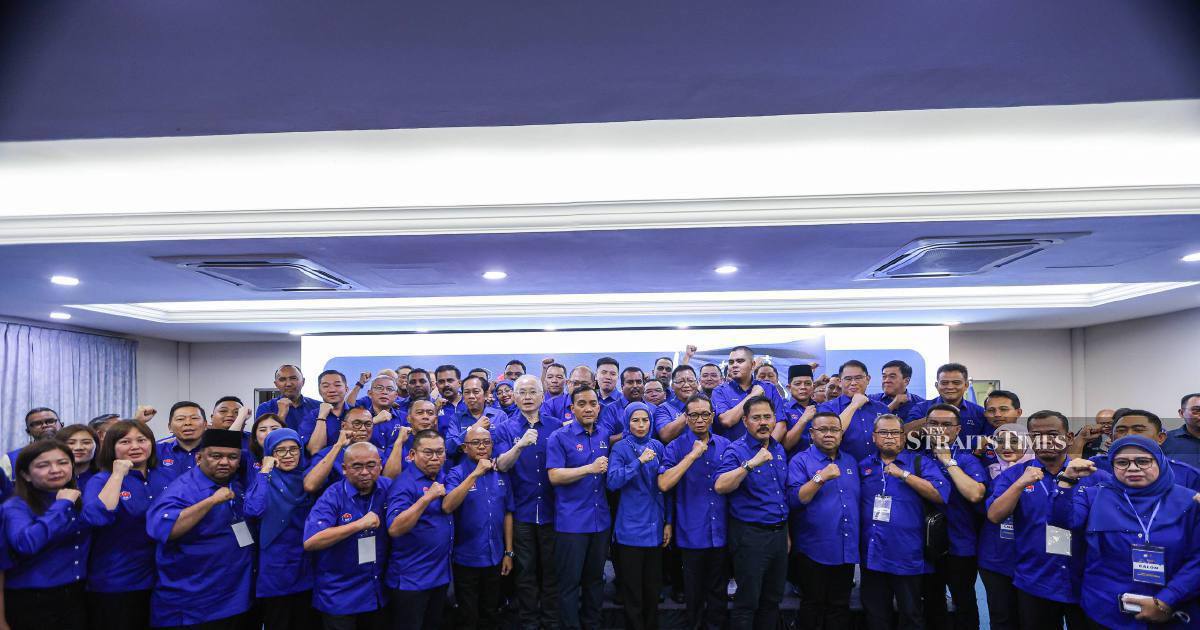
Barisan Nasional's announcement of its complete roster of 56 candidates for the Johor election on July 11 marks a decisive moment in the electoral calendar, as Malaysia's longest-governing coalition moves into the final phase of campaigning for a state that has remained a traditional stronghold since independence. The formal unveiling in Johor Baru crystallises months of internal consultation and party negotiations, representing the culmination of deliberations across BN's component parties—UMNO, MCA, and MIC—as they balance factional interests, incumbent performance, and strategic considerations for retaining control of the state assembly.
The presentation of a full candidate slate signals BN's confidence in contesting all available seats in Johor, a posture that underscores the coalition's determination to maintain its position despite mounting electoral challenges across the federation. By fielding candidates in every contest, BN demonstrates that it is leaving no seat unchallenged, a necessary stance in an increasingly competitive political environment where former partners like Bersatu and PKR have consolidated opposition ranks. This comprehensive approach contrasts with previous elections where BN sometimes conceded seats to coalition partners, indicating a shift towards maximising its own representation rather than cooperative sharing arrangements.
The timing of the announcement, released well ahead of voting day, allows candidates sufficient runway to establish ground campaigns and build name recognition within their respective constituencies. In Malaysian electoral practice, the period between candidate announcement and polling day typically sees intensified party machinery activation, grassroots mobilisation, and media engagement. For BN candidates, this window represents an opportunity to rebuild connections with voters, address local grievances, and counter opposition narratives that have gained traction in recent years, particularly concerning governance, development disparities, and accountability.
Johor's electoral significance extends beyond state-level governance. The state houses approximately 3.6 million people and constitutes a substantial portion of Malaysia's electorate, making its political trajectory consequential for national coalition dynamics. A strong BN showing would reinforce the coalition's recovery narrative following significant losses in the 2022 general election, while a diminished performance could signal deeper structural challenges within the coalition's traditional support base. The composition of candidates—encompassing incumbent assemblymen, new faces, and strategic replacements—reflects BN's strategic calculations about which constituencies it can defend and which it believes it can reclaim from opposition control.
The distribution of candidacies among BN's component parties represents a delicate balancing act reflecting each party's organisational strength and electoral track record. UMNO, as the coalition's dominant partner, typically claims the majority of seats, while MCA targets constituencies with significant Chinese-majority or mixed demographics, and MIC competes primarily in Indian-concentrated areas. This arrangement, though sometimes contentious within coalition talks, has persisted as a pragmatic mechanism for managing internal party competition while projecting unity to voters. The candidate selections made available through this announcement reveal whether any recalibration has occurred within the traditional power-sharing formula.
For Malaysian observers, the Johor election represents a significant test of several broader political trends. First, it assesses whether BN can stabilise support among Malay-Muslim voters following internal divisions and the rise of competing Malay-based parties. Second, it gauges the cohesion of opposition forces, particularly the coordination between Pakatan Harapan components and other anti-establishment formations. Third, the election provides insights into urban-rural voting patterns, youth political engagement, and the evolving relationship between traditional constituencies and emerging political identities focused on economic anxiety and governance reform.
The announcement also carries implications for leadership dynamics within BN's component parties. Candidates selected and those overlooked invariably generate discussion about factional strength, patronage networks, and the relative influence of various power brokers within each party. For UMNO, a party navigating its own internal contests and leadership transitions, the candidate selection reflects current power distribution among competing factions. Similarly, within MCA and MIC, the chosen candidates signal which leaders command sufficient institutional authority to secure nominations for their preferred candidates, with potential ramifications for forthcoming party elections.
From a Malaysian electoral perspective, this announcement formalises the contest parameters and allows voters in Johor to begin assessing their choices. Unlike federal elections where constituency boundaries and candidacies shift periodically, state elections often maintain relatively stable contest boundaries, allowing voters to evaluate incumbent performance and challenger credentials against known track records. This familiarity can advantage incumbents with strong local service records, though it also exposes them to accumulated dissatisfaction with state governance, infrastructure provision, or perceived patronage imbalances.
The July 11 election will also test the effectiveness of BN's campaign machinery, messaging discipline, and ability to mobilise traditional supporters while attracting swing voters. The coalition's capacity to retain Johor would provide crucial political momentum heading into future electoral contests and would validate its strategy of reconsolidation following the 2022 setbacks. Conversely, a diminished parliamentary majority or loss of control would intensify internal pressure on BN's leadership, likely triggering renewed questions about coalition viability and the appeal of alternative electoral arrangements.
As BN's candidates prepare to contest all 56 seats, the state becomes a focal point for Malaysia's ongoing political realignment. The results will reverberate beyond Johor's boundaries, influencing coalition calculations, opposition strategy, and national political positioning for the period ahead. For Malaysian political observers monitoring the trajectory of the world's longest-serving ruling coalition and the maturation of Malaysia's post-2018 political landscape, the July 11 election represents a consequential moment whose implications will extend far beyond state-level governance alone.

