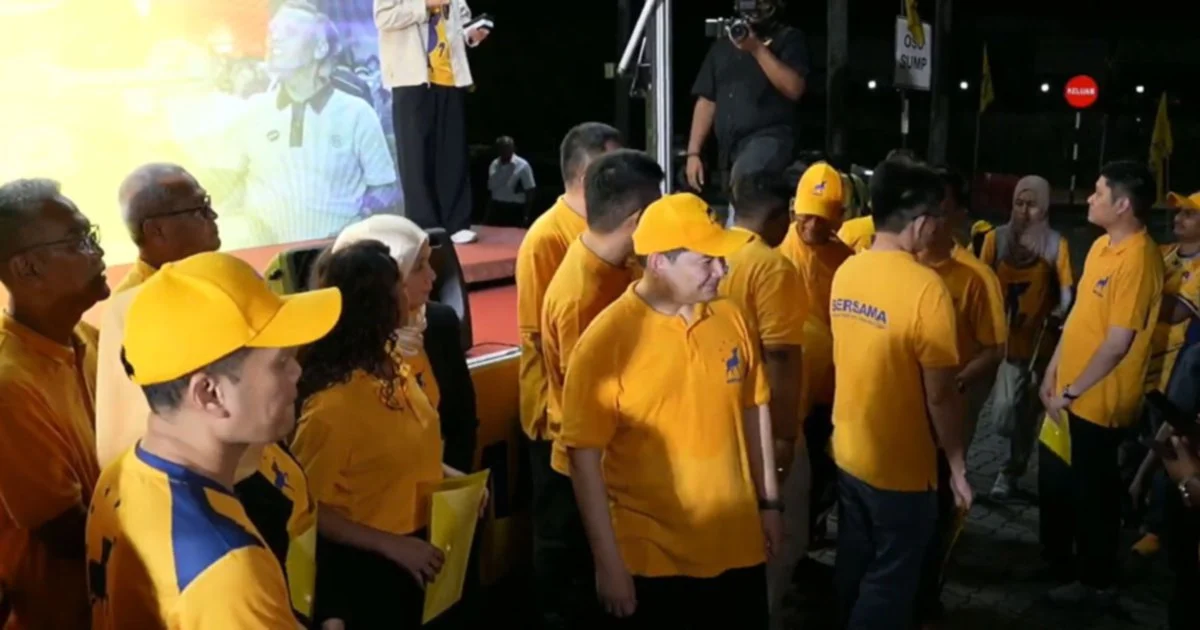
Parti Bersama Malaysia has stepped into the competitive Johor political arena by unveiling 15 candidates ahead of the state election, signalling an attempt to broaden its appeal across economic classes. The announcement, made in Kuala Lumpur on Friday, reflects the fledgling party's strategy of presenting candidates from diverse professional backgrounds rather than relying solely on seasoned political operatives. By fielding an entrepreneur, a supermarket manager, and a logistics worker among its roster, Bersama appears intent on positioning itself as a party that understands the concerns of ordinary Malaysians struggling with the rising cost of living and employment uncertainties.
The inclusion of candidates from non-political backgrounds is particularly noteworthy in the Malaysian electoral context, where established political parties typically field combinations of seasoned politicians, business elites, and professionals with party connections. Bersama's approach suggests a deliberate pivot toward grassroots representation, attempting to capitalize on voter fatigue with traditional political establishments. This strategy echoes broader global trends where newer political movements leverage outsider candidates to challenge incumbent parties, though success in such ventures remains unpredictable in Malaysia's competitive party landscape.
For Johor specifically, the election carries significant weight as Malaysia's second-largest state by population and a crucial economic engine for the nation. The state's political dynamics have shifted considerably following recent state elections, with multiple parties vying for influence. Bersama's entry with a full slate demonstrates confidence in its electoral prospects, yet the party must contend with established competitors who have deeper organizational networks and voter recognition. The logistics worker candidate, in particular, speaks to Bersama's apparent effort to capture support from the working and lower-middle classes, demographics that have expressed frustration with economic opportunities and wage stagnation.
The party's candidate selection also reflects demographic and professional diversity that Malaysian voters have increasingly demanded. Rather than presenting candidates who are predominantly from merchant or professional classes, Bersama has sought to include individuals whose lived experience mirrors that of ordinary voters. A supermarket manager, for instance, works in an industry directly affected by consumer spending patterns and retail sector challenges, making such a candidate potentially relatable to voters concerned about job security and economic management. Similarly, a logistics worker represents the transportation and supply chain sectors that have been central to Malaysia's economic discussions, particularly in light of inflation and supply chain disruptions affecting consumer prices.
Bersama Malaysia itself represents a relatively new entrant to Malaysia's fractious political ecosystem. Founded to challenge the dominance of larger, longer-established parties, Bersama must overcome significant hurdles to establish voter recognition and build organizational capacity. Fielding candidates from ordinary professional backgrounds could either strengthen the party's narrative as a force for change or risk appearing inexperienced compared to opponents with deeper governmental experience. The success of Bersama's Johor campaign will likely provide insights into whether Malaysian voters are genuinely prepared to support newer political movements or whether incumbents retain insurmountable structural advantages.
The timing of Bersama's Johor push coincides with broader flux in Malaysian state politics. Over recent years, multiple state governments have changed hands, suggesting voter volatility and dissatisfaction with incumbent administrations. In this environment, Bersama's fresh candidate slate could potentially resonate with voters seeking alternatives to established parties. However, the party faces the challenge of competing not just against established opposition and ruling coalitions, but also against other newer parties attempting similar disruptive strategies. The crowded field means even well-positioned challengers can struggle to gain sufficient voter concentration to win seats.
Geographically, Johor's mix of urban, suburban, and rural constituencies presents distinct challenges for any challenging party. Urban voters may be more receptive to newer political movements and reform-oriented candidates, while rural voters typically demonstrate stronger loyalty to established parties with historical presence in their communities. Bersama's candidate selection process will need to account for these geographic variations, ensuring that its entrepreneurs, managers, and workers are appropriately distributed across constituencies where they can build effective campaigns.
The economic composition of Bersama's Johor slate also hints at the party's ideological positioning. By emphasizing business ownership and worker representation alongside professional management, the party appears to be staking a centrist position that acknowledges both entrepreneurial dynamism and worker concerns. This balancing act distinguishes Bersama from parties positioned as purely pro-business or purely pro-labour, though maintaining such equilibrium during electoral campaigns requires careful messaging and consistent policy coherence.
For Malaysian political observers, Bersama's Johor campaign represents an interesting test case for whether structural factors—such as party machinery, incumbent advantages, and voter familiarity—remain decisive in state elections, or whether quality candidate selection and clear messaging can overcome these barriers. The party's performance will provide data on voter appetite for political renewal and whether diverse professional backgrounds genuinely translate into electoral advantages. Should Bersama perform credibly in Johor, it could encourage further investment in the party's infrastructure and organizational development, potentially positioning it as a genuine challenger in future electoral cycles across the peninsula.

