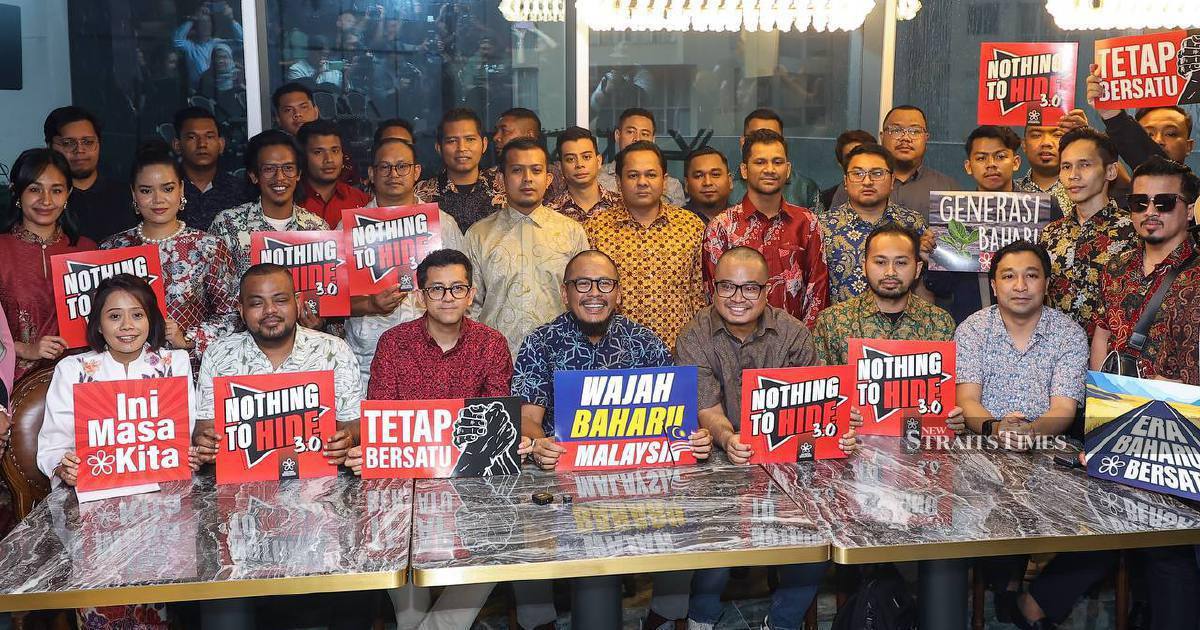
Kota Siputeh assemblyman Mohd Ashraf Mustaqim Abdul Munir has signalled that strained relations between PAS and Bersatu within the Perikatan Nasional alliance appear to be stabilising, employing a domestic metaphor to characterise the partnership's resilience through recent turbulence. The Bersatu representative's comments come at a critical juncture for the coalition as both parties seek to rebuild working relations following months of public disagreements and political manoeuvring that have tested the alliance's cohesion.
The comparison to a married couple weathering disagreements while sharing a household offers insight into how PN leadership frames the coalition's durability. Rather than suggesting an irreparable rupture, Mohd Ashraf's characterisation implies that underlying institutional bonds remain intact despite surface-level friction. This framing carries particular significance given the stakes involved in Malaysian coalition politics, where alignment between major Malay-Muslim parties shapes parliamentary arithmetic and determines ministerial portfolios.
Bersatu's optimism about reconciliation reflects broader calculations within PN leadership regarding the coalition's viability heading toward potential electoral contests. The party cannot afford sustained antagonism with PAS, which commands substantial support among conservative Malay-Muslim voters and maintains significant parliamentary representation. Conversely, PAS leadership has shown willingness to engage in dialogue rather than precipitate a complete break, suggesting both organisations view reconciliation as preferable to the instability that would follow a formal split.
The tensions between the two parties have manifested across multiple policy domains and organisational disputes. These disagreements have occasionally spilled into public discourse, creating perception challenges for PN's narrative of unity and clear governance vision. When coalition partners engage in visible conflict, voters question the alliance's capacity to deliver coherent policy implementation and attract swing voters concerned about political stability.
Mohd Ashraf's characterisation also reflects a pragmatic understanding that political partnerships require occasional friction and renegotiation. Unlike purely voluntary associations, governing coalitions involve non-negotiable institutional interests and cannot dissolve at the first disagreement. However, coalition partners must periodically recalibrate their relationship, clarify expectations, and reaffirm commitment to shared objectives. The Bersatu official's implicit messaging suggests such recalibration is underway.
For Malaysian observers monitoring PN's trajectory, the significance of PAS-Bersatu relations extends beyond internal coalition mechanics. The duo's stability influences broader parliamentary dynamics and potentially determines whether PN can function as an effective governing force or merely as a vehicle for blocking alternative configurations. Their relationship also affects discussions about potential electoral realignment, as defections or fractures within either party would reshape Malaysia's already fragmented political landscape.
The optimism expressed by Mohd Ashraf must be contextualised within the broader challenge of maintaining multiparty coalitions in Malaysia's consensus-resistant political culture. PN itself emerged from previous coalition breakdowns and subsequent reorganisation, illustrating how Malaysian political partnerships can undergo dramatic transformation. Whether current efforts to stabilise PAS-Bersatu relations represent genuine reconciliation or merely tactical pause remains to be tested through specific policy coordination and resource-sharing disputes.
Both parties share fundamental ideological commitments regarding Islam's role in governance and Malay-Muslim interest representation, providing a stable foundation for partnership despite tactical disagreements. These shared principles differentiate PN from coalitions involving ideologically disparate members forced into unhappy marriages of convenience. However, shared ideology does not automatically resolve disputes over party autonomy, resource allocation, candidate selection, and credit-claiming for popular initiatives.
The domestic metaphor employed by Mohd Ashraf implicitly acknowledges that the PAS-Bersatu relationship requires continuous management and mutual accommodation. Unlike transactional business partnerships that can be dissolved when terms are violated, political coalitions must accommodate partners' legitimate interests even during disagreements. The assemblyman's measured optimism suggests PN leadership believes current tensions reflect normal coalition strain rather than fundamental incompatibility.
Looking forward, the trajectory of PAS-Bersatu relations will significantly influence PN's strategic positioning and electoral prospects. If genuine reconciliation takes hold, the coalition strengthens its capacity to function as a stable governing formation. Conversely, if underlying tensions persist beneath superficial harmony, PN risks sudden fracturing triggered by leadership transitions or unexpected political crises. The coming months will reveal whether current reconciliation efforts constitute substantive repair or merely cosmetic management of chronic partnership dysfunction.
For Southeast Asian analysts observing Malaysian coalition politics, the PAS-Bersatu dynamic illustrates broader regional patterns where ideologically aligned parties struggle with power-sharing and organisational autonomy. The outcome of their negotiations may offer instructive lessons for similar coalition arrangements elsewhere in the region contending with comparable tensions between institutional interests and shared principles.

