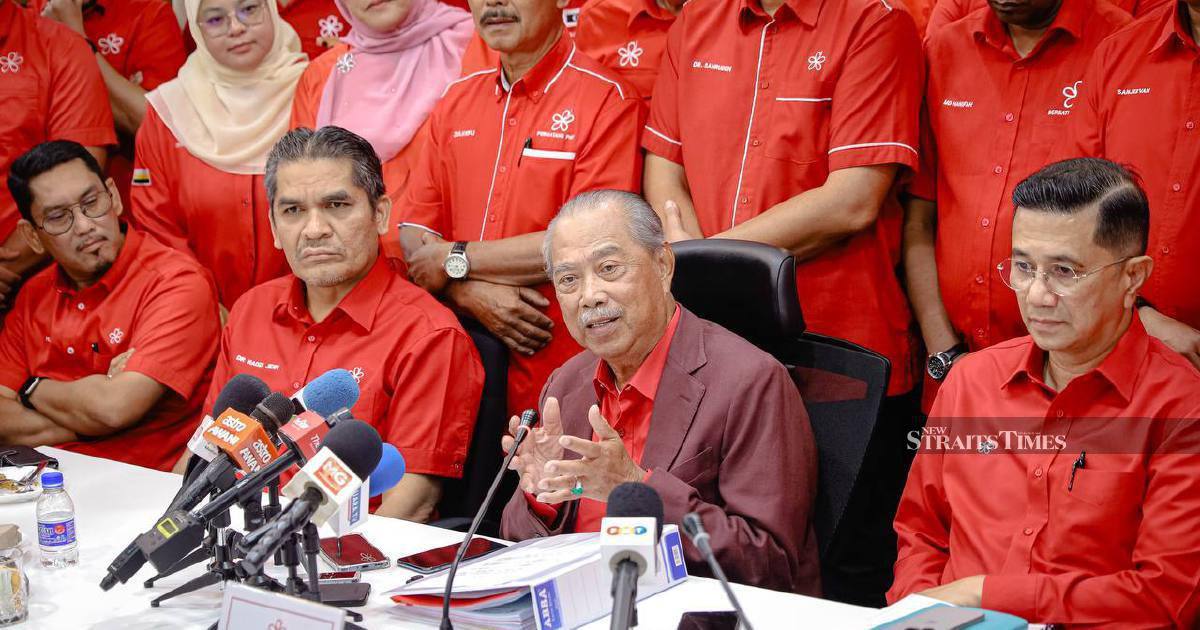
Tan Sri Muhyiddin Yassin has made clear that Bersatu will not shy away from a straight electoral contest against Pas in Johor should both parties fail to resolve their seat allocations before the state election. The Bersatu president's statement represents a significant hardening of rhetoric regarding the two parties' relationship within the broader Malay-Muslim coalition framework, suggesting that negotiations between the partners remain fluid and potentially contentious.
The tension between Bersatu and Pas reflects deeper strategic divergences within Malaysia's political landscape. While both parties draw support from similar demographic constituencies, their organisational structures, political philosophies, and approaches to governance create natural points of friction. Bersatu, positioned as a moderate Malay-Muslim party with Pakatan Harapan linkages, competes for ground traditionally dominated by Umno, while Pas maintains its conservative Islamic identity and has expanded significantly into urban and relatively cosmopolitan areas once considered Umno strongholds.
Johor holds particular significance in Malaysian politics as one of the nation's most consequential states. Its electoral outcome carries implications extending beyond state-level governance, shaping the broader political equilibrium at federal level. The state remains economically vibrant and strategically important, serving as a gateway to Singapore and a crucial industrial hub. Control of Johor's state assembly therefore translates into considerable political capital and influence over resource allocation, administrative patronage, and policy direction affecting millions of residents.
Muhyiddin's willingness to openly acknowledge the possibility of contesting against Pas indicates that informal seat-sharing discussions between the two parties may not be progressing satisfactorily. In Malaysian coalition politics, such public warnings typically follow extended private negotiations where differences prove insurmountable. The president's statement serves multiple purposes: it demonstrates Bersatu's confidence in its organisational capacity, signals to supporters that the party will not be marginalised within electoral arrangements, and applies pressure on Pas leadership to make concessions in ongoing talks.
The threat of direct confrontation between coalition partners creates complications for the broader anti-Umno movement. Both Bersatu and Pas claim to represent Malay-Muslim interests, yet their competing visions of how such representation should function create strategic challenges. A bruising internal contest in Johor could inflict mutual damage, potentially fragmenting votes in a manner that benefits their mutual rival, Umno, which continues to retain significant electoral machinery and grassroots networks throughout the state despite recent political setbacks at national level.
Historically, Johor has presented particular challenges for opposition coalitions seeking to coordinate effectively. The state's political culture remains distinctly traditional, with strong links to Umno's foundational narrative and the Johor royal establishment. Previous attempts by Pas and other opposition parties to challenge Umno's dominance have often faltered due to internal disagreements over seat allocation, candidate selection, and strategic priorities. Muhyiddin's experience with such dynamics—both through his tenure as Umno vice-president and his subsequent leadership of Bersatu—informs his pragmatic acknowledgement that coalition management frequently breaks down when seat demands cannot be reconciled.
The practical mathematics of electoral competition in Johor require any serious opposition challenge to pool resources effectively. The state assembly comprises 56 seats distributed across constituencies of varying electoral difficulty. Neither Bersatu nor Pas alone commands sufficient organisational reach to mount a comprehensive challenge across all constituencies. Yet their competitive impulses and overlapping support bases inevitably generate disputes over which party should contest which seats, particularly in areas perceived as winnable or strategically important.
Muhyiddin's statement also reflects Bersatu's broader positioning as it navigates the complex terrain of Malaysian coalition politics following the party's transformation from splinter faction to independently significant political force. The party seeks recognition as a viable governing alternative rather than merely a junior partner dependent on larger parties' goodwill. Demonstrating electoral viability through willingness to contest difficult races independently reinforces this narrative and provides leverage in future coalition negotiations.
The potential for Bersatu-Pas contests in Johor carries implications for Islamic politics within Malaysia's Malay-Muslim political space. Pas has long claimed to represent authentic Islamic representation, while Bersatu positions itself as a pragmatic, modernising force within Muslim governance. Direct electoral confrontation between these different visions could intensify existing theological and political debates within Malaysian Islam, particularly regarding the proper relationship between religious identity and democratic pluralism.
From a broader Southeast Asian perspective, Johor's electoral dynamics reflect wider regional trends where traditional coalition frameworks face pressure from political fragmentation and competing visions of Muslim-majority governance. Malaysia's experience with managing such tensions offers instructive lessons for other regional democracies navigating similar pressures between religious identity politics and secular coalition-building imperatives.
The resolution of Bersatu-Pas seat negotiations will likely depend on whether either party can demonstrate sufficient electoral strength independently to justify more favourable allocation terms. Muhyiddin's willingness to engage in electoral competition therefore serves as both negotiating tactic and genuine contingency plan. Whether this contested approach ultimately strengthens or weakens the opposition coalition's prospects in Johor will become apparent only as negotiations progress and electoral strategies crystallise.

