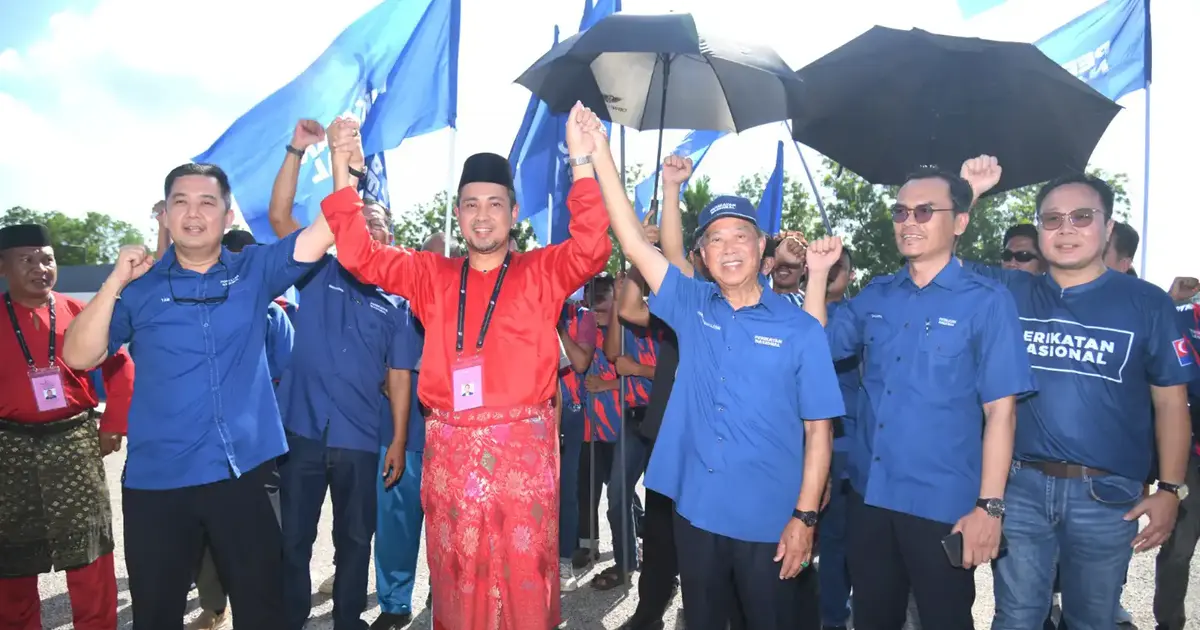
Bersatu's leadership has responded with measured pragmatism to PAS's decision to withhold its campaign machinery from coalition partners, with party president Muhyiddin Yassin characterising the snub as a matter the party can absorb without friction. The move marks a subtle yet telling moment in the dynamics of the Perikatan Nasional alliance, which has positioned itself as an alternative political force centred on shared Islamic principles and Malay-Muslim interests.
Muhyiddin's public stance reflects a broader political calculation within Bersatu: maintaining the facade of coalition unity remains essential for the partnership's long-term viability, particularly as Malaysia approaches future electoral cycles. By framing PAS's decision as entirely legitimate and consistent with PN's operating philosophy, the Bersatu president effectively insulated his party from appearing weak or subordinate, whilst simultaneously reaffirming commitment to the alliance framework. This rhetorical manoeuvre serves multiple audiences—party loyalists within Bersatu, the broader PN coalition, and potentially undecided voters who might view internal squabbling as a sign of dysfunction.
The underlying issue touches on a fundamental tension within PN: the degree to which component parties must pool resources and coordinate campaign efforts. PAS, as the largest and most deeply entrenched Malay-Muslim party within the coalition, controls substantial ground machinery built over decades of grassroots organising, particularly in states like Kelantan and Terengganu where the party maintains near-hegemonic political control. The party's reluctance to place these resources entirely at the coalition's disposal reflects both organisational pragmatism and a degree of political independence that PAS has historically guarded jealously.
For Bersatu, a relatively younger and smaller party that emerged only in 2016 following Muhyiddin's split from UMNO, the limitation presents a genuine operational constraint. The party lacks the extensive ground networks that PAS possesses, making it dependent either on coalition machinery-sharing or on resources provided by other PN components. This asymmetry has long characterised the coalition's internal balance of power, with PAS's numerical strength and territorial presence serving as an anchor point that constrains the ambitions of other members.
Muhyiddin's emphasis on Bersatu's autonomy—stating that his party will not compel others to provide assistance—carries particular significance in the Malaysian political context, where coalition stability has proven historically fragile. UMNO's dominance within the previous Barisan Nasional framework had often created resentments among smaller coalition partners who felt pressured to follow the larger party's lead. By projecting an image of confident independence, Muhyiddin positions Bersatu as a coalition partner operating from principle rather than desperation.
The PAS decision likely reflects calculations specific to the Islamic party's strategic position. By retaining its machinery, PAS maintains maximum flexibility in how to deploy resources, potentially favouring certain candidates or regions based on its own assessment of electoral priorities. This approach also subtly asserts PAS's position as the coalition's dominant Islamic voice—a claim that matters considerably given that PN explicitly markets itself as the political home for Malay-Muslim interests in contrast to the broader, more heterogeneous appeal of the ruling coalition.
The implications for Malaysian politics extend beyond inter-party relations within PN. The coalition's coherence remains vital to the broader political landscape, as PN functions as a significant check on governmental power. Should internal frictions escalate from resource allocation disagreements to more fundamental strategic disputes, the coalition could fracture, potentially reshuffling the country's political alignments. However, Muhyiddin's steady response suggests neither party views this moment as a breaking point.
For regional observers, the incident illustrates how Malaysian coalitions operate as networks of negotiated power rather than disciplined electoral machines comparable to tightly structured parties elsewhere. Component parties retain considerable autonomy, and coalition partners must continually renegotiate terms of cooperation rather than rely on settled hierarchies. This characteristic of Malaysian politics reflects both democratic pluralism and the practical limits of binding larger groupings together across ethnic and religious lines.
Bersatu's capacity to absorb PAS's refusal without apparent rancour also depends on the party's own competitive position. Should Bersatu suffer electoral setbacks, leadership changes, or internal divisions, the party's tolerance for such treatment from coalition partners might rapidly diminish. Muhyiddin's current equanimity thus represents both genuine confidence and a calculated bet that Bersatu's fortunes will improve, making the party less dependent on others' goodwill.
Looking forward, the machinery-sharing question will likely resurface during campaign periods, forcing the coalition to work through these tensions repeatedly. PN's long-term sustainability as a viable governing alternative depends partly on developing more formal mechanisms for resource coordination that all parties accept as legitimate, rather than treating each negotiation as a fresh trial of strength. Whether such institutional development occurs remains uncertain, but Muhyiddin's diplomatic handling of this incident suggests the leadership recognises that coalition preservation requires flexibility and restraint during inevitable disagreements.

