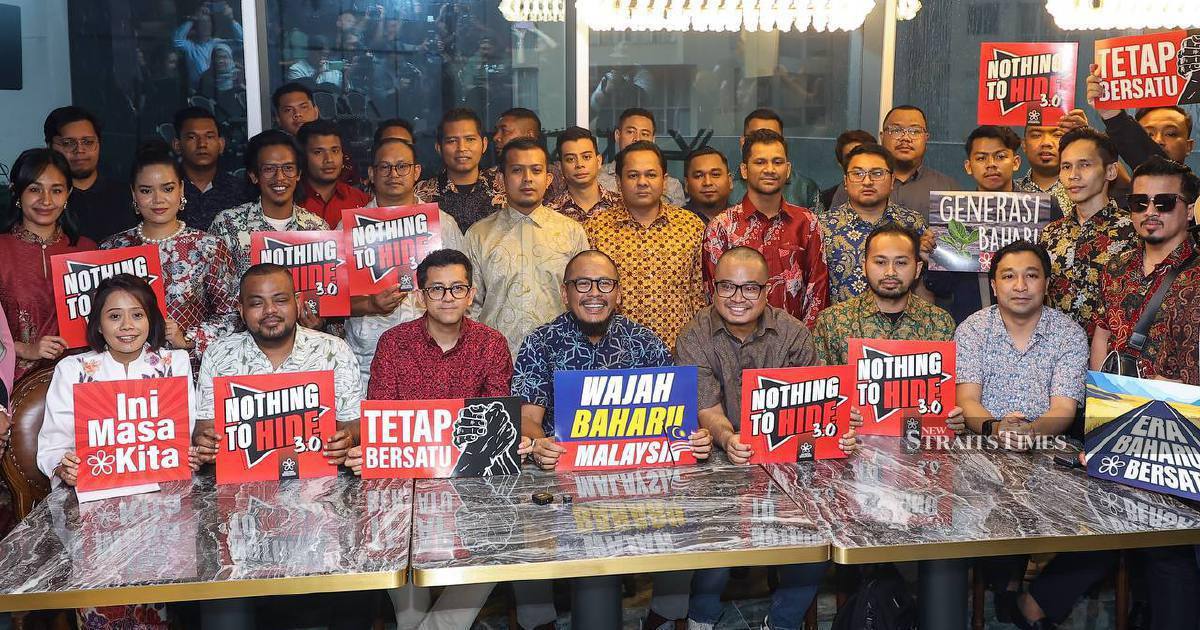
Kota Siputeh assemblyman Mohd Ashraf Mustaqim Abdul Munir has signalled optimism that the friction afflicting the partnership between Bersatu and PAS can be resolved, drawing a domestic analogy to describe the strains within their shared Perikatan Nasional (PN) coalition structure. His remarks reflect a broader effort within the opposition bloc to project stability amid mounting pressures that have tested the alliance's cohesion since its reformation following the 2022 general election.
The comparison to a quarrelsome married couple living under one roof carries weight in the Malaysian political context, where coalition dynamics often hinge on personal relationships and institutional loyalty. Ashraf's characterization suggests that underneath current disagreements lies a foundational commitment to the partnership—a narrative that both parties appear keen to maintain publicly, even as underlying grievances accumulate. This framing allows senior figures to acknowledge tensions without implying existential threats to the bloc's survival, a delicate balance required when managing coalition morale and internal party expectations.
Relations between Bersatu and PAS have deteriorated noticeably over recent months, rooted in disputes over leadership succession, allocation of ministerial positions, and policy direction within states where both parties hold significant influence. These tensions have manifested through public statements, competing claims to political space, and subtle jostling for advantage in local power structures. The friction reflects deeper anxieties about the distribution of power and resources within PN, with each component party seeking to maximize its influence and electoral prospects ahead of potential snap elections at state or federal level.
Bersatu, the newer entrant to Malaysian coalitional politics, has worked systematically to establish itself as a serious force within the opposition framework. Its president, Muhyiddin Yassin, has positioned the party as a bridge-builder and nationalist advocate, attempting to carve out distinct political territory while maintaining the PN alliance. This balancing act has proven challenging, particularly when PAS—with deeper roots in Malay-Muslim constituencies and stronger organizational infrastructure—seeks to assert dominance within the coalition structure. The rivalry is not merely organizational but reflects competing visions for the coalition's direction and messaging.
PAS, as the largest component of PN by parliamentary representation and organizational strength, naturally expects significant influence over coalition strategy and resource allocation. The party's Islamic orientation and grassroots apparatus provide it substantial leverage, yet Bersatu's control of federal executive machinery when PN was in government created asymmetries that complicate internal negotiations. Even with Bersatu no longer holding the prime minister's office, the party retains considerable parliamentary numbers and organizational capacity, preventing PAS from exercising uncontested dominance. This structural tension underscores why reconciliation efforts, though publicly optimistic, face genuine obstacles.
Ashraf's intervention into the discourse suggests that senior figures within Bersatu recognize the political cost of prolonged visible discord. Coalition governments and opposition blocs require functional operating procedures, and persistent public bickering undermines both morale and external credibility. Malaysian voters have grown skeptical of unstable political arrangements, particularly following the turbulent 2020-2023 period when multiple coalition shifts rattled confidence in institutional predictability. Displaying unity, even formulaic unity, therefore serves strategic interests for both PN components when competing against the ruling Pakatan Harapan administration.
The reconciliation narrative also addresses internal party anxieties. Bersatu members and supporters worry about marginalization within an opposition bloc, while PAS grassroots fear that secular-leaning coalition partners might dilute Islamic advocacy in policy-making. By framing disputes as temporary friction rather than structural incompatibility, leaders can reassure their respective bases that coalition participation remains worthwhile. This rhetorical strategy buys time for behind-the-scenes negotiations while maintaining public confidence in the partnership's future.
However, the sustainability of this reconciliation approach depends on concrete outcomes. If disputes over cabinet-level positions, electoral seat allocations, or policy priorities remain unresolved, public optimism will give way to renewed friction. Recent Malaysian political history demonstrates that coalition partners frequently use patient diplomacy as cover while strengthening independent party positions, hedging against potential partnership dissolution. Both Bersatu and PAS are likely adopting this dual approach—maintaining coalition commitments while fortifying their individual institutional strength.
The implications for Malaysian politics extend beyond internal PN dynamics. If the Perikatan Nasional coalition demonstrates resilience through this period of tension, it strengthens the opposition's electoral positioning ahead of the next general election, potentially in 2025. Conversely, if reconciliation attempts fail and the coalition splinters, it would reshape the political landscape dramatically, offering opportunities for coalition realignment. The current window of apparent repair work therefore carries significance for broader national political trajectories.
Ashraf's optimism, while diplomatically necessary, reflects genuine structural incentives for both parties to maintain partnership despite friction. Neither Bersatu nor PAS commands sufficient independent parliamentary strength to govern alone, making coalition participation essential to both parties' long-term viability. This reality, more than any appeals to unity, likely explains why reconciliation efforts, however challenging, will probably continue. The married couple metaphor thus captures an uncomfortable truth about Malaysian coalition politics: even badly strained partnerships often persist because the alternatives appear worse.

