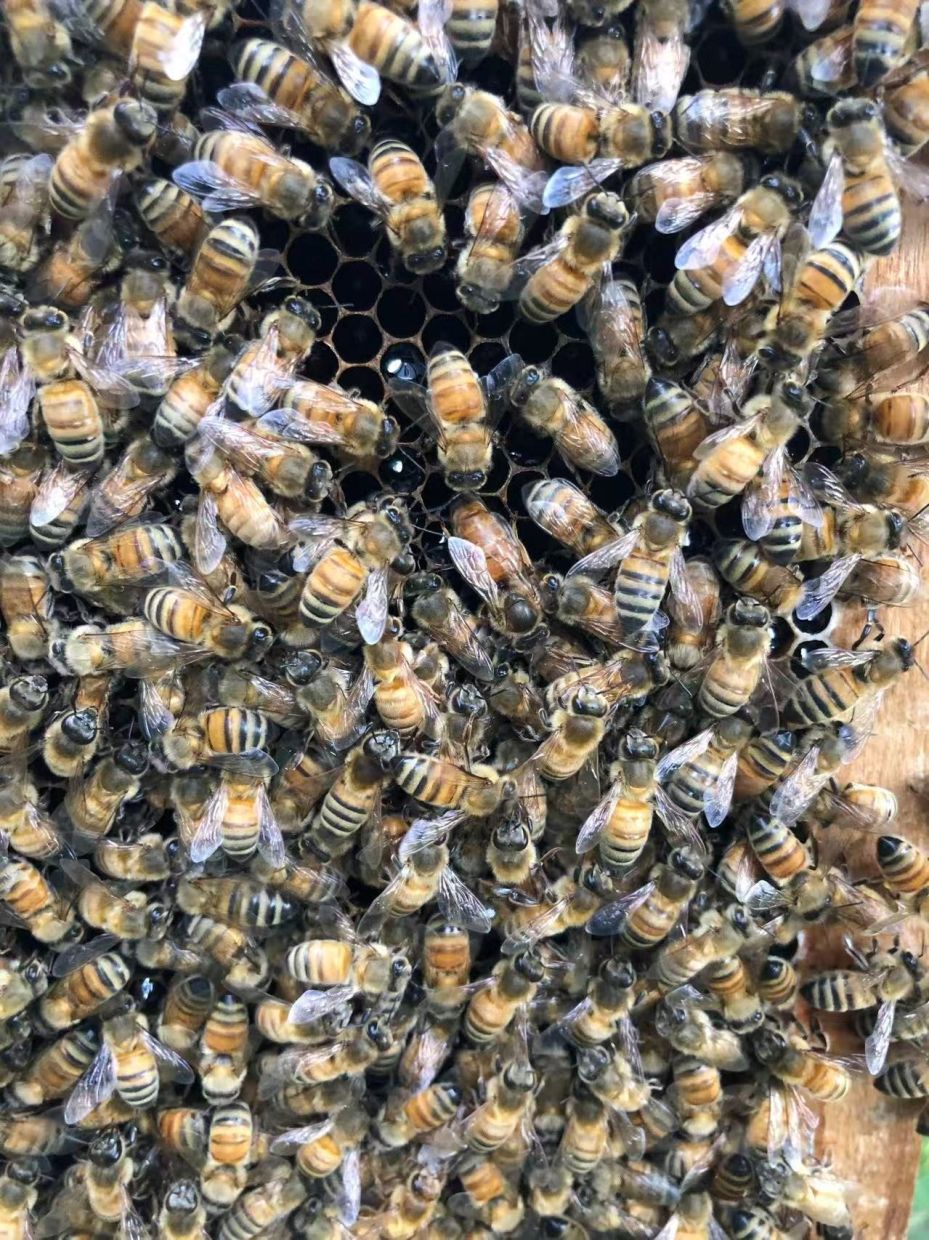
A groundbreaking study by researchers at the Institute of Apicultural Research under the Chinese Academy of Agricultural Sciences has upended decades of scientific understanding about how honeybee colonies produce their queens. The findings, published in Nature, reveal that the physical architecture of the womb-like chamber where a future queen develops matters just as much as the premium nutrition she receives. This discovery carries significant implications not only for beekeeping practices across Malaysia and Southeast Asia, but also for our understanding of how social insects collectively engineer their own destinies.
For generations, scientists and beekeepers alike believed that the transformation of an ordinary female larva into a queen was determined entirely by diet. All honeybees begin their lives as identical fertilised eggs with equal potential. Yet somehow, some larvae are selected to receive royal jelly—a secretion produced by worker bees that is far richer in nutrients than the standard larval food—while others receive ordinary sustenance. The prevailing assumption was that this nutritional privilege alone explained the dramatic differences in development: a queen bee emerges significantly larger, develops reproductive capabilities that other females lack, and can live several years instead of mere weeks. The notion that nutrition was destiny became so ingrained in both scientific literature and practical beekeeping that alternative explanations were largely unexplored.
The research led by Kai Wang and his colleagues challenges this reductionist view by demonstrating that the chamber itself functions as what Wang describes as an "active, highly engineered smart incubator." Honeybee colonies construct three types of wax chambers: regular hexagonal cells for storing honey and raising worker bees, and two specialized structures. The royal chambers, resembling downward-hanging peanut shells, have long been recognised by beekeepers as harbingers of swarming or queen succession. However, these structures were generally treated as merely passive containers rather than active participants in the developmental process.
The critical discovery centres on the physical and chemical properties of the wax used in royal chambers. Unlike the ordinary wax that forms worker cells, the material composing a queen's chamber is demonstrably softer, possesses a higher melting point, and emits a distinctly different chemical signature. These seemingly minor differences may profoundly influence larval development. The softer walls provide expanding larvae with additional space to grow, while the chemical "perfume" released by the wax may function as hormonal triggers that guide developmental pathways toward queenship. Wang noted that even larvae provided with royal jelly showed significantly poorer development and substantially higher mortality rates when exposed to standard worker-cell wax, indicating that the "smell and feel" of royal wax proves essential for survival and transformation.
What renders this discovery particularly fascinating is the extraordinary biological adaptation required to construct these chambers. The worker bees responsible for building queen cells demonstrate unusually elevated thoracic temperatures and distinct patterns of gene expression. These young bees essentially transform themselves into biological furnaces, heating their thoraxes to temperatures exceeding 39 degrees Celsius—comparable to running a high fever—to manipulate the wax into its specialized form. This metabolic expenditure occurs on a temporary basis; these are not permanently specialised workers but rather ordinary young bees undertaking an emergency task with short-term modifications to their genetic expression.
The complexity intensifies when one considers that these worker bees do not abandon their regular duties while engaged in this demanding work. Wang describes them as "the ultimate multitaskers" because they simultaneously construct queen cells, share food with nestmates, and inspect other cells throughout the hive. This reveals a remarkable flexibility within honeybee colonies—the ability to mobilise ordinary workers for extraordinary tasks without compromising the colony's fundamental functioning. The bees involved are not a permanently segregated caste but rather members of a fluid workforce capable of responding to collective needs through temporary physiological and genetic shifts.
For Malaysian beekeepers and the broader Southeast Asian apiculture sector, this research offers practical significance. Queen production constitutes a cornerstone of modern beekeeping operations, as healthy, vigorous queens are fundamental to maintaining productive colonies. Many regional beekeepers currently rely on importation of queens from established apiaries or employ less-than-optimal queen-rearing techniques that fail to replicate the conditions honeybee colonies naturally create. Understanding the precise mechanisms governing natural queen development could enable beekeepers to breed healthier, more resilient queens locally, reducing dependence on imports and supporting sustainable apiculture throughout the region.
The implications extend beyond individual hive management to agricultural resilience and food security. Managed honeybees provide pollination services to more than eighty major agricultural crops globally, and this dependency underscores the critical importance of maintaining robust bee populations. Regions including the United States and parts of Europe report substantial colony losses, a trend attributed to multiple factors including disease, pesticide exposure, and environmental degradation. By developing techniques to produce higher-quality queens that lay stronger, more disease-resistant colonies, beekeepers might help counteract these population declines. For Southeast Asia, where agriculture relies heavily on both wild and managed pollinators, improvements in queen production capacity could directly translate into improved crop yields and food production.
Yet Wang emphasises that the research remains incomplete. The study identifies that wax chambers possess distinct physical and chemical properties crucial for queen development, but the precise molecular mechanisms remain unmapped. Wang's next investigative step involves identifying the specific chemical compound or physical characteristic that triggers the developmental switch—the signal that instructs a larva's DNA that it is destined for queenship. This molecular-level understanding could eventually enable artificial replication of these conditions, potentially allowing beekeepers to produce queens with greater consistency and quality than current methods permit.
Wang's observations about the honeybee colony functioning as a superorganism carry profound implications that extend far beyond this single species. The notion that termite mounds and wasp paper nests might serve functions beyond simple shelter suggests that architectural engineering plays broader roles in insect development than previously recognised. Stingless bees, which produce intricate wax structures, may similarly employ architectural features to regulate colony reproduction and development. This perspective reframes how scientists conceptualise the relationship between individual organisms and their constructed environments within collective societies.
The findings fundamentally challenge what Wang describes as "deeply rooted dogma"—the assumption that nutrition alone determines biological destiny. By demonstrating that environment shapes development as powerfully as food, the research underscores a broader principle applicable across biology: organisms cannot be understood in isolation from the systems they inhabit. A larva fed the finest nutrition but confined in an inappropriate chamber fails to develop properly, suggesting that wellbeing emerges from the integration of adequate resources with suitable context.
For understanding Southeast Asian ecosystems, which depend critically on diverse pollinator populations including honeybees, this research carries conservation implications. As habitat loss and environmental change threaten natural bee populations, maintaining viable managed bee populations becomes increasingly important as a bridge supporting agricultural production and wild plant reproduction. Improvements in queen production could strengthen the resilience of these managed populations, providing a buffer against broader ecological pressures. Moreover, the research exemplifies how fundamental biological discoveries made through studying one species can generate practical applications supporting human food security and environmental stability.
Wang's eloquent summary—"Eating well is important, but living in the perfect home is what truly changes your destiny"—encapsulates a lesson extending far beyond honeybees. It suggests that comprehensive approaches to supporting any organism's flourishing must attend to both material provisions and environmental conditions. For beekeepers across Malaysia and Southeast Asia contemplating how to strengthen their operations and support pollinator health, this research offers both scientific validation and practical direction. By understanding and replicating the conditions that honeybee colonies naturally engineer, beekeepers can work with rather than against the biological imperatives that have evolved over millions of years.

