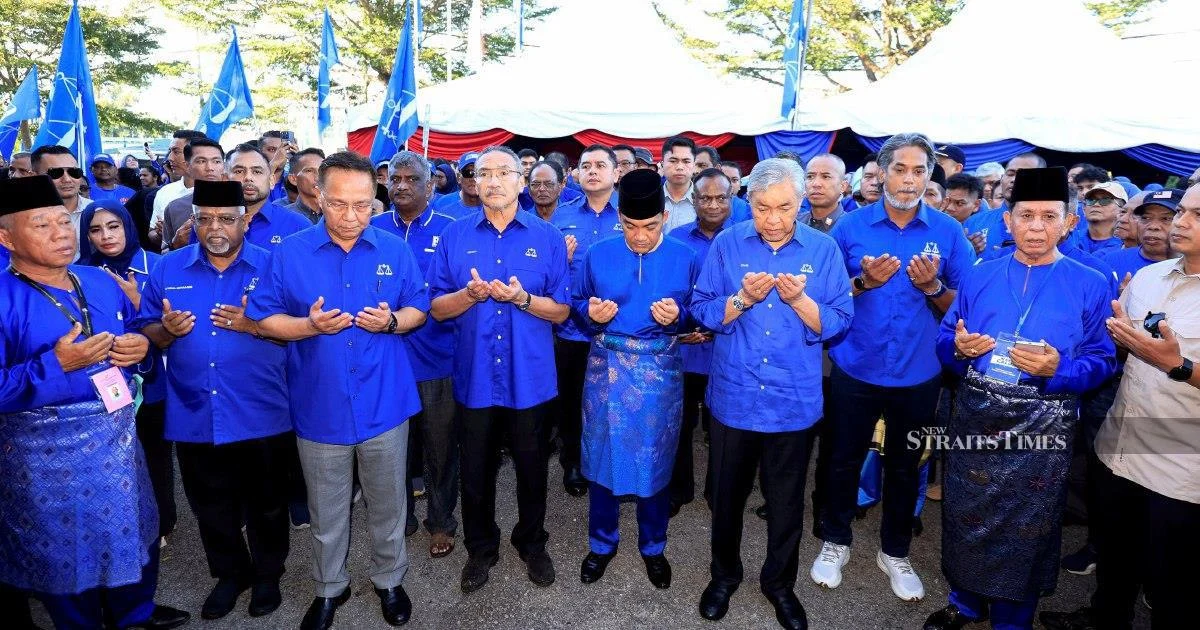
The corridors of power within Malaysia's longest-ruling coalition moved into campaign mode on Tuesday morning as prominent Barisan Nasional figures converged on the Simpang Renggam District Council to endorse Datuk Onn Hafiz Ghazi's bid in the forthcoming Johor election. The carefully orchestrated gathering underscored BN's determination to project a united front across Johor, a state where electoral dominance has traditionally defined the coalition's national strength.
The presence of multiple senior party figures at the Simpang Renggam venue carried symbolic weight beyond mere campaign optics. Such coordinated displays of solidarity have become increasingly important for BN as it navigates a more competitive political landscape than the one it dominated for decades. By converging on this location, the coalition's heavyweights sent a clear message to both party members and voters that Onn Hafiz commands broad institutional backing, a factor that often translates into voter confidence and ground-level mobilisation.
Johor remains strategically significant for BN's national electoral calculations. The state's 56 state assembly seats and substantial number of parliamentary constituencies mean that performance here directly impacts the coalition's ability to secure and maintain federal power. Any election in Johor functions as a barometer for wider political sentiment, which explains why senior leaders invest considerable time and political capital in supporting key candidates. The investment of leadership attention in Simpang Renggam suggests that BN views this particular contest as important within the broader state campaign.
Onn Hafiz has held considerable influence within Johor politics, and his positioning as a key figure in the state's BN apparatus makes him a natural focal point for coalition support. The convergence of party heavyweights around his campaign reflects both his standing within the organisation and BN's broader strategy of consolidating support among loyal constituencies. In a state where Umno, MCA, and MIC have traditionally divided electoral labour, demonstrating cross-party backing for favoured candidates reinforces hierarchy and party discipline.
The timing of such public endorsements carries significance in Malaysian electoral culture. Voters in Johor, particularly in constituencies outside major urban centres, often weigh visible leadership backing when making electoral decisions. The personal presence of senior figures can generate local media attention, encourage party machinery activation, and create momentum that extends beyond the immediate campaign event. The Simpang Renggam gathering would have rippled through BN's ground-level networks, signalling that headquarters was committed to this particular race.
BN's coalition structure means that unified action across multiple parties carries particular weight. When heavyweights from different component parties appear together in support of a single candidate, it demonstrates that the candidate enjoys cross-communal and cross-party approval within the coalition framework. This becomes especially important in constituencies with mixed demographic composition, where voters from different communities may look to different coalition parties for political cues. The gathering at Simpang Renggam appeared designed to convey that Onn Hafiz and his campaign transcended parochial party interests and embodied broader coalition aspirations.
For Datuk Onn Hafiz specifically, the accumulation of high-level support addresses a fundamental campaign challenge: establishing credibility as a viable choice deserving voter confidence. In Malaysian politics, voters frequently respond to visible institutional backing, interpreting widespread leadership presence as validation that a candidate possesses qualities necessary for effective representation. The presence of multiple BN figures amplified this message, essentially endorsing Onn Hafiz as someone worthy of the considerable political capital that senior leaders were investing in his campaign.
The broader context of Malaysian electoral politics cannot be ignored when assessing such gatherings. BN's dominance in Johor has faced greater pressure than in previous decades, with opposition parties improving their competitive positioning across multiple contests. The coalition's strategic response has increasingly involved concentrating leadership resources on important races and key personalities. The mobilisation of heavyweights around Onn Hafiz's campaign reflected this tactical adjustment, acknowledging that electoral victory in contemporary Malaysia requires more aggressive and coordinated effort than the relatively passive approaches that once sufficed.
From a voter perspective, such displays function as signals about which candidates the party establishment genuinely prioritises. In a political environment where party members and supporters often outnumber actual voters, these signals influence who commits time and resources to ground campaigns. The more visible senior backing a candidate receives, the more enthusiastically party machinery typically mobilises on their behalf, creating a self-reinforcing cycle of campaign momentum and organisational activation. The Simpang Renggam gathering essentially triggered this dynamic.
The optics of coalition unity also serve an internal party function. BN comprises multiple parties with distinct interests and member bases. Visible cooperation in supporting candidates sends messages to member parties about coalition discipline and shared decision-making structures. When heavyweights from different parties appear together, they reinforce the coalition's institutional coherence and remind members that party leadership expects compliance with collective decisions. This becomes particularly important in a state like Johor where internal party competition can occasionally overshadow coalition cooperation.
Looking forward, the success of such coordinated campaigns depends ultimately on voter response. Johor's electorate has demonstrated increasing sophistication in distinguishing between symbolic shows of support and substantive commitments to constituent welfare. Senior party figures converging on campaign venues generates headlines and reinforces internal party messaging, but converting such visibility into actual electoral gains requires that candidates themselves connect effectively with voters and deliver on campaign promises. For Onn Hafiz, the backing of multiple BN heavyweights provided essential political scaffolding, but the campaign's ultimate outcome would depend on his ability to translate that institutional support into voter preference and translate voter preference into actual electoral victory.

