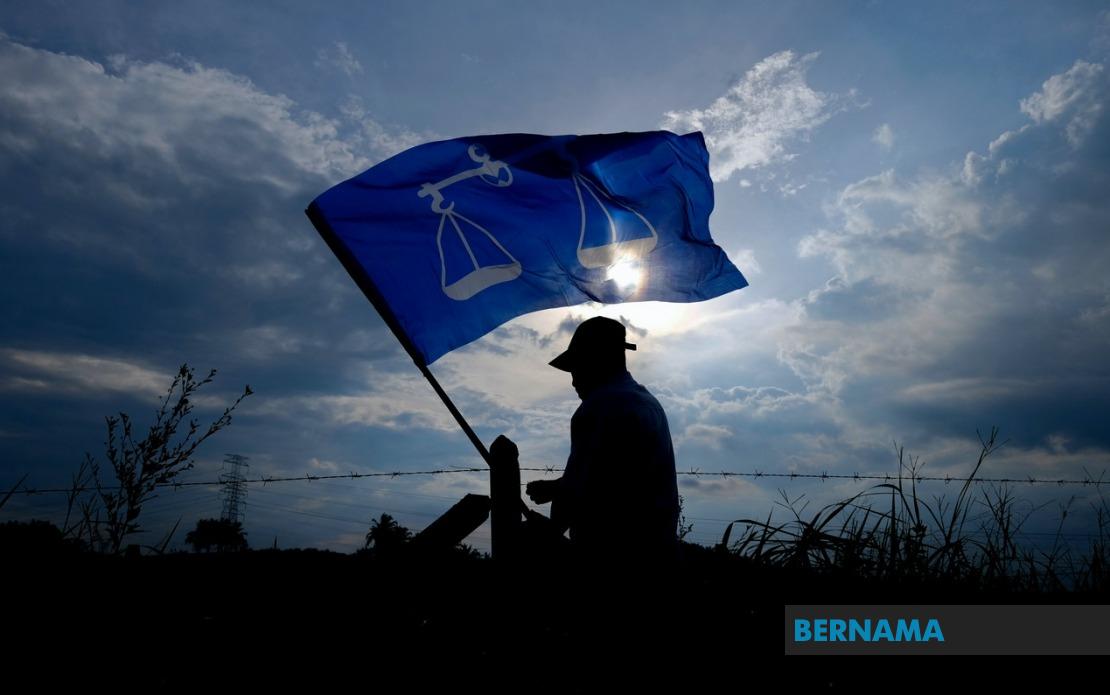
The Barisan Nasional coalition intends to fashion its political playbook and candidate slate for the forthcoming Negeri Sembilan state election to reflect the distinctive demographic composition and voting behaviour of the state, according to BN chairman Datuk Seri Dr Ahmad Zahid Hamidi, who also serves as Deputy Prime Minister. Speaking to journalists on July 13, Ahmad Zahid underscored that a bespoke approach was imperative given Negeri Sembilan's unique characteristics, which set it materially apart from other Malaysian states in ways that conventional strategies might overlook.
The BN leadership recognised that Negeri Sembilan presents a fundamentally different electoral landscape compared to counterparts elsewhere in the country. The state's composition—encompassing its seat structure, population density, and the specific voting proclivities of its electorate—demands a calibrated response rather than a one-size-fits-all methodology transplanted from successful campaigns conducted in other jurisdictions. Ahmad Zahid elaborated that BN would accordingly recalibrate its formula to accommodate the particular political dynamics at play within Negeri Sembilan's boundaries, signalling that the coalition was prepared to move beyond routine procedural templates.
The announcement came during a media interaction following Ahmad Zahid's attendance at a briefing with the TVET@KKDW (Rural and Regional Development Ministry) contingent preparing for WorldSkills Shanghai 2026, an event also attended by Deputy Rural and Regional Development Minister Datuk Rubiah Wang. The timing of his remarks appeared deliberately positioned to emphasise BN's strategic acuity and readiness to contest the upcoming state poll with a considered approach rooted in empirical assessment rather than assumption. Ahmad Zahid conveyed that the coalition would unveil its selected candidates within the week, suggesting momentum was building toward a formal announcement.
Prior to his remarks to the press, Ahmad Zahid had addressed the skills development gathering and referenced BN's recent triumph in the Johor state election, held the preceding Saturday. He attributed that electoral success to what he characterised as mental fortitude and imaginative problem-solving deployed throughout the campaign period—a framing that positioned BN as a coalition capable of navigating obstacles and maintaining cohesion under pressure. This narrative served to reinforce confidence in BN's ability to execute a sophisticated, localised strategy in Negeri Sembilan.
On the matter of ongoing discussions with the Pan-Malaysian Islamic Party (PAS) regarding cooperation arrangements for the Negeri Sembilan contest, including negotiations surrounding a prospective Menteri Besar candidate, Ahmad Zahid adopted a cautious posture. He stressed that no binding accord currently exists between BN and PAS, characterising the talks instead as preliminary explorations reflecting a preliminary understanding that has not yet crystallised into anything definitive or formal. This distinction—between a tentative understanding and a sealed agreement—carried obvious tactical significance, potentially providing both coalitions room to manoeuvre should negotiations encounter obstacles or public sentiment shift.
Ahmad Zahid's insistence that discussions remain unsettled reflected sensitivities within the broader coalition dynamics. The absence of a formalised arrangement meant that statements circulating about specific candidacies or arrangements should not be interpreted as settled fact, thereby creating operational flexibility while negotiations continued. The BN chairman's emphasis on this distinction appeared designed to temper expectations and prevent premature speculation from constraining the coalition's negotiating position or creating intra-coalition friction.
Separately, Ahmad Zahid addressed mounting pressure on Housing and Local Government Minister Nga Kor Ming, the DAP's deputy chairman, to step down from his ministerial position. The calls had emerged from various quarters, yet Ahmad Zahid's response emphasised the incongruity of such demands within the context of the Unity Government framework. He argued that agitating for a colleague's resignation—especially a fellow member of the governing coalition—represented conduct more befitting opposition parties engaged in adversarial dynamics, rather than coalition partners committed to collaborative governance until the administration's term concludes.
Ahmad Zahid's defence of Nga Kor Ming, coupled with his characterisation of their relationship as one of friendship and professional respect, underscored the premium placed on maintaining cohesion within the fragile Unity Government structure. His assertion that relations among federal-level leadership remain solid and professional, with all constituent parties functioning as an integrated team, suggested an intent to project stability and unity despite periodic strains. This framing was significant for Malaysian readers given the coalition's vulnerability to internal friction and the potential for defections or withdrawal that could alter the government's parliamentary arithmetic.
The timing and substance of Ahmad Zahid's remarks illustrated the intricate balancing act undertaken by governing coalitions in Malaysia's contemporary political environment. On one hand, BN must demonstrate capacity for sophisticated, context-responsive electoral strategy—particularly given the competitive threat posed by opposition blocs in states where consensus remains fluid. On the other, the coalition must manage relationships with both internal allies like PAS and fellow participants in the Unity Government structure like DAP, a party with significantly different ideological moorings and voter bases. These concurrent imperatives create perpetual tension and necessitate careful calibration of public messaging.
The forthcoming Negeri Sembilan state election, for which the dissolution of the state legislature must still be formally announced, represents a significant test of whether BN can translate its demonstrated capacity for strategic adjustment and coalition management into continued electoral success. The state's particular demographics and voting patterns will determine whether BN's customised approach yields the anticipated results or whether underlying shifts in voter sentiment override even carefully calibrated campaign mechanics. For Malaysian observers tracking the broader trajectory of peninsular politics, the Negeri Sembilan contest provides an early indicator of whether BN's revitalisation following its 2018 electoral collapse has achieved sufficient durability to withstand competitive pressure.

