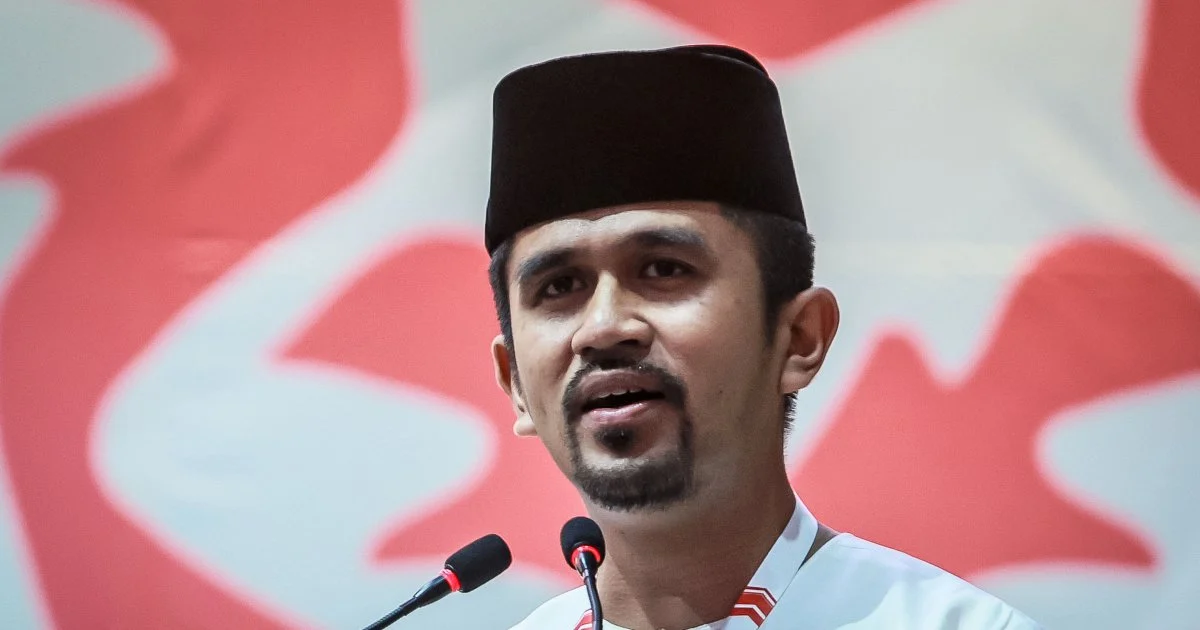
The Umno Youth leadership has stepped up political pressure on Pakatan Harapan by publicly questioning why several senior figures from the opposition coalition's Johor chapter have not been included in the candidate roster for the July 11 state election. Hafiz Ariffin, serving as Umno Youth secretary-general, has seized on what he characterizes as a notable absence of prominent Pakatan Harapan personalities from the electoral slate, treating the matter as evidence of internal instability within the opposition bloc and potentially hampering their electoral prospects in Malaysia's second-largest state.
The timing of this political salvo reflects the increasingly intense competition playing out across Johor's political landscape as parties prepare for a consequential state poll. For Barisan Nasional, drawing attention to perceived weaknesses in opposition ranks represents a calculated strategy to undermine Pakatan Harapan's message and fracture its coalition narrative. By questioning why established Johor leaders have been sidelined, the Umno-dominated coalition aims to cast doubt on whether Pakatan Harapan possesses coherent leadership direction and whether its internal mechanisms for candidate selection function fairly and transparently.
Johor has historically served as a critical battleground in Malaysian electoral politics, given its large voter base, strategic geographic position, and economic significance. The state has traditionally been a Barisan Nasional stronghold, though recent political realignments have created more competitive conditions. A state election in Johor therefore carries disproportionate weight for both coalitions, with potential ripple effects for the federal political equation. For Pakatan Harapan, the state represents a crucial testing ground for whether the coalition can consolidate support and build momentum for future federal contests.
The exclusion of experienced Johor-based leaders from Pakatan Harapan's candidate list raises legitimate questions about the coalition's internal dynamics and selection methodology. Opposition coalitions are inherently fragile entities, requiring careful balance among multiple parties with differing interests and constituencies. When prominent figures are left out of electoral slates, it frequently signals either internal disagreements over strategy, personality clashes between coalition partners, or deliberate attempts to refresh the candidate pool with fresh faces. The implications vary depending on the underlying cause, but externally, such moves create narratives of disunity that opponents can exploit.
Hafiz Ariffin's challenge carries particular weight given his position within Umno Youth, the powerful grassroots wing of the ruling coalition. Umno Youth has traditionally served as the aggressive political attack dog for Barisan Nasional, mobilizing members and shaping public discourse through youth-oriented messaging. By raising the Pakatan Harapan succession issue, Ariffin is attempting to shift the election narrative away from Barisan Nasional's own record and towards supposed opposition instability. This defensive posturing may itself suggest that Barisan Nasional recognizes competitive pressure in Johor and feels the need to attack rather than defend its own platform.
For Pakatan Harapan, such external criticism of internal decisions carries risks regardless of the reasoning behind the candidate selections. The opposition coalition must simultaneously defend its strategic choices while maintaining a united public front and avoiding the impression that senior leaders have been purged or sidelined due to political struggles. This balancing act becomes more difficult when coalition partners represent different constituencies and party interests, as is the case with Pakatan Harapan's multiparty structure. Any perception that the coalition has abandoned experienced voices could weaken morale among grassroots supporters and create opening for tactical voting.
The political context surrounding Johor's election extends beyond state-level considerations. The state government's composition influences the calculation of federal power dynamics, particularly in a context where Barisan Nasional and Pakatan Harapan remain locked in close national competition. A decisive outcome in Johor could provide either coalition with momentum and credibility ahead of the next federal election cycle. Conversely, an unexpectedly close or divided result might embolden smaller parties or independent candidates to claim a kingmaking role in state politics.
The absence of experienced Johor politicians from Pakatan Harapan's electoral slate could result from several distinct scenarios. The coalition leadership might have concluded that a fresh cohort of candidates would be more appealing to voters fatigued by conventional politicians. Alternatively, internal disagreements over seat allocations between coalition parties could have resulted in negotiations where certain Johor personalities traded candidacy for other political advantages. In some instances, senior figures may have voluntarily stepped back from electoral contests due to personal considerations or strategic preferences to focus on organizational or advisory roles.
But from an electoral strategy standpoint, excluding established, well-recognized figures carries potential downside for any coalition. While new candidates can sometimes energize voters seeking change, they typically lack the institutional knowledge, constituent networks, and public recognition that experienced politicians bring to campaigns. This is particularly significant in state-level contests where local relationships and historical context carry substantial weight in voter decision-making. Johor voters may be more inclined to vote for candidates they recognize and who have demonstrated track records of service and capability, even in an environment where anti-incumbency sentiment exists.
The Barisan Nasional challenge also reflects broader regional political dynamics affecting Malaysian electoral competition. As the ruling coalition faces sustained pressure from opposition groups, it increasingly relies on tactical attacks on opposition credibility and unity rather than primarily defending its own record. This shift in emphasis suggests that even dominant coalitions feel vulnerable to electoral surprises and cannot take voter support for granted. For Johor voters and observers across Southeast Asia monitoring Malaysian politics, the intensity of pre-election positioning underscores how high stakes have become in contemporary Malaysian governance, where state elections serve as meaningful tests of political strength and coalition viability.

