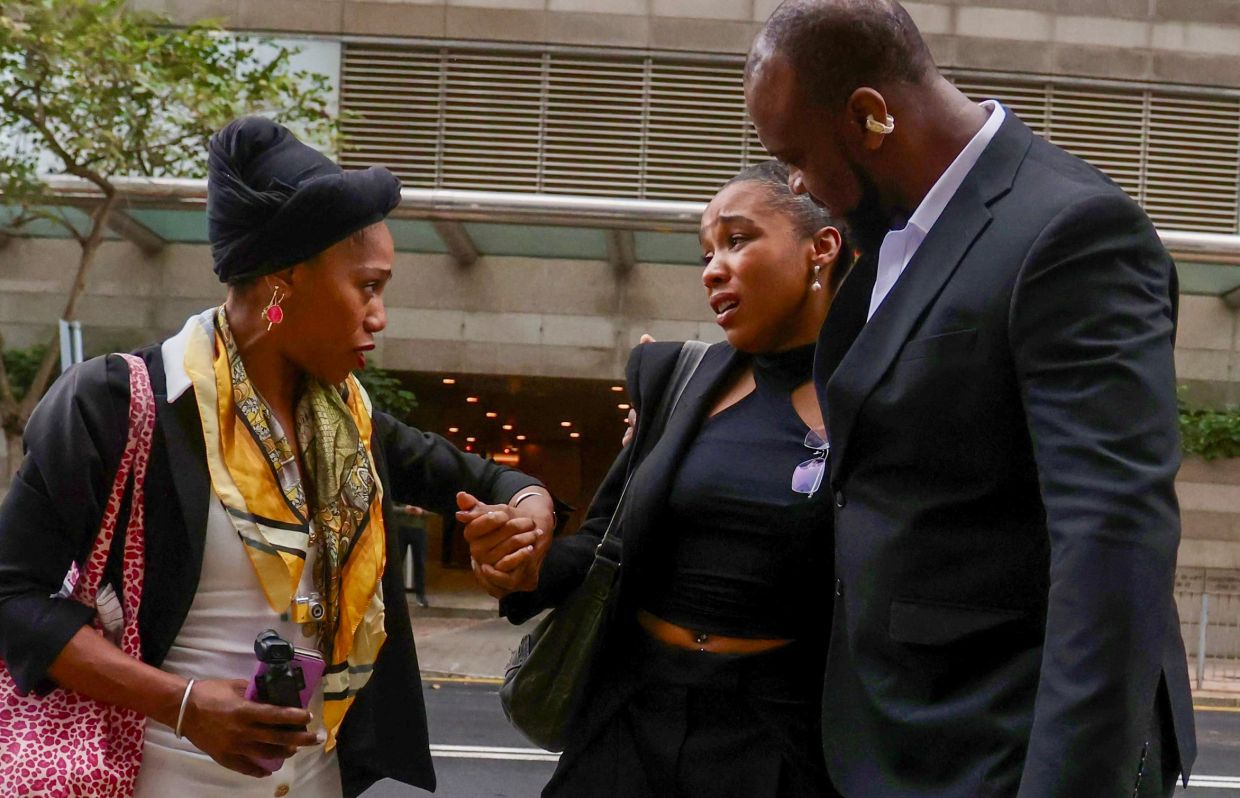
A Hong Kong district court has imposed a six-year prison sentence on Isabel Anonia Barbra Eudora Rose, a 26-year-old British woman, following her conviction on charges of blackmail and perverting the course of public justice. Judge Adriana Noelle Tse Ching delivered the verdict on Wednesday, marking the conclusion of a case that raises uncomfortable questions about false accusations and their intersection with extortion in the city's legal system.
Rose, an event management professional based in London, travelled to Hong Kong on January 31, 2024, ostensibly to visit a man she had met during a holiday in Thailand the previous month. Within hours of her arrival, she claimed that he had sexually assaulted her at his apartment in Central. The circumstances of that night, however, would become the crux of the court's inquiry into whether her accusation was genuine or part of a calculated scheme to extract money.
The case hinges on evidence presented through the pair's post-incident communication. The day after the alleged assault, the two exchanged messages in which Rose asserted that rape had occurred, while the man denied any deliberate wrongdoing, claiming he had misread her signals and rushed physical contact before she consented. Court records show that Rose then inquired whether her unwillingness to proceed with intercourse had angered him. The man's response—that he was instead impressed by her restraint but felt mildly frustrated—became instrumental to Judge Tse's ultimate conclusion that no assault had taken place.
Judge Tse found the man's account more credible, determining that while intimate contact had occurred between them, penetrative intercourse had not. A medical examination revealed bruising on Rose's neck but no genital injuries consistent with the violence she had alleged. Critically, Tse ruled that the exchanges between them undermined the rape claim, with Rose's messaging patterns standing at odds with the behaviour one would typically expect from a genuine assault victim. The judge concluded that the rape allegation had been entirely fabricated.
The financial dimension of the case emerged swiftly after this disputed encounter. Discussions about compensation began almost immediately, initially framed around reimbursing Rose for accommodation and travel expenses. The man agreed to provide £2,000 at her request, but she then escalated the demand to £5,000. Messages subsequently obtained by prosecutors captured Rose writing that she had lost her entire soul and was only receiving ten per cent of what she claimed was rightfully owed, a statement strongly implying a far larger sum was expected.
The extent of Rose's demands became fully apparent through testimony indicating that she had eventually requested £100,000, though this specific figure did not appear in the text message records presented in court. Judge Tse accepted the man's testimony that Rose had communicated this astronomical sum through disappearing messages and voice notes, which she later deleted. Critically, the man testified that Rose had set a deadline for payment and threatened to report him to police if he failed to comply, thereby transforming what might have been framed as a settlement discussion into outright criminal extortion.
Facing mounting pressure and aware of Rose's threat to file a police report, the man ultimately did not meet her demands. On February 3, Rose reported the alleged rape to Hong Kong Police. During the initial investigation, officers arrested the man and conducted questioning, but their focus shifted rapidly. Within 24 hours, Rose herself was arrested and subsequently charged with blackmail and perverting the course of public justice. This swift reversal exposed what police had apparently determined: that the rape claim was a mechanism for extortion rather than a genuine report of criminal violence.
At sentencing, Judge Tse employed unusually forceful language to describe Rose's conduct, describing the offence as both "cruel and evil." The judge stated that Rose had deliberately exploited the man's kindness, naivety, and romantic interest in pursuing her scheme. Tse concluded that from the moment of Rose's arrival in Hong Kong, her primary objective had been accessing his money, and that the blackmail attempt commenced within a mere 48 hours of her arrival. The judge set the base sentence for the blackmail charge at five years, with an additional year from the perverting justice conviction to be served consecutively, resulting in the six-year total.
Rose's reaction to the guilty verdict came as visible emotional distress. In the dock, she broke down in tears and was remanded in custody pending sentencing. Subsequent interviews revealed her continued insistence on the injustice of her situation. Speaking to the South China Morning Post following the March guilty verdict, Rose expressed shock at the outcome, claiming she could not comprehend how the narrative had reversed so dramatically. She stated that officers investigating her case indicated they would pursue the blackmail allegations more vigorously than the rape claim, a decision that she characterised as bewildering.
This case carries significant implications for how Hong Kong courts assess sexual assault allegations, particularly those made by foreign nationals in contexts involving financial negotiations. The decision reinforces judicial scepticism toward rape claims accompanied by immediate financial demands, even as it raises questions about whether such factors should weigh so heavily in determining credibility. For Malaysian and Southeast Asian readers, the case underscores the legal risks of travelling to Hong Kong and becoming entangled in complex interpersonal disputes that may result in serious criminal charges.
The case also reflects broader concerns within the region regarding false allegations and their potential to undermine genuine victims seeking justice. While false accusations represent a minority of reported sexual assaults, cases like Rose's receive considerable media attention and can influence public and judicial attitudes toward sexual violence reporting. The outcome demonstrates that Hong Kong courts take extortion seriously and are willing to impose substantial sentences on those who weaponise accusations of sexual violence for financial gain. However, observers caution that high-profile prosecutions of false accusers should not create a chilling effect on legitimate reporting of genuine assaults.
Rose remains in custody serving her sentence, having lost the opportunity to return to her professional life in London. Her case serves as a stark warning about the consequences of criminal blackmail, regardless of the tactics employed, and illustrates how quickly a visitor's situation in Hong Kong can transform from that of alleged victim to convicted criminal. The decision also affirms that Hong Kong's justice system will rigorously scrutinise claims of sexual assault when accompanied by patterns of financial escalation and threats, placing significant evidentiary burdens on accusers in such contexts.

