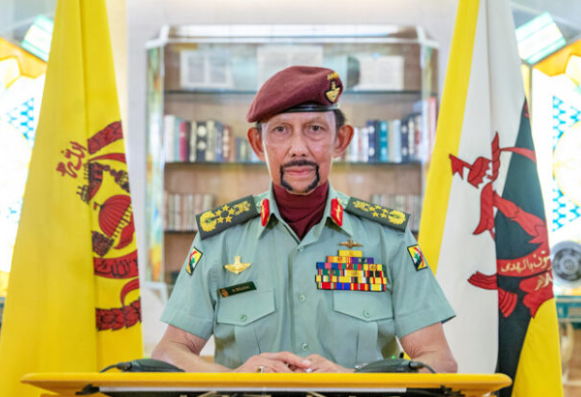
Sultan Hassanal Bolkiah has used the occasion of the Islamic New Year 1448 Hijrah to rally Brunei Darussalam around a vision of coordinated national progress grounded in both material advancement and spiritual commitment. In his address marking the Hijrah New Year, the monarch articulated a comprehensive framework for development that transcends the typical new year rhetoric, instead framing the calendar milestone as an opportunity for renewed dedication rather than a mere marker of time's passage.
The Sultan's remarks underscore a philosophy increasingly central to governance across the Muslim world: the notion that prosperity cannot be measured solely in economic terms or infrastructure development. Instead, he positioned material progress—encompassing economic growth and physical infrastructure—as inherently dependent upon concurrent advancement in spiritual dimensions. This spiritual foundation, he suggested, rests upon three pillars: knowledge acquisition, educational excellence, and dakwah, the Islamic concept of calling or inviting others to the faith. By articulating this dual framework, the Sultan offered a reminder that Brunei's vision of development is distinctly grounded in Islamic principles rather than purely secular metrics of success.
The timing of such a message carries particular weight given the prevailing geopolitical environment. The Sultan explicitly acknowledged that the world continues to grapple with numerous conflicts and challenges that generate widespread suffering and hardship without exception. This candid assessment serves multiple purposes: it contextualises Brunei's relative stability within a turbulent regional and global landscape, thereby highlighting both the nation's achievements and the fragility of peace itself. By drawing this contrast, the Sultan implicitly reinforced the notion that Brunei's current tranquility—free from warfare and major natural disasters—represents not merely geographical fortune but rather the result of sustained collective effort and spiritual commitment.
Brunei's notable absence from the conflicts afflicting neighbouring regions and beyond warrants examination within the Sultan's framework. The nation's peace and stability, he suggested, stem from the spiritual foundation built through prayer, zikir (remembrance of Allah), and Quranic recitation. This framing positions religious practice not as private devotion but as a foundational element of national security and cohesion. For regional observers, particularly those monitoring stability across Southeast Asia, this emphasis on spiritual underpinnings as guarantors of peace offers a distinct perspective on governance priorities that may diverge from purely security-centric or economically focused policy approaches.
Yet the Sultan's address would prove incomplete without addressing the internal challenges that threaten the nation's social fabric. He identified crime as a persistent concern demanding collective vigilance and coordinated institutional response. The specific crimes highlighted—drug-related offences and theft—represent not merely violations of law but, in the Sultan's articulation, affronts to religious values and national dignity. By condemning these offences as religiously inadmissible, the monarch elevated the crime issue beyond a secular law-and-order concern, instead positioning it as a matter of faith and moral obligation.
This religious framing carries important implications for how authorities address criminal activity in Brunei. The Sultan called upon relevant agencies—particularly those managing security and religious affairs—to respond with both swiftness and effectiveness. Notably, he accorded special significance to the religious sector, emphasising that strengthening religious education and intensifying dakwah efforts represent critical components of crime prevention strategy. This approach reflects a conviction that criminal behaviour stems partly from inadequate religious awareness and moral instruction, suggesting that solutions must engage spiritual and educational dimensions alongside conventional law enforcement.
The Sultan's emphasis on strengthening dakwah and religious education as crime-prevention tools reflects broader Southeast Asian discussions about the relationship between Islamic instruction and social stability. In Brunei's context, where Islam represents both the official religion and a central element of national identity, the framing of religious education as essential to crime prevention represents a natural extension of governance philosophy. However, this approach also underscores potential challenges: ensuring that religious instruction effectively addresses modern criminal pressures, including drug trafficking and organised theft, requires coordination between religious scholars, educators, and security professionals.
The call for collective responsibility emerged as another crucial theme in the Sultan's message. He stressed that safeguarding the ummah—the global Muslim community—and the nation itself represents a shared obligation rather than the exclusive domain of government agencies. This emphasis on distributed responsibility carries particular resonance in the Malaysian and Southeast Asian context, where questions about community engagement in security and governance remain persistently relevant. By positioning vigilance and prayer as complementary duties of all citizens, the Sultan offered a model of national security that incorporates both institutional capacity and grassroots awareness.
The Sultan's caution against negligence and complacency addresses a psychological dimension of national security often overlooked in policy discussions. He urged Brunei's citizens and residents to remain perpetually alert, avoiding the complacency that can emerge when a nation enjoys extended periods of peace. This warning reflects historical awareness that security is perpetually vulnerable to erosion through inattention. By framing vigilance not as paranoia but as religious obligation—manifested through increased prayer and remembrance of Allah—the Sultan sought to maintain a heightened state of collective awareness without stoking fear or suspicion.
For Malaysia and other Southeast Asian neighbours, Brunei's approach to balancing material progress, spiritual development, and security offers instructive lessons. The Sultan's framework suggests that sustainable national development requires addressing multiple dimensions simultaneously: economic advancement cannot substitute for moral and religious education, security threats demand both institutional and community-level responses, and national resilience depends upon maintaining spiritual foundations even amid material progress. The message also implicitly acknowledges that rapid modernisation and economic development, while beneficial, can create social pressures and vulnerabilities that purely technical or administrative solutions cannot fully address.
The Sultan and royal family's extension of new year wishes to all citizens and residents—notably including non-citizens—signalled an inclusive vision despite the deeply Islamic framing of his message. This inclusive gesture suggests that Brunei's vision of unity, stability, and shared responsibility extends beyond the Muslim majority to encompass all inhabitants. Such inclusivity becomes particularly significant in a region where questions about religious pluralism, minority rights, and national cohesion remain actively debated.
As Brunei Darussalam enters 1448 Hijrah, the Sultan's address has established the parameters for national discourse during the coming year. The emphasis on dual commitment to material and spiritual advancement, the acknowledgement of global challenges while celebrating local stability, the call for crime-fighting through combined religious and institutional effort, and the insistence on perpetual vigilance grounded in faith represent a comprehensive vision of governance. For a small nation navigating complex regional dynamics and internal social pressures, this multifaceted approach reflects an understanding that national durability requires simultaneous attention to economic competitiveness, social cohesion, religious vitality, and institutional effectiveness.

