%22%2F%3E%3C%2Fpattern%3E%3C%2Fdefs%3E%3Crect%20width%3D%22100%25%22%20height%3D%22100%25%22%20fill%3D%22url(%23ph59ybpg)%22%2F%3E%3Crect%20width%3D%22100%25%22%20height%3D%22100%25%22%20fill%3D%22url(%23ph59ybpp)%22%2F%3E%3Ctext%20x%3D%2250%25%22%20y%3D%2250%25%22%20text-anchor%3D%22middle%22%20dominant-baseline%3D%22central%22%20fill%3D%22rgba(255%2C255%2C255%2C0.95)%22%20font-family%3D%22Georgia%2C%20'Times%20New%20Roman'%2C%20serif%22%20font-weight%3D%22700%22%20font-size%3D%22272%22%20letter-spacing%3D%22-0.02em%22%3EBukit%3C%2Ftext%3E%3C%2Fsvg%3E)
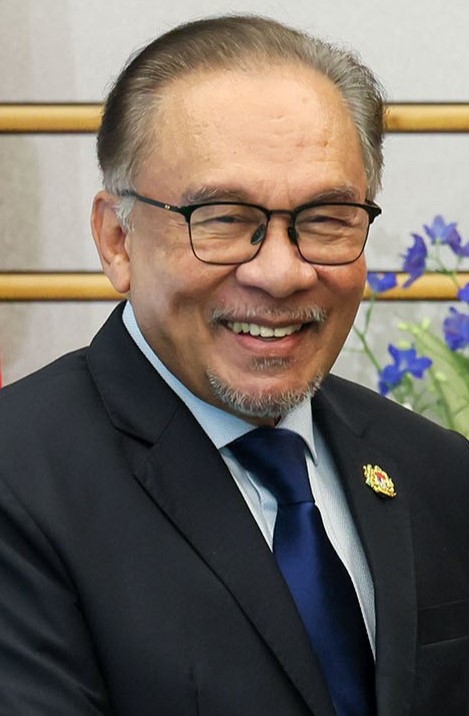
Prime Minister Datuk Seri Anwar Ibrahim has formally launched the groundbreaking ceremony for a permanent housing project addressing the long-standing plight of Bukit Kiara Longhouse residents in Kuala Lumpur, signalling a tangible shift in how the government approaches deeply entrenched urban housing crises. The initiative represents a watershed moment for a community whose struggle for dignified living conditions has stretched across more than four decades, outlasting multiple political administrations and development proposals that threatened to displace them without adequate alternatives.
Under the finalized housing scheme, each eligible family will receive two new residential units at no cost, a provision that directly targets the urban poor demographic whose access to affordable housing in Malaysia's expensive capital city remains severely constrained. This two-unit allocation per household is notably generous compared to typical resettlement programs and suggests an attempt to account for extended family structures common among longhouse communities, while providing households with either increased living space or potential rental income opportunities.
Human Resources Minister Datuk Seri R. Ramanan, who represents Sungai Buloh as Member of Parliament, emphasized that the resolution reflects broader governmental philosophy regarding timely intervention in social issues. In a Facebook statement, Ramanan articulated that permitting generational transfer of unresolved housing grievances contradicts the administration's foundational commitment to equitable development, positioning the Bukit Kiara initiative within a larger narrative of corrective governance.
The government's announcement of an additional RM1 million contribution to Kuala Lumpur City Hall spanning a three-year maintenance period underscores recognition that housing provision alone cannot succeed without sustained infrastructure support. This allocation addresses ongoing operational costs, essential services delivery, and community amenities that determine whether resettlement actually improves resident wellbeing or merely relocates poverty to newly constructed premises without addressing underlying service deficiencies.
What distinguishes this resolution within Malaysia's complex resettlement landscape is its simultaneous accommodation of environmental conservation objectives. The solution navigates between urban poor housing demands and preservation of Taman Rimba Kiara, a green space increasingly rare within Kuala Lumpur's densifying urban fabric. Earlier development proposals had threatened the park, but the finalized approach respects ecological boundaries while still providing permanent housing, suggesting that such ostensible conflicts between social needs and environmental protection are often false dichotomies resolvable through creative policy-making.
The forty-year duration of the Bukit Kiara dispute itself demands analysis, as it reflects systemic failures in addressing urban vulnerability comprehensively. That residents required legal intervention initiated in 2018 merely to achieve outcomes that government policy should have prioritized decades earlier indicates how informal settlement populations become trapped in procedural limbo, accumulating grievances across electoral cycles while formal institutions treat their circumstances as perpetually unresolved problems rather than urgent crises requiring immediate cabinet-level attention.
For Malaysian policymakers confronting similar informal settlement disputes across major cities, the Bukit Kiara resolution offers both encouraging precedent and cautionary lessons. The precedent involves demonstrated political will to allocate substantial resources toward dignified urban housing solutions and environmental stewardship simultaneously. The caution concerns the inefficiency of allowing disputes to fester for decades before resolution, indicating that systematic approaches to identifying and addressing urban housing vulnerability would prove more cost-effective than episodic crisis responses.
The project's significance extends beyond immediate beneficiary households to broader questions about Malaysian urbanism and development equity. As Kuala Lumpur and surrounding regions experience accelerating property price inflation and demographic pressures, the capacity of government programs to provide free permanent housing for urban poor populations faces increasing fiscal and political strain. This resolution demonstrates commitment while also highlighting that without complementary policies addressing affordable housing stock expansion, wage growth, and equitable urban planning, individual resettlement projects remain palliative rather than systemic interventions.
Minister Ramanan's characterization that the project's modest scale produces immense human impact reflects important perspective on development impact measurement. While RM1 million in maintenance funding and a single permanent housing development may appear incremental within national budgetary contexts, for families transitioning from informal longhouse conditions to permanent titled residential units, the transformation represents fundamental improvement in security, dignity, and life prospects. This human-centered evaluation framework offers alternative metrics to conventional development economics that often dismiss housing programs as economically insignificant.
The resolution also carries implications for Malaysia's international development reputation and domestic social cohesion. Southeast Asian nations increasingly face scrutiny regarding informal settlement policies, urbanization management, and poverty alleviation strategies. Demonstrating that government institutions can successfully resolve decades-old disputes through comprehensive housing provision, environmental respect, and financial commitment reinforces narratives of institutional capacity and social responsiveness, contrasting with approaches in some peer economies that have criminalized informal settlements or pursued purely market-driven solutions.
Looking forward, the Bukit Kiara model may inform approaches to other persistent informal settlement issues across Malaysian urban centers. However, scaling such solutions requires not merely political will but sustained fiscal allocation, institutional coordination between federal and municipal authorities, and recognition that housing provision represents investment in human capital and social stability rather than discretionary expenditure. The government's framing of this resolution as aligned with core developmental philosophy suggests openness toward systematizing such approaches rather than treating them as exceptional interventions.