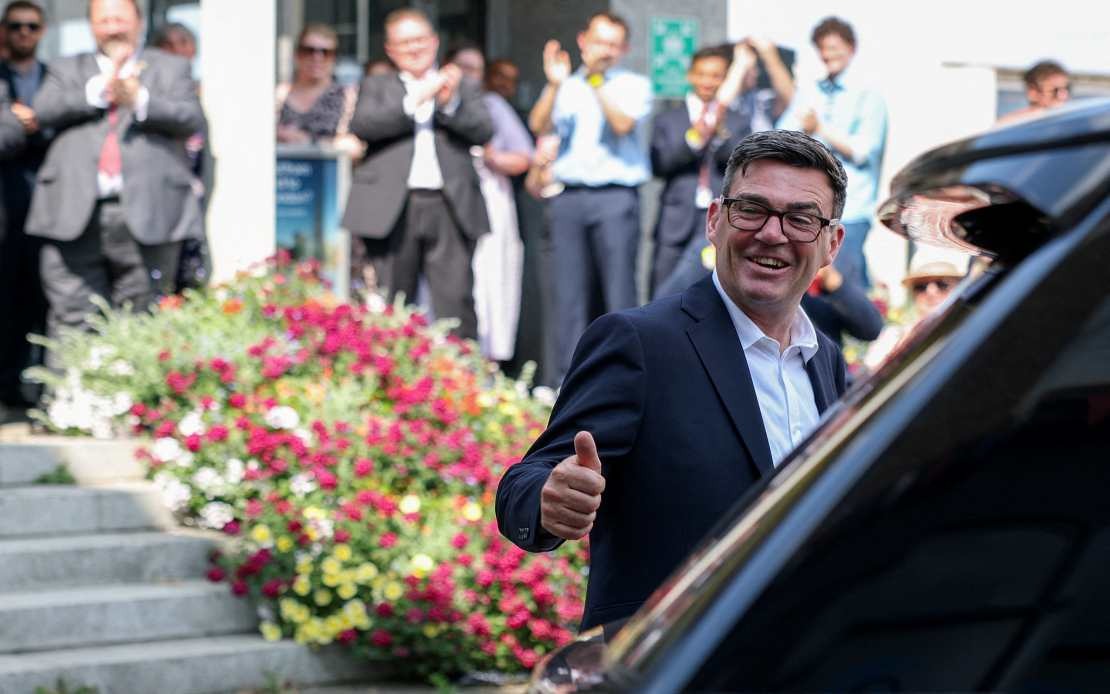
Andy Burnham assumed office as Prime Minister of the United Kingdom on Monday, inheriting leadership of a Labour government after an unusually swift transition that saw him elected party leader without contest just over a month following his return to Parliament. The former mayor of Greater Manchester takes the helm at a moment when British politics faces deep questions about institutional confidence, having cycled through seven prime ministers in just ten years—a figure that Burnham himself intends to address directly in his approach to governance.
In his inaugural address from 10 Downing Street following his formal visit to King Charles III, Burnham is expected to frame his premiership as one of "reflection and resolution," acknowledging the scale of Britain's economic and social difficulties while positioning his administration as capable of confronting them honestly. This rhetorical positioning reflects a broader strategy to distinguish his leadership from that of his predecessor Keir Starmer, whose relatively brief tenure ended amid internal Labour tensions and public discontent. The new prime minister's emphasis on candour about challenges represents an attempt to rebuild trust in institutions that polls suggest have suffered considerable erosion.
Central to Burnham's early messaging is the concept of providing people with "breathing room" on the cost-of-living crisis, a commitment his advisers have now married to promises of tangible policy improvements. This dual approach—offering both immediate psychological relief and substantive economic measures—reflects an understanding that public sentiment has grown weary of announcements without visible results. For Malaysian observers watching UK politics, Burnham's emphasis on delivering concrete improvements rather than mere political rhetoric carries particular relevance, as governments across Southeast Asia similarly grapple with inflation pressures and household affordability concerns.
Scrapping the previous administration's digital identity programme represents Burnham's first major policy decision, a choice that signals his willingness to overturn inherited initiatives in pursuit of his stated priorities. By reallocating resources away from this technology-focused scheme toward cost-of-living interventions, Burnham is making a deliberate statement about where his government's focus lies. The decision also reflects broader public scepticism about the digital ID system that had prompted civil liberties concerns, potentially allowing Burnham to unite diverse constituencies around a cost-of-living agenda.
Among the policies expected to emerge during Burnham's first week are measures addressing energy costs, with reports suggesting his government may expand oil and gas drilling permissions in the North Sea. This proposal has triggered immediate conflict between the new prime minister and environmental campaigners, who argue that such licensing would contradict Labour's 2024 manifesto commitment to halt new North Sea drilling and would fail to reduce household energy bills in any meaningful way. The tension reveals competing pressures within Burnham's coalition, where energy security and cost concerns clash with climate commitments—a dilemma increasingly familiar to policymakers across the region as Asian nations balance economic growth with environmental obligations.
Thames Water's precarious financial position, burdened by a £20 billion debt mountain, presents another early test of Burnham's willingness to deploy state intervention in essential services. Having previously signalled openness to greater public control of critical infrastructure, the new prime minister may face pressure to consider temporary nationalisation as the company's creditors seek government involvement in rescue discussions. Such a decision would represent a significant ideological statement, moving Labour toward more direct state involvement in utility provision than Starmer's administration had pursued. For Malaysian stakeholders observing UK infrastructure policy, the Thames Water scenario illustrates the growing difficulty democratic governments face in maintaining private utility ownership when companies face systemic dysfunction.
Devolution of power away from London stands as a foundational commitment in Burnham's premiership, reflecting both his experience as a regional leader and a broader recognition that Westminster-centred governance has failed to address regional disparities effectively. This ambition carries potential implications for how the UK approaches intergovernmental relations and could reshape the balance between central and local authority in ways not seen since devolution movements of the 1990s. The commitment also positions Burnham as a leader attuned to regional frustrations—sentiments that resonate across Southeast Asia, where tensions between capital cities and provincial areas similarly shape political dynamics.
Burnham's path to the premiership differs markedly from most of his predecessors, arriving through internal party mechanisms rather than competitive electoral contests or protracted negotiations. This unusual ascension, while potentially granting him a honeymoon period with party members, also leaves him without the explicit electoral mandate that general elections typically confer. This structural weakness may constrain his flexibility in pursuing unpopular policies, even when he believes such measures necessary, potentially explaining his early emphasis on policies with broad appeal like cost-of-living relief.
The composition of his Cabinet will offer clearer signals about his governing philosophy and priorities. Particular attention has focused on the chancellorship contest between Energy Secretary Ed Miliband and Home Secretary Shabana Mahmood, with each potential appointment carrying different implications for economic policy direction. The choice between these two senior figures will indicate whether Burnham intends to prioritise energy transition and industrial strategy or place greater emphasis on law-and-order concerns—a decision that will reverberate through both domestic and international policy spheres, including Britain's approach to global climate negotiations and security partnerships.
For Malaysian observers, Burnham's arrival at the premiership offers instructive lessons about political transitions, institutional renewal, and the contemporary challenges facing Westminster democracies. His emphasis on stability and delivery speaks to a broader crisis of confidence in democratic governance that extends well beyond Britain, touching societies across Asia where similar pressures for responsive, effective government have intensified. The extent to which Burnham can translate his promises of breathing room and political stability into demonstrable improvements will shape not only British politics but also international perceptions of democratic governance's capacity to address contemporary challenges.

