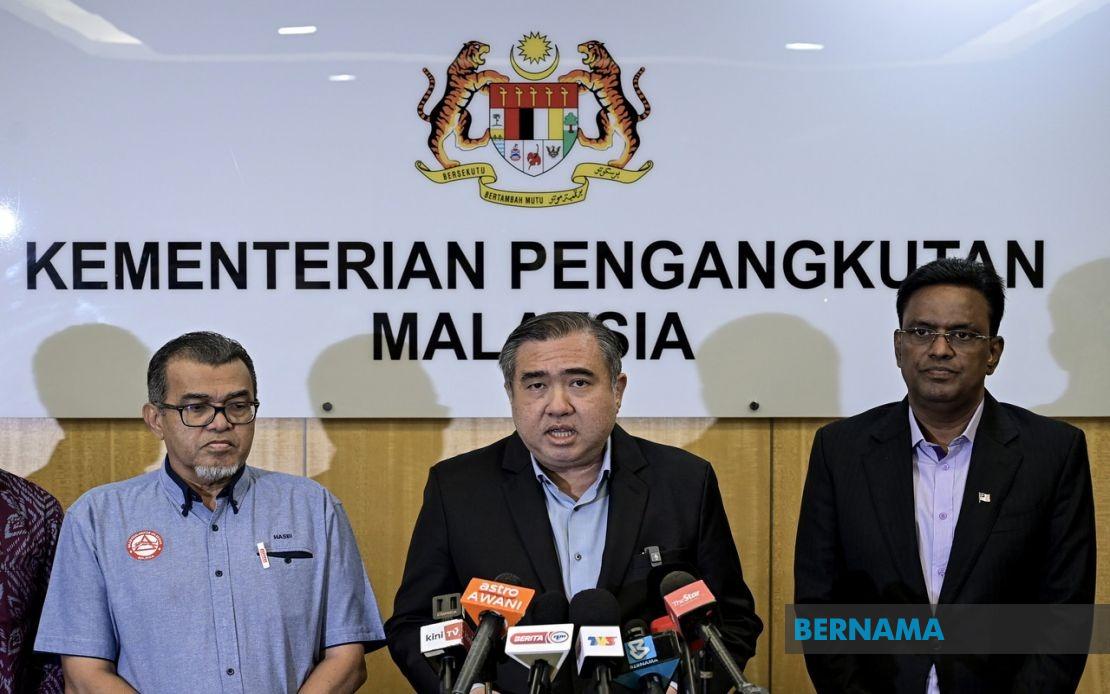
The Malaysian Cabinet has taken a significant step toward strengthening victim protection in traffic law by approving preliminary amendments to the Road Transport Act 1987. Under the proposed changes, judicial officers will gain authority to order those convicted of road offences to provide compensation directly to accident victims or their bereaved families, operating as a supplementary penalty rather than a replacement for traditional punishments. Transport Minister Anthony Loke announced the decision on Wednesday, positioning the initiative as part of a broader road safety modernisation agenda that extends beyond compensation to encompass systemic improvements in how Malaysia tackles dangerous driving behaviour.
The compensation framework being developed differs fundamentally from existing approaches by placing decision-making authority in the hands of the judiciary rather than government bureaucracies. Instead of relying on preset compensation scales or administrative formulas, courts will evaluate each case individually, weighing multiple factors before determining an appropriate amount. This case-by-case methodology considers the gravity of the offence itself, the extent and nature of injuries sustained, documented financial losses experienced by victims or surviving family members, and critically, whether the offender possesses realistic means to fulfil the obligation. This judicial discretion represents a marked departure from earlier conceptualisations that might have established blanket compensation levels, reflecting a more sophisticated understanding of the diverse circumstances surrounding different accidents.
The scope of eligible offences under the reformed legislation will encompass a substantial range of dangerous driving conduct. Particularly serious offences such as driving while impaired by alcohol or narcotic substances will fall within the compensation mandate, as will reckless driving and related violations that endanger road users. This breadth ensures that the compensation mechanism addresses not merely isolated categories of misbehaviour but rather the spectrum of culpable driving that generates catastrophic human and financial consequences. The ministry plans to engage in detailed deliberation regarding exactly which offence classifications warrant compensation orders, recognising that careful boundary-setting will be essential for workable implementation.
Loke emphasised repeatedly that compensation orders will function strictly as additional accountability measures layered atop existing sentencing options. Imprisonment terms, monetary fines, and driving licence suspensions remain fully intact and enforceable as separate punishments. This additive approach ensures that offenders cannot escape traditional justice mechanisms by satisfying a compensation obligation, nor can courts be perceived as substituting financial payment for meaningful custodial consequences. The minister's explicit clarification reflects awareness that some constituencies might fear compensation orders could inadvertently incentivise lighter prison terms or reduced fines, a misunderstanding the government is pre-emptively dispelling.
The legislative timeline outlined by the ministry indicates ambitious but realistic parliamentary scheduling. Following Cabinet approval in principle, the Transport Ministry will embark on comprehensive drafting of specific legislative language while simultaneously conducting broad-based stakeholder consultation. The insurance industry merits particular attention in these engagement processes, given that compensation orders will operate in tandem with existing insurance claim mechanisms rather than superseding them. Accident victims and their families will retain full entitlement to pursue insurance recoveries under their policies and to initiate separate civil litigation through courts to recover additional damages beyond what criminal compensation courts may award. This co-existence of multiple compensation channels requires careful coordination to prevent double recovery or legal conflicts.
Several operational dimensions demand thorough examination before the amended legislation reaches Parliament for formal scrutiny. The ministry has identified the precise definition of serious injuries—a critical threshold that may determine which cases qualify for compensation orders—as requiring consensual agreement among relevant agencies. Similarly, the mechanism addressing situations where convicted offenders lack financial capacity to satisfy court-ordered compensation demands careful construction; options might range from extended payment plans to alternative service obligations. These details will substantially influence the practical effectiveness of the reform and its acceptance by the legal profession, victim advocacy groups, and the broader public.
The government's proposal to establish a dedicated parliamentary select committee signals recognition that road safety reform commands support across Malaysia's political spectrum. Rather than advancing amendments as a purely executive initiative subject to partisan debate, the ministry seeks to build consensus through structured cross-party collaboration. This approach acknowledges that coherent road safety policy requires sustained commitment beyond any single electoral cycle, and that judges, prosecutors, defence lawyers, victim advocates, and civil society stakeholders all contribute essential perspectives to reform design. The select committee framework creates space for thorough vetting and potential improvement of the draft legislation before it faces formal parliamentary votes.
The timing constraint reflects practical governance realities: the ministry targets presentation during the year-end parliamentary sitting, contingent upon completing drafting work and incorporating feedback from stakeholder consultations. This deadline provides approximately five months for intensive legislative development, giving participants realistic opportunity to raise concerns and propose modifications without indefinitely deferring implementation. The retrospective application limitation—whereby amended provisions apply only to offences committed after parliamentary passage—aligns with fundamental legal principles protecting individuals from unanticipated retroactive criminal consequences while ensuring that the reform will have meaningful impact going forward.
For Malaysian accident victims and grieving families, the reforms potentially represent a meaningful institutional acknowledgement of their suffering and financial devastation. Thousands of Malaysians sustain life-altering injuries or lose loved ones annually in road crashes, often experiencing compounded trauma when offenders lack insurance or personal resources to compensate losses. Criminal courts have traditionally offered limited mechanisms for victim restitution, leaving injured persons and dependents to navigate civil litigation or pursue insurance claims while simultaneously witnessing criminal proceedings unfold on separate tracks. The amended Act 333 would integrate victim compensation into the criminal justice process itself, creating judicial authority to address material losses as part of pronouncing sentence.
The reform also reflects evolving international practice in victim-centred justice. Comparable jurisdictions including several European nations and Commonwealth countries have incorporated victim compensation orders into their traffic legislation frameworks, generating experience that Malaysian policymakers can study and potentially adapt. These jurisdictions have generally found that compensation orders strengthen public confidence in road safety enforcement by demonstrating that the system holds offenders accountable not merely through abstract punishment but through tangible restitution to those harmed. However, successful implementation requires coordination between court systems and enforcement mechanisms to ensure that orders are actually collected and distributed, preventing compensation from becoming merely symbolic rather than genuinely remedial.
The Road Offence Demerit Points System enhancement mentioned alongside compensation reforms represents complementary modernisation of traffic enforcement architecture. KEJARA strengthening aims to create more effective incentive structures encouraging safer driving behaviour through accumulation of demerit points leading to licence suspension. Combined with compensation orders, this tiered approach addresses both deterrence and victim protection simultaneously. Dangerous drivers face the prospect of licence loss through demerit accumulation while simultaneously confronting court-mandated financial obligations to their victims, creating multi-layered consequences for misconduct that transcend traditional single-penalty frameworks.
The consultation phases ahead will likely generate substantive debate regarding implementation mechanics. Insurance industry representatives will seek clarity on how compensation orders interact with their statutory obligations, while victim advocacy organisations will lobby for inclusive definitions of harm qualifying for compensation. Legal practitioners may raise concerns about evidentiary standards and procedural safeguards, particularly regarding assessment of offender financial capacity and collection methodologies. These conversations, though potentially contentious, are essential for crafting durable legislation that achieves its protective objectives while remaining practically administrable across Malaysia's diverse court systems and socioeconomic contexts.

