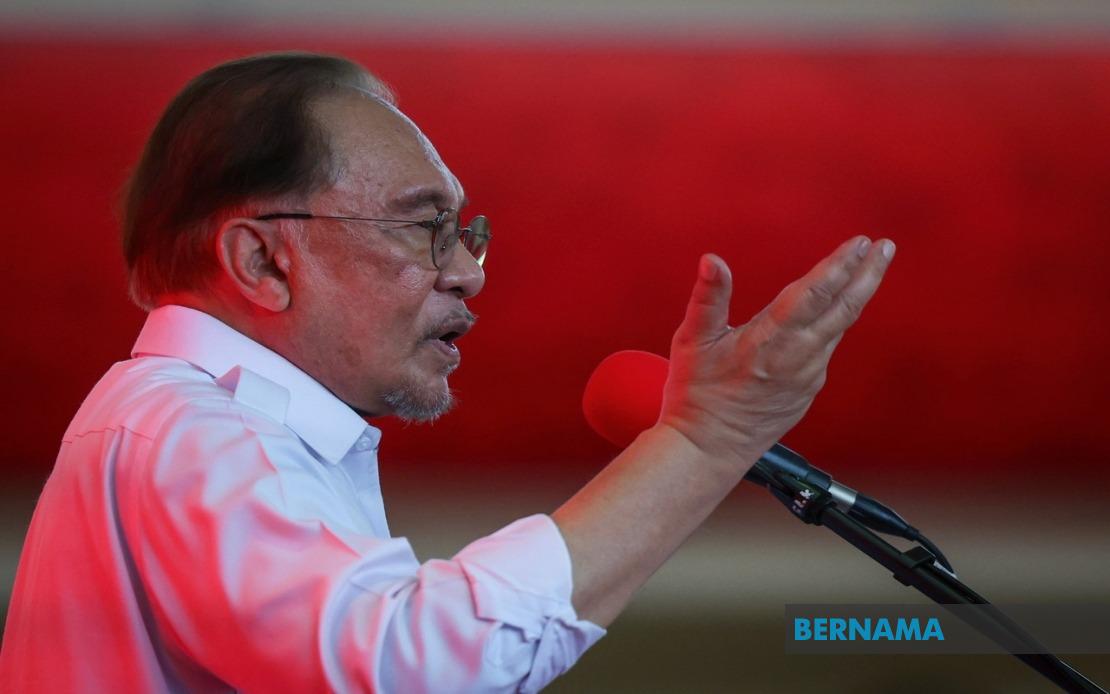
Prime Minister Datuk Seri Anwar Ibrahim signalled that a decision on releasing the Royal Commission of Inquiry report into Lembaga Tabung Haji is imminent, with the Cabinet expected to deliberate the matter at its weekly meeting on Wednesday. Speaking in Tampin on Sunday, Anwar indicated the government's intention to move forward with disclosure, subject to formal Cabinet approval, marking a potential turning point in one of Malaysia's most contentious corporate governance issues.
The RCI report addresses serious allegations surrounding Tabung Haji's disposal of strategic assets, a matter that has drawn sustained scrutiny from lawmakers, civil society organisations, and the Muslim-majority public who view the fund as a sacred institution entrusted with their religious obligations and financial security. The inquiry itself represents the government's acknowledgment that questions about asset management and decision-making processes at the fund warranted independent investigation, though the lengthy period between the inquiry's completion and potential release has itself become a political issue.
Anwar's framing of the matter emphasises institutional separation of powers, a recurring theme in his administration's governance messaging. He stressed that once findings are made public, appropriate authorities—the investigating bodies, the Attorney General's office, and the courts—should handle any resulting criminal or civil proceedings according to established legal frameworks. This delineation reflects Anwar's broader push to insulate executive decisions from perceptions of political interference in judicial matters, a concern that has historically plagued Malaysian governance.
The Prime Minister's comments also carried an implicit challenge to those within government or the ruling coalition who may have opposed disclosure. By stating "if nothing is wrong, stand up for it" and "if something is wrong, prosecute," Anwar positioned transparency as compatible with institutional integrity rather than contrary to it. This rhetorical stance attempts to reframe the debate from one about protecting political allies or institutional reputations to one about confidence in Malaysia's investigative and judicial systems.
Tabung Haji's status as a state-owned enterprise managing pilgrimage savings for millions of Malaysians gives this matter particular weight beyond typical corporate governance disputes. The fund's role in facilitating hajj—one of Islam's five pillars—means that public confidence in its management carries both spiritual and financial dimensions. Any serious governance failures uncovered in the RCI report would likely provoke strong reactions from the Muslim community and raise broader questions about how state institutions safeguard public assets.
The decision to release the report also carries implications for Malaysia's transparency and anti-corruption credentials at a time when international observers and domestic constituencies increasingly expect government accountability. Malaysia's experience with high-profile corporate scandals and governance lapses in recent decades has created demand for public access to official inquiries, particularly when they investigate misuse of public or semi-public funds. Withholding such reports, conversely, invites speculation and erodes public trust in institutions.
Anwar's reference to consulting the Chief Secretary to the Government about procedural requirements underscores that Cabinet approval may itself be a formal necessity rather than a discretionary gate. This procedural clarity is noteworthy because it suggests the government views the matter as administratively straightforward once Cabinet decides, reducing potential for further delays based on technical grounds. The presence of senior military and civil service figures at the event where Anwar made these remarks also signals broad institutional alignment on moving forward.
The timing of the announcement, during what appeared to be an official government engagement in Tampin, reflects the political significance the Prime Minister's office is attaching to the matter. By making the statement in a public setting rather than in a closed meeting, Anwar ensured media coverage and public awareness, effectively locking the government into a commitment to decide by Wednesday. This tactical transparency—announcing the intention to be transparent—serves to build expectation and demonstrates responsiveness to public concerns.
For Malaysian stakeholders, a Cabinet decision to release the report would represent a culmination of years of advocacy and scrutiny. Opposition parliamentarians, civil society groups, and journalists have repeatedly called for disclosure, arguing that public funds warrant public accountability. A positive decision would vindicate that position and potentially set precedent for greater openness around other government inquiries. Conversely, a decision to withhold the report or to release it in redacted form would generate considerable backlash and feed narratives about selective transparency.
The broader governance implications extend to how Malaysian institutions handle sensitive investigations involving state enterprises and political figures. If the RCI process and subsequent disclosure occur smoothly and lead to appropriate prosecutions where warranted, it would demonstrate the functionality of Malaysia's institutional checks and balances. If the process results in selective accountability or appears to protect particular individuals, it would reinforce existing public skepticism about institutional independence.
Anwar's emphasis on adhering to constitutional processes and legal procedures, while emphasising that final decisions rest with investigative and judicial authorities rather than the Prime Minister, reflects a conscious effort to distance the executive from direct control over outcomes. This positioning is significant in Malaysian context, where prime ministerial influence over prosecutorial decisions has historically been a concern. By publicly delimiting his role, Anwar signals institutional discipline while accepting political responsibility for the transparency decision itself.
The week ahead will reveal whether Cabinet consensus supports release and under what conditions. The decision will likely face scrutiny regarding whether the report is released in full, whether certain passages are redacted on grounds of national security or ongoing investigations, and what accompanying statements the government issues. Each of these dimensions will carry meaning for observers assessing the government's genuine commitment to accountability versus performative transparency. For Malaysian and regional observers watching the country's governance trajectory, the Cabinet's decision will offer important signals about institutional direction.

