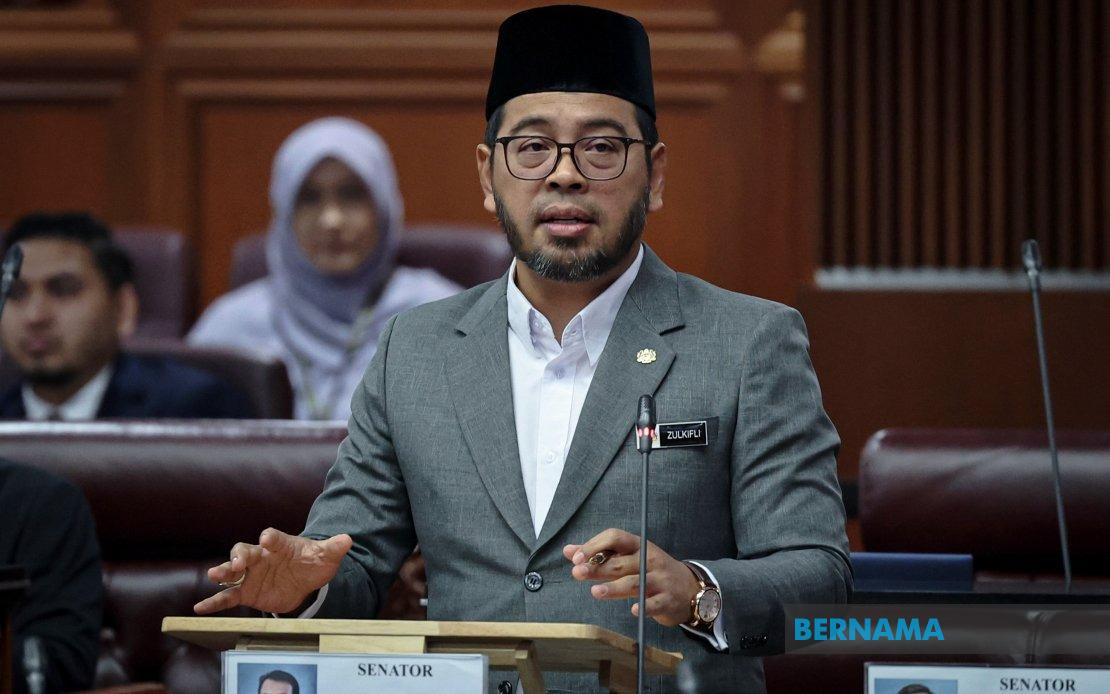
The Cabinet is set to review a proposal that would make the Royal Commission of Inquiry's findings on Tabung Haji publicly accessible, according to Minister in the Prime Minister's Department (Religious Affairs) Dr Zulkifli Hasan. The government's consideration of transparency comes as public confusion and competing narratives continue to cloud understanding of how the nation's largest pilgrimage fund confronted its most severe financial crisis in recent history. The decision to potentially release the RCI report reflects broader pressure from lawmakers and the public to clarify what actually transpired during the troubled period when Tabung Haji's viability faced existential threats.
Central to the Cabinet's deliberation is the need to definitively counter allegations that a former Treasury secretary-general orchestrated the sale of strategically important assets belonging to the institution. Dr Zulkifli categorically rejected these claims as false and misleading, emphasising instead that the asset transfers were part of an emergency rescue operation designed to preserve a critical financial institution serving the Muslim community during a period of acute vulnerability. This distinction between asset liquidation and structured bailout becomes crucial when examining the decisions made during 2018, when Tabung Haji faced unprecedented pressures that threatened the financial security of millions of depositors.
The gravity of Tabung Haji's predicament during 2018 cannot be overstated. Independent assessments by the Auditor-General and Bank Negara Malaysia documented that the fund had accumulated an asset-liability deficit exceeding RM10.9 billion, a figure that essentially meant liabilities far exceeded available assets. Compounding this structural weakness, a sudden loss of depositor confidence triggered approximately RM6 billion in withdrawals within a compressed timeframe, draining liquidity and intensifying the crisis. Concurrently, international efforts to secure emergency standby financing proved unsuccessful, eliminating a potential lifeline that might have allowed the institution to navigate its difficulties through credit arrangements rather than asset restructuring.
The financial exposure faced by the Malaysian government through Tabung Haji's implicit guarantee created an extraordinary fiscal risk. Because deposits held at Tabung Haji carry explicit government protection, the state stood to assume liabilities potentially reaching RM74.5 billion had the institution failed completely. This scenario would have represented an unexpected and substantial shock to federal finances, with cascading implications for the government's budgetary position, credit rating, and ability to fund other critical programmes. Against this backdrop, the 2018 Cabinet decision to restructure Tabung Haji's assets by transferring underperforming holdings to Urusharta Jamaah Sdn Bhd represented a collective strategic choice designed to contain fiscal risk and prevent institutional collapse.
For Malaysian readers assessing the merits of this restructuring, the subsequent performance data provides tangible evidence of the intervention's effectiveness. Depositor confidence has substantially recovered, with total deposits rising from approximately RM69.4 billion in 2019 to more than RM95.1 billion by mid-2024, representing a remarkable restoration of public trust. This deposit recovery indicates that Malaysian Muslims returned to Tabung Haji in meaningful numbers once the crisis receded, suggesting that institutional confidence could be rebuilt through decisive action rather than allowing deterioration to proceed unchecked. The deposit growth trajectory essentially validates the decision-making process undertaken by policymakers during the emergency period.
Beyond deposit accumulation, the institution's capacity to deliver financial returns to members has demonstrably improved. The profit distribution rate climbed from merely 1.25 percent in 2018, when the institution faced existential pressure, to 3.5 percent targeted for 2025, representing the highest return offered to depositors over the previous eight-year period. This improvement in yield reflects both stabilised institutional finances and enhanced management performance in deploying restructured assets more productively. For Malaysian pilgrims and their families who depend on Tabung Haji as both a savings vehicle and pathway to religious obligation, the enhanced returns translate into greater financial resources available for eventual pilgrimage expenses.
The pilgrim experience itself has benefited from the restructuring process despite the turbulent environment in which decisions occurred. Despite persistent global inflation affecting travel and accommodation costs, the government has successfully maintained unchanged haj fees across three consecutive years, from 2024 through 2026. This price stability represents a meaningful commitment to preserving pilgrim access to the spiritual journey regardless of external economic pressures. For Muslim Malaysians planning their haj, particularly those from middle and lower-income backgrounds, the preservation of stable costs alongside improved institutional returns creates a more predictable and sustainable pathway to fulfilling this religious obligation.
The proposal to release the RCI report publicly speaks to a broader governance imperative regarding institutional transparency and public accountability. When major financial institutions undergo restructuring involving government intervention and asset transfers, the public legitimately expects clarity regarding decision-making processes, the reasoning underlying major transactions, and the outcomes that resulted from those choices. The RCI's independent investigation would have examined these matters comprehensively, and making its findings accessible would enable civil society, academic researchers, journalists, and ordinary citizens to scrutinise whether the restructuring was conducted appropriately and whether promised outcomes have materialised as projected.
For Southeast Asian observers evaluating Malaysia's approach to financial crisis management and sovereign wealth supervision, the Tabung Haji experience offers instructive lessons about the advantages and complications of explicit government guarantees on deposits. The institution's role as the primary vehicle through which Malaysian Muslims save for pilgrimage creates particular political and social dimensions distinct from conventional banking crises. The government's willingness to intervene decisively through restructuring rather than allowing institutional failure illustrates a commitment to protecting depositor interests, yet it simultaneously raises questions about moral hazard and risk management practices that merit transparent examination. The RCI report, if made public, could contribute valuable insights for policymakers elsewhere managing similar institutional vulnerabilities.
The timing of this decision also reflects the government's confidence in the recovery narrative. If Tabung Haji's turnaround were incomplete or fragile, releasing an investigative report might risk reigniting public anxiety or prompting second-guessing of past decisions. The fact that policymakers are now willing to contemplate public disclosure suggests they believe the evidence supports the legitimacy of 2018's controversial decisions. Deposit growth, improved returns, stable pilgrim fees, and enhanced institutional stability provide empirical foundations for defending the restructuring against critics who characterised it as asset stripping or mismanagement. Public disclosure of the RCI report would essentially invite Malaysians to judge these outcomes against the original rationale provided by authorities.

