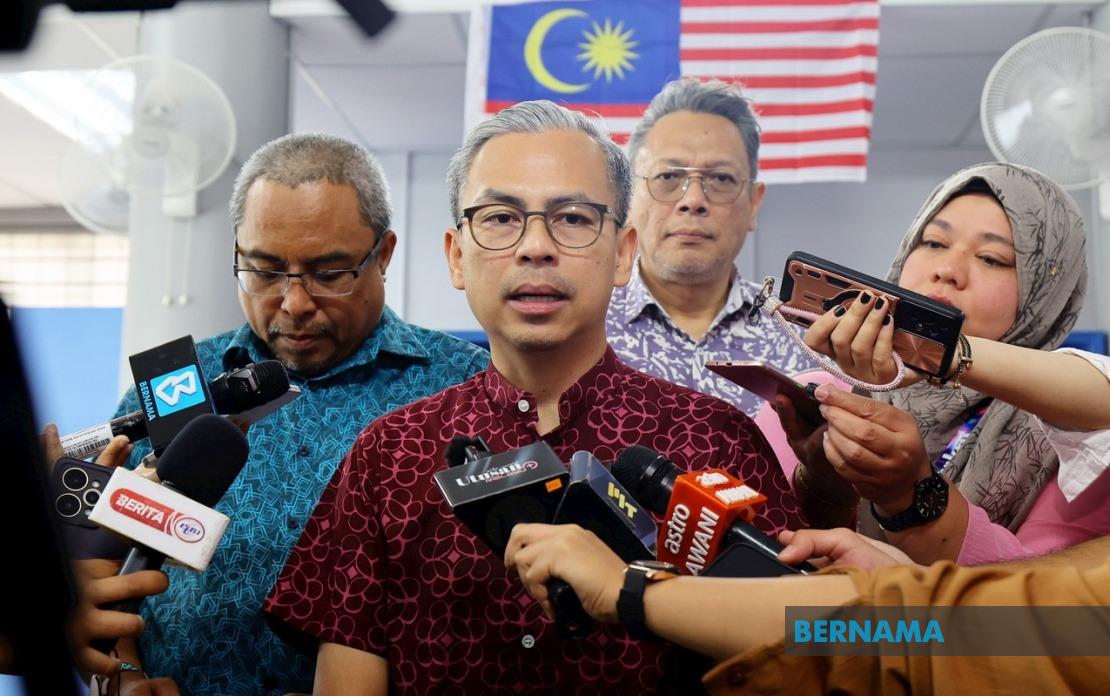
The release of the Royal Commission of Inquiry report on Tabung Haji's operations has drawn scrutiny over its timing relative to the Negeri Sembilan state election, but Communications Minister Datuk Seri Fahmi Fadzil has flatly rejected suggestions that political calculations influenced the decision. Speaking in Jempol on July 30, Fahmi stated that the Cabinet had discussed and unanimously approved the public disclosure of the 211-page investigation into the Islamic pilgrimage fund's management and operations spanning 2014 to 2020.
The minister's statement represents an attempt to place procedural legitimacy around the report's publication, which the Department of Islamic Development Malaysia released the previous evening. Fahmi emphasised that the process adhered to formal government protocols, with the matter receiving full Cabinet consideration before approval. This framing suggests the government anticipated questions about whether the timing was designed to boost support among Negeri Sembilan voters or dominate the news cycle.
Beyond simply making the report public, Fahmi outlined a broader strategic intent for the disclosure. The government envisioned the RCI findings would facilitate parliamentary debate in the Dewan Rakyat and provide enforcement agencies with the factual foundation to pursue legal action against individuals and entities implicated in misconduct. This multi-layered approach transforms the report's release from a mere information-sharing exercise into a catalyst for potential prosecutions and institutional accountability measures across multiple government bodies.
The timing consideration gains additional context when examining Tabung Haji chairman Tan Sri Abdul Rashid Hussain's role in the deliberation. Fahmi revealed that Rashid, who sat on the RCI itself, had previously requested that the Prime Minister Datuk Seri Anwar Ibrahim delay publication following Rashid's appointment in 2023. This deferral was intended to provide the fund with breathing room to restore depositor confidence and implement remedial measures before facing public scrutiny. The chairman's intervention demonstrates tension between transparency and the institutional damage that full disclosure might inflict on an organisation attempting rehabilitation.
Progressess on reform has apparently been substantial. According to Fahmi's citations of Rashid's briefing, Tabung Haji had successfully implemented 75 per cent of the RCI's recommendations by the time of the report's release. However, critical recommendations remained pending, particularly those requiring legal proceedings and enforcement agency investigations. This partial compliance suggests the fund has undertaken administrative and operational improvements but stopped short of the more difficult step of pursuing prosecutions against former officials or managers who may have been responsible for the misconduct identified in the inquiry.
The RCI findings themselves paint a troubling picture of financial manipulation extending across multiple years. The report documents alleged instances of creative accounting practices that allegedly disguised massive losses as profits. Most starkly, the inquiry found that reported losses of RM1.4 billion in 2017 were adjusted through accounting mechanisms to present the institution as having generated a profit of RM3.4 billion during the same period. This RM4.8 billion discrepancy between reported and actual performance underscores the scale of the institutional integrity failures under examination.
Crucially, the RCI investigation traced these problematic accounting practices back to 2014, suggesting that questionable financial management predated the 2017 anomalies by several years. This longer timeline indicates systemic rather than isolated issues within the organisation's financial reporting and oversight mechanisms. The discovery that misconduct spanned nearly a decade significantly elevates the potential scope of personal accountability investigations that enforcement agencies may pursue.
Fahmi addressed semantic debates surrounding the report's language, specifically regarding the phrase "sakau," a colloquial Malaysian term for embezzlement. Critics had apparently noted that the formal RCI report eschewed such colloquial language in favour of legalistic terminology. Fahmi countered that an official Royal Commission of Inquiry appropriately employs formal legal terminology such as corruption rather than everyday expressions. This defense underscores how official reports must accommodate subsequent legal proceedings, which depend on precise, legally defensible language rather than colloquial descriptors.
The minister confirmed that investigative authorities had already begun working from the RCI findings. Police reports and Malaysian Anti-Corruption Commission submissions had been lodged based on the inquiry's conclusions, and Fahmi indicated that Bank Negara Malaysia and enforcement agencies responsible for administering anti-money laundering and counter-terrorism financing legislation would separately examine relevant findings. This distribution of investigative responsibility across multiple agencies suggests the RCI identified conduct potentially implicating diverse legislative frameworks.
Fahmi's broader message positioned the government as committed to following established procedures while catalysing accountability mechanisms beyond Cabinet control. By emphasising Cabinet unanimity, adherence to formal processes, and the involvement of multiple enforcement agencies, he attempted to reframe the report's release as a principled commitment to transparency rather than an opportunistic political manoeuvre. Whether this framing will satisfy sceptics questioning the election timing remains uncertain, but the minister's extensive elaboration of the Cabinet's deliberations and the government's enforcement expectations suggests awareness that political perceptions around the report's release required careful management.

