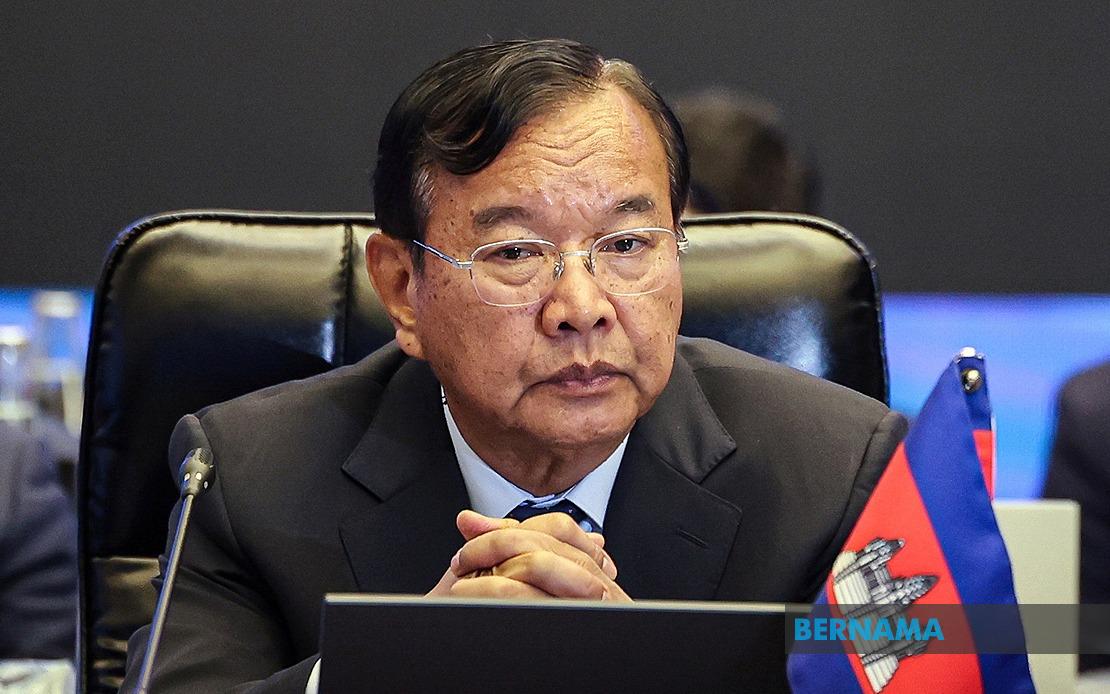
Cambodia's Deputy Prime Minister and Foreign Minister Prak Sokhonn will travel to Malaysia for a two-day official visit beginning August 3rd, marking another milestone in the deepening engagement between the two Southeast Asian neighbours. The trip represents a continuation of high-level diplomatic momentum that has characterised relations over recent years, with Sokhonn's visit providing an opportunity to consolidate existing agreements and chart a course for expanded cooperation across diverse domains.
The centrepiece of Sokhonn's visit will be his participation in the third meeting of the Cambodia–Malaysia Joint Commission for Bilateral Cooperation, which will take place in Kuala Lumpur. This institutionalised mechanism has become the primary vehicle through which both nations address the full spectrum of their bilateral relationship, from trade and investment to security and cultural matters. The regularity of these meetings underscores how deeply integrated the two countries have become in their strategic and economic interests within the region.
During the joint commission sessions, officials from both sides will conduct a comprehensive assessment of progress made in implementing the joint minutes agreed upon at the second JCBC meeting. This methodical review process ensures accountability and allows both governments to identify implementation challenges early and adjust course as necessary. Beyond merely tracking past commitments, the meeting will serve as a platform for identifying new areas of mutual benefit and establishing concrete mechanisms to expand cooperation.
The agenda is expected to span multiple sectors, reflecting the comprehensive nature of modern bilateral relations. While the specific sectors have not been enumerated in official statements, Cambodia-Malaysia cooperation typically encompasses trade promotion, tourism development, labour mobility, infrastructure projects, and regional security cooperation within frameworks such as ASEAN. For Malaysian readers, Cambodian markets represent both investment opportunities and sources of skilled labour, particularly in agriculture, manufacturing, and hospitality sectors.
Beyond the formal joint commission work, Sokhonn's itinerary includes substantial bilateral engagements at the highest levels. He will hold one-on-one talks with Malaysian Foreign Minister Datuk Seri Mohamad Hasan, affording the two foreign ministers an opportunity to discuss sensitive bilateral matters and regional developments with greater candour than is typically possible in larger multilateral settings. These private conversations often prove more consequential than the public sessions, allowing both sides to explore nuanced positions and build personal rapport that facilitates future cooperation.
The visit also incorporates a courtesy call on Malaysian Prime Minister Datuk Seri Anwar Ibrahim, a diplomatic protocol that carries symbolic weight. Such meetings with heads of government, even when brief, underscore the importance each nation places on the relationship and provide an opportunity for senior leaders to signal commitment to shared objectives. For Cambodia, demonstrating strong bilateral relationships with major Southeast Asian partners like Malaysia is strategically important as it navigates complex regional dynamics involving larger powers and competing regional interests.
From Malaysia's perspective, deepening ties with Cambodia serves multiple strategic purposes. As an ASEAN member with growing economic importance, Cambodia offers Malaysian businesses and investors access to a young, increasingly urbanised population and development opportunities in sectors ranging from infrastructure to agro-industry. The bilateral relationship also strengthens Malaysia's position within ASEAN by ensuring that smaller neighbouring states have reasons to maintain close economic and political alignment with Kuala Lumpur rather than seeking alternative partnerships elsewhere in the region.
The timing of this visit during a period of regional flux adds significance to the proceedings. Both Southeast Asia and the broader Indo-Pacific region are experiencing shifts in power dynamics and strategic alignments. For Cambodia in particular, balancing relationships with major powers while maintaining strong ASEAN solidarity requires careful diplomacy. Enhanced engagement with Malaysia, a fellow ASEAN member with significant regional standing, helps Cambodia maintain strategic flexibility and demonstrates commitment to strengthening the bloc's internal cohesion.
The stated objective of injecting fresh momentum into bilateral relations suggests that both governments view the current state of engagement as solid but capable of acceleration. This language typically indicates joint determination to move beyond routine maintenance of existing agreements toward more ambitious joint initiatives. Whether this involves new trade arrangements, development cooperation projects, or enhanced security collaboration will likely become apparent in post-visit statements and follow-up announcements from both foreign ministries.
For the broader Southeast Asian region, bilateral visits of this nature serve as building blocks for regional stability and integration. They demonstrate that despite competing interests and occasional disagreements on regional issues, ASEAN members remain committed to managing relations through institutionalised dialogue and seeking mutually beneficial outcomes. This pattern of regular high-level engagement, multiplied across the ten ASEAN nations, creates an intricate web of connections that reinforce regional norms and reduce the likelihood of bilateral disputes escalating into broader conflicts.
The Cambodia-Malaysia partnership has historically been marked by pragmatism and quiet cooperation, lacking the higher public profile of relations involving larger regional powers. Yet this understated character should not obscure the relationship's real substance. Regular joint commission meetings, ongoing trade flows, and personnel exchanges constitute a solid foundation of bilateral ties. Sokhonn's visit demonstrates both countries' commitment to maintaining and building upon this foundation, ensuring that as the region evolves and new opportunities emerge, Cambodia and Malaysia are positioned to leverage them collaboratively.

