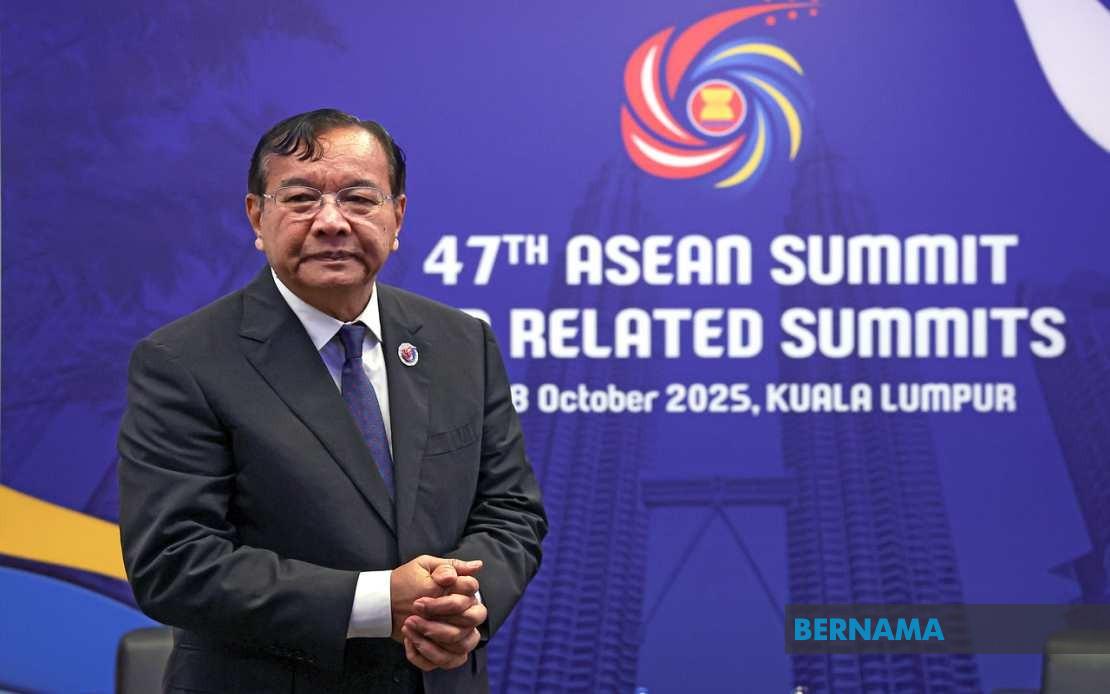
The arrival of Cambodian Deputy Prime Minister and Foreign Minister Prak Sokhonn in Malaysia marks a significant diplomatic moment for Southeast Asian regional relations, as the two countries prepare to reactivate their primary bilateral cooperation mechanism after a 20-year break. During his two-day visit beginning August 3, Prak Sokhonn will lead Cambodia's delegation in co-chairing the third Malaysia-Cambodia Joint Commission for Bilateral Cooperation alongside Malaysia's Foreign Minister Datuk Seri Mohamad Hasan, a ceremonial milestone that underscores renewed political commitment at the highest levels.
The revival of the Joint Commission comes at a particularly symbolic juncture, occurring in advance of Malaysia and Cambodia's 70th anniversary of formal diplomatic relations in 2027. This timing suggests both nations view the next phase of bilateral engagement as foundational to their partnership's future trajectory. The two-decade pause since the second JCBC meeting convened in Siem Reap in 2006 had left a substantial institutional vacuum in structured dialogue between the countries, despite their geographical proximity within the Association of Southeast Asian Nations framework.
Prior to the formal commission session, Prak Sokhonn is scheduled to hold a courtesy audience with Malaysia's Prime Minister Datuk Seri Anwar Ibrahim. Such high-level protocol encounters typically serve to establish or reaffirm the tenor of bilateral relations and allow senior leaders to communicate strategic priorities beyond the scope of working-level negotiations. These discussions are expected to encompass matters of mutual regional and economic interest, reflecting both nations' evolving positions within ASEAN and broader Asia-Pacific geopolitics.
The economic dimension of Malaysia-Cambodia relations has remained robust even during the commission's dormancy, demonstrating that trade and investment flows operate independently of formal diplomatic mechanisms. In 2025 alone, bilateral trade volumes surged 27.4 percent year-on-year, reaching RM5 billion, with Malaysian exporters shipping goods valued at RM4.13 billion whilst importing RM880 million in Cambodian products. This trade dynamic reveals Malaysia's particular success in penetrating Cambodia's market, maintaining a trade surplus that reflects competitive advantages in manufactured goods and services.
Beyond commerce, Malaysia has emerged as a cornerstone investor in Cambodia's development trajectory. As of 2024, Malaysian companies had accumulated US$3.20 billion in direct investment across 162 formally registered projects, positioning Malaysia as Cambodia's third-largest foreign investor after other major regional and international players. These project allocations span diverse sectors including manufacturing, infrastructure, and services, creating employment and technology transfer benefits that deepen interdependency between the two economies.
The decision to reconvene the Joint Commission reflects a broader recognition that bilateral mechanisms provide essential scaffolding for managing diverse cooperation areas systematically. The commission's framework allows both governments to coordinate across multiple ministries and sectors simultaneously, addressing trade grievances, labour mobility, border management, cultural exchange, and security concerns within a structured dialogue platform. Without such coordinated institutional architecture, issues can fester or be resolved piecemeal through ad-hoc channels, reducing efficiency and strategic coherence.
At the conclusion of the commission meeting, both foreign ministers are expected to sign Agreed Minutes documenting the session's substantive outcomes and reaffirming mutual commitments to deepening bilateral cooperation. These minutes typically outline concrete action items, timelines, and departmental responsibilities, translating political will into operational directives that cascade through respective government bureaucracies. Such formal documentation also creates public record and accountability mechanisms, signalling to businesses, civil society, and regional observers the direction of official policy.
For Malaysia specifically, the reinvigoration of ties with Cambodia carries strategic significance within broader regional positioning. Cambodia's geographic location, its role as a CLMV (Cambodia, Laos, Myanmar, Vietnam) development partner within ASEAN, and its expanding economic footprint make it an increasingly important node in Malaysia's Southeast Asian network. Strengthening institutional channels with Phnom Penh facilitates Malaysia's engagement across the Mekong region and reinforces its role as a mature diplomatic actor capable of sustaining long-term partnerships.
The timing of this visit also intersects with Cambodia's own evolving foreign policy orientations under Prime Minister Hun Manet's leadership. Cambodia has sought to balance relationships with major powers whilst strengthening ties with immediate ASEAN neighbours, and elevating coordination with Malaysia aligns with this equilibrium-seeking approach. The renewal of the commission suggests Phnom Penh views Malaysia as a reliable partner for addressing shared regional challenges ranging from transnational crime to economic integration.
Looking forward, the resumed commission mechanism creates platforms for addressing emerging bilateral issues that have accumulated during the two-decade hiatus or newly arisen from changed circumstances. Digital economy cooperation, climate adaptation, pandemic preparedness, and cross-border labour standards represent areas where coordinated approaches yield mutual benefits. The commission also provides early-warning systems for potential disputes, allowing diplomatic resolution before issues escalate to higher-level confrontation.
For Malaysian readers and policymakers, the Prak Sokhonn visit represents a concrete demonstration that regional partnerships require periodic renewal and reinvestment of political capital. The commission's resurrection validates patience and consistent engagement, vindicating those who maintained relationships through quieter periods. As Malaysia navigates its regional role amidst broader geopolitical transitions, deepening institutional cooperation with neighbouring states like Cambodia offers tangible benefits whilst positioning the country as a stabilising regional presence.

