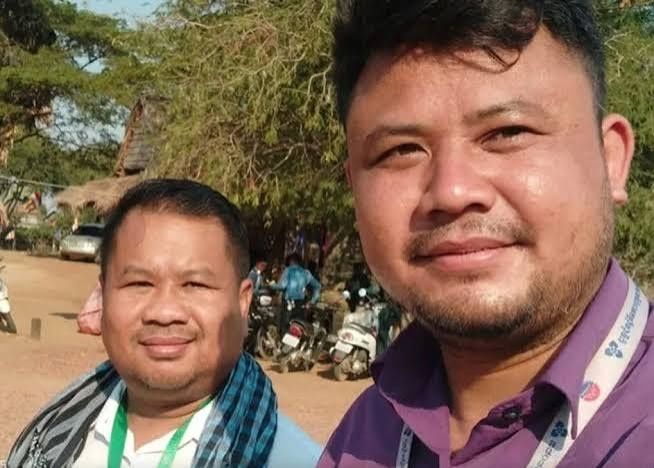
Cambodia's Supreme Court was set to hear arguments Thursday in a high-profile treason case involving two journalists whose conviction has intensified scrutiny of the kingdom's judicial independence and press freedoms. Phorn Sopheap of Battambang Post TV Online and Pheap Pheara of TSP 68 TV Online are appealing 14-year prison sentences handed down by a lower court in December, following their arrests last July as they returned from border reporting assignments. Both men maintain they had authorisation to operate in the restricted military zone where they captured the disputed images, and they are asking the Supreme Court to overturn the guilty verdict entirely.
The photographs at the centre of the case touched a raw nerve between Cambodia and Thailand, particularly one image documenting land mines that was subsequently circulated by Thai media outlets. That picture became pivotal evidence in Thailand's assertions that Cambodia had recently deployed mines along their contested frontier, contributing to injuries sustained by Thai military patrols. Cambodia's government categorically rejected such allegations, insisting it honours international conventions prohibiting land mines and attributing any mines found to unexploded ordnance remaining from the country's brutal civil conflict, which concluded in the late 1990s.
The border tensions that prompted the journalists' reporting expedition escalated dramatically across 2024, with major clashes erupting in both July and December. These skirmishes displaced hundreds of thousands of civilians on both sides of the frontier and resulted in approximately 100 fatalities among military personnel and civilians. A ceasefire agreed in December has largely held, though the underlying hostilities remain unresolved and the political atmosphere remains fraught with suspicion.
The journalists were formally charged with treason under a provision criminalising the supply of sensitive defence information to foreign nations. Siem Reap Provincial Court upheld this interpretation when it rendered its guilty verdict in December, and a lower appellate panel affirmed the conviction in March, leaving the Supreme Court as the final venue for legal recourse. International and domestic journalism organisations have rallied to their defence, with more than a dozen press freedom groups issuing a joint statement urging the government to abandon prosecution, arguing the charges represent an abuse of vague national security statutes to suppress legitimate reporting.
The timing of the Supreme Court's decision carries additional significance. Just days earlier, the same court upheld an incitement conviction against Rong Chhun, a 56-year-old opposition politician prosecuted for meeting with villagers displaced by government development schemes. That ruling reignited a broader conversation about whether Cambodia's courts genuinely operate with autonomy or function as extensions of executive power. Human Rights Watch characterised the Rong Chhun decision as evidence of the judiciary's lack of separation from the ruling Cambodian People's Party, a claim the government dismissed as unfounded, asserting the Supreme Court operates with full independence.
Cambodia's press environment reflects this trajectory. The Committee to Protect Journalists has explicitly accused the Cambodian authorities of weaponising vague national security legislation to criminalise routine journalism, specifically citing the cases of Pheap Pheara and Phorn Sopheap as emblematic of this troubling pattern. In the 2025 Reporters Without Borders World Press Freedom Index, Cambodia ranked 161st out of 180 nations and territories surveyed, placing it among states where press freedom conditions are classified as "very serious." This positioning underscores the country's isolation among regional peers and its trajectory toward greater restrictions on information flow and public discourse.
The broader context illuminates why this particular case resonates beyond Cambodia's borders. Under former Prime Minister Hun Sen, who ruled for nearly four decades until August 2023, the kingdom became synonymous with authoritarian governance, systematic suppression of dissent, and chronic human rights violations. Hun Sen's successor, his American-educated son Hun Manet, initially suggested possible reforms and a softer approach to governance. However, nine months into his tenure, few meaningful changes have emerged in practice, and legal proceedings against journalists and opposition figures have continued unabated, suggesting institutional momentum toward repression persists regardless of leadership transitions.
For Malaysia and other Southeast Asian democracies, Cambodia's handling of press freedom and judicial independence serves as a cautionary example. The region's journalists and media outlets, many of which maintain bureaus or correspondents in Cambodia, watch closely how neighbouring governments treat their peers' right to report freely. The willingness of Cambodian authorities to prosecute reporters for documenting military activities—even when those reports contain information the government disputes—sends a chilling signal about the costs of investigative journalism across the region.
The Supreme Court's decision will likely reflect whether Hun Manet's administration intends to chart a genuinely different course on human rights and freedoms, or whether Cambodia will entrench the institutional patterns established by his predecessor. A ruling upholding the convictions would signal continuity with Hun Sen's approach and provide further evidence supporting allegations that Cambodia's judiciary lacks meaningful independence from political pressure. Conversely, overturning the convictions would constitute a significant departure and offer nascent hope that legal and institutional reform remains possible under the new leadership.

