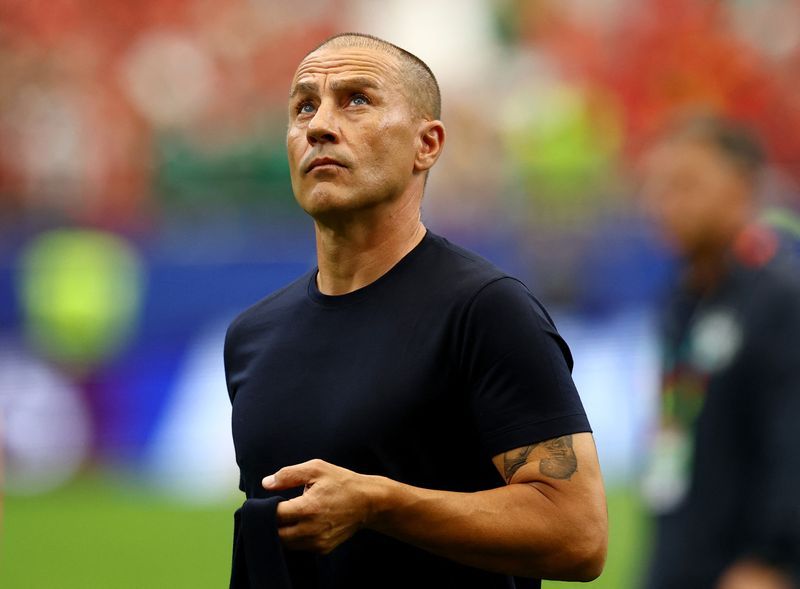
Uzbekistan's maiden World Cup campaign has taken a devastating turn following their 5-0 thrashing at the hands of Portugal in Houston on Tuesday, though manager Fabio Cannavaro has moved swiftly to shield his players from criticism by absorbing all accountability for the debacle himself. The Italian tactician, whose résumé includes winning football's greatest prize with Italy in 2006, delivered an unusually frank assessment of his own performance rather than deflecting onto his squad, insisting that strategic errors and tactical missteps originated from the dugout rather than the pitch.
Cannavaro's willingness to accept personal responsibility contrasts sharply with the magnitude of the defeat and signals a determined effort to maintain morale within a squad confronting the harsh realities of elite-level international football. Speaking to reporters in the aftermath of the loss, he acknowledged that any culpability for the scoreline rested squarely with his decisions and preparation, not with individual players who had given their maximum effort throughout the contest. This measured approach reflects his experience navigating high-pressure scenarios across his career as both a decorated centre-back and increasingly seasoned coach.
Uzbekistan's tournament position has become precarious following this second consecutive defeat, adding to the 3-1 loss sustained against Colombia in their opening fixture. With only a fixture against the Democratic Republic of Congo remaining on Saturday, the Central Asian nation now faces an uphill mathematical battle to progress beyond the group stage. Victory in that final encounter represents their sole pathway towards salvaging a place in the round-of-32, though their goal-difference deficit and recent form suggest the odds remain heavily stacked against them in their debut World Cup appearance.
The coach revealed that a controversial disallowed goal by midfielder Azizjon Ganiev, which would have made the score 2-0, profoundly impacted his team's psychological state during the match. Cannavaro indicated that the decision to rule out Ganiev's strike for an infraction in the build-up proved a turning point that visibly deflated Uzbekistan's confidence and tactical structure. Rather than recover from this setback, the team subsequently conceded further goals, suggesting that the psychological blow compounded what were already challenging circumstances against a superior Portuguese outfit.
Cannavaro emphasised that his primary mission as manager involves nurturing his players' development and fostering the self-belief required to compete at international level, even when results are unfavourable. He stressed the importance of maintaining confidence within the squad by accepting mistakes as inevitable aspects of their learning curve, rather than establishing a blame culture that might inhibit their willingness to take creative risks and express themselves on the field. This philosophy underscores his commitment to building a foundation for Uzbekistan's long-term World Cup project beyond the immediate tournament.
The disallowed goal incident assumed particular significance given Uzbekistan's initial tactical approach, which mirrored the relatively bold and structured framework they had deployed against Colombia despite that match also ending in defeat. Cannavaro noted that his team had begun executing his instructions with encouraging intensity and positional discipline, suggesting that the overturned goal represented not merely a refereeing decision but a psychological inflection point from which recovery proved impossible. The manner in which the team subsequently unravelled indicated fragility under pressure rather than fundamental tactical deficiencies.
Cannavaro's insistence on maintaining belief despite mathematically dire circumstances reflects a coach determined to extract maximum value from what appears destined to be an early tournament exit. He communicated to his players that errors and unsuccessful passes should not deter them from pursuing their attacking ambitions, emphasising that growth as both individual athletes and as a collective unit emerges through adversity rather than through comfortable victories. This messaging carries particular weight for a squad experiencing World Cup football for the first time and lacking the accumulated experience that might enable weathering such defeats with greater equilibrium.
The strategic framework Cannavaro advocated for his team centred on courage and positive expression rather than defensive conservatism or fear-based football. He argued that adopting a cautious mentality and excessive caution would inevitably result in defeats anyway, whereas pursuing an attacking and committed approach at least provided the foundation for genuine improvement and learning. This philosophy distinguishes his tenure from previous Uzbek coaching regimes and signals an intent to establish a particular footballing identity regardless of immediate results.
Uzbekistan's World Cup debut, despite the disappointing outcomes, positions the nation prominently within the growing footballing landscape of Central Asia. The experience, however painful in the short term, provides invaluable exposure for younger players and establishes infrastructure for future qualification campaigns. Cannavaro's presence and willingness to take personal responsibility for setbacks rather than abandoning the project positions Uzbekistan favourably for consolidating their emerging status as a legitimate World Cup participant, even as this particular tournament appears destined to conclude prematurely for the team.

