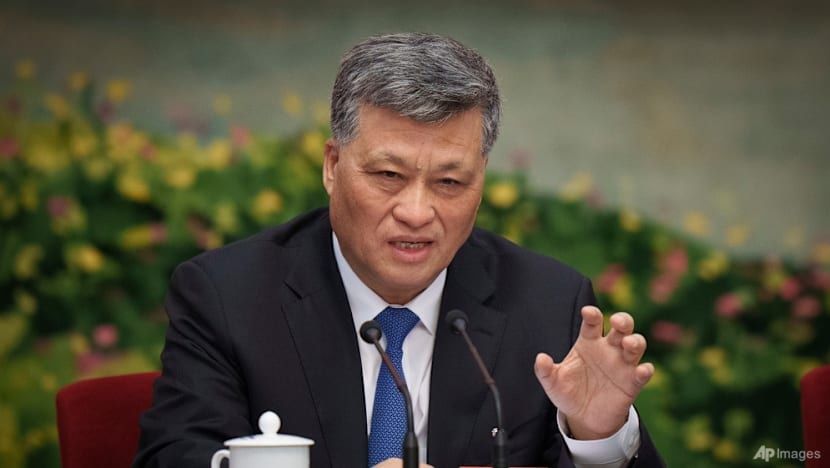
Beijing has taken decisive action against Ma Xingrui, removing the 66-year-old former Xinjiang administrator from the Communist Party and stripping him of all official positions following an anti-corruption inquiry. The expulsion marks a significant disciplinary measure within China's highest echelons of power, as Ma held membership in the Politburo, the party's elite policy-making council that functions as the ultimate authority under President Xi Jinping's leadership.
The Politburo formally reviewed and approved findings from the party's central discipline commission after Ma fell under investigation in April, according to state media accounts. The allegations against him reveal a pattern of misconduct that extends across personal enrichment, abuse of official authority, and moral violations. Xinhua's account documents that Ma facilitated his family members' acquisition of residential properties at prices substantially below market rates, exploiting his official standing to secure financial advantages that would have been unavailable to ordinary citizens.
Beyond property dealings, the investigation uncovered transactional sexual relationships involving both coercion through his position and financial inducement, categorised within Chinese anti-corruption terminology as "power-for-sex" and "money-for-sex" arrangements. His immediate family members leveraged his political influence to accumulate substantial private wealth, a pattern authorities characterised as particularly egregious. The disciplinary commission further detailed how Ma orchestrated benefits for business associates across operational decisions, infrastructure contracting awards, and personnel promotions, while simultaneously accepting bribes in monetary and material forms on a substantial scale.
Ma's tenure governing Xinjiang spanned a critical four-year period from 2021 through 2025, positioning him at the centre of China's most sensitive and heavily scrutinised regional administration. The northwestern territory has endured intense international controversy surrounding Beijing's security policies, particularly regarding its approach to the Uyghur Muslim population and broader ethnic minorities. This timing renders his removal notable from both domestic governance and international relations perspectives, as Xinjiang remains an area of sustained geopolitical tension.
The region's recent history includes sporadic but deadly civilian attacks that Beijing attributed to Islamist separatist networks, particularly in the mid-2010s period. These incidents provided the initial justification for what would become an expansive security framework. Over the succeeding decade, Chinese authorities implemented a comprehensive counterterrorism and counter-extremism programme affecting the entire population, with particular intensity directed toward Uyghur communities. The security apparatus has encompassed surveillance infrastructure, detention facilities, and administrative controls on daily life that international observers have scrutinised with growing alarm.
The international human rights community has mounted sustained criticism of these policies. Most prominently, a 2022 investigative report by Michelle Bachelet, who served as United Nations high commissioner for human rights, documented evidence suggesting potential violations rising to the threshold of crimes against humanity. The report represented an unprecedented moment of institutional international scrutiny, though China has consistently rejected such characterisations and defended its policies as necessary security measures responding to genuine terrorist threats.
Ma's expulsion occurs within the broader context of Xi Jinping's sustained anti-corruption campaign, which has functioned simultaneously as a mechanism for consolidating power and eliminating potential rivals within the party apparatus. Since assuming leadership, Xi has systematically targeted officials across regional administrations and central ministries, framing the effort as essential institutional cleansing. The consistency with which high-ranking officials face removal on corruption charges has created an environment where vulnerability to investigation affects even the most senior figures.
For Southeast Asian observers, Ma's case carries implications regarding how Beijing manages its regional governance and the stability of senior appointments affecting cross-border relations. Xinjiang's geographic position adjacent to several Central Asian nations and its role in China's Belt and Road Initiative infrastructure programmes means that administrative upheaval in the region can influence bilateral relationships and investment flows. The removal of an experienced administrator creates questions about transition planning and policy continuity affecting neighbouring economies.
The emphasis on sexual misconduct allegations in official media coverage reflects evolving standards within party discipline procedures, which increasingly emphasise moral conduct alongside financial irregularities. This represents a departure from earlier anti-corruption campaigns that focused primarily on economic crimes. The explicit detailing of sexual transgressions suggests authorities view such conduct as incompatible with party membership regardless of economic dimensions, reflecting broader shifts in party disciplinary standards.
Ma's case also demonstrates the vulnerability of regional powerbrokers despite their Politburo status, indicating that senior position offers limited insulation from investigation when authorities decide to proceed. His removal sends signals throughout the administrative hierarchy regarding expected conduct standards and the consequences of transgression. For foreign observers seeking to understand elite Chinese politics, the expulsion illustrates how institutional anti-corruption mechanisms operate at the highest levels, though questions persist regarding whether such actions serve genuine accountability or primarily advance factional interests within the party's competitive structure.

