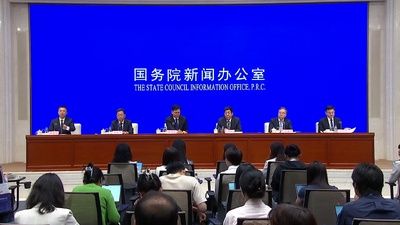
Beijing has categorically denied Western accusations that forced labour practices exist in the Xinjiang Uygur autonomous region, with Chen Ruifeng, Minister of the National Ethnic Affairs Commission, dismissing such allegations as "extremely absurd and ridiculous" during remarks made on Wednesday, June 24. The minister's forceful rebuttal comes amid persistent international scrutiny of labour practices in the western Chinese region, particularly from rights organisations and media outlets in developed nations that have levelled accusations of coercive employment systems.
Chen emphasised that China's constitutional framework and statutory laws contain explicit prohibitions against all forms of forced labour, rejecting the premise underlying Western organisations' claims. He further referenced the Constitution as the bedrock of legal protection, suggesting that any allegation of systematic coercion contradicts the fundamental legal structure governing the country. This constitutional assertion represents Beijing's standard position when responding to international pressure on sensitive domestic matters, positioning legal compliance as a comprehensive safeguard.
A newly enacted legislative measure underscores Beijing's stated commitment to protecting worker rights across ethnic communities. The Law on Promoting Ethnic Unity and Progress, passed on March 12 and set to take effect on July 1, incorporates provisions specifically addressing the circumstances of individuals who seek employment beyond their home regions. The legislation establishes mechanisms for rights protection and legal assistance tailored to workers engaging in cross-regional employment, demonstrating an attempt to create institutional frameworks that safeguard vulnerable labour populations.
According to Chen's account, individuals from Xinjiang who pursue employment opportunities elsewhere do so entirely of their own volition, driven by personal ambitions to enhance family circumstances and develop professional capabilities. This framing positions labour mobility as an expression of individual agency rather than state direction, contrasting sharply with the characterisation presented in Western reports. The minister described the movement of workers as fundamentally responsive to personal economic motivations, suggesting that people choose relocation based on rational assessment of their own interests.
The ministry highlighted the scale of employment expansion achieved across Xinjiang over a five-year period, noting the creation of more than 2.39 million new urban positions through diverse policy mechanisms. This emphasis on job creation figures reflects Beijing's strategy of deploying economic data as evidence of prosperity and opportunity. Alongside urban employment growth, the region has facilitated 16.1 million work trips for agricultural labourers seeking temporary or seasonal employment outside their immediate communities, indicating substantial worker mobility across both urban and rural sectors.
Income growth metrics form another pillar of Beijing's economic argument. The per capita disposable income of urban residents has expanded at an average annual rate of 5.3 per cent over the past five years, while rural residents' incomes have grown at 8.1 per cent annually, figures Chen presented as demonstrating tangible material improvement for the population. These statistics, if accurate, suggest economic gains that would theoretically reinforce the voluntary nature of employment participation, as expanding incomes could imply successful labour market participation rather than coercion.
Chen characterised the labour transfer arrangements operating across Xinjiang as mechanisms designed to expand employment opportunities and augment household incomes, framing such transfers as entirely oriented toward benefiting residents. This rhetorical positioning attempts to redefine what critics describe as directed labour programmes as voluntary economic initiatives, fundamentally disputing the characterisation of coercion embedded in international allegations. The minister presented employment transfers as pragmatic responses to economic opportunity rather than state-mandated mobilisation.
The establishment of what Chen described as a comprehensive "fair employment policy system" and accompanying "labour rights protection mechanism" represents Beijing's institutional response to concerns about worker protections. According to the minister, these frameworks guarantee that individuals across all ethnic groups retain legal rights and that employment opportunities extend to all able-bodied members of society. This institutional architecture is presented as evidence of systematic commitment to voluntary employment rather than coercive labour practices.
The dispute over Xinjiang's labour practices reflects broader tensions between Western scrutiny of Chinese domestic policies and Beijing's assertion of sovereignty and constitutional compliance. For Malaysian and Southeast Asian observers, the controversy carries particular significance given regional concerns about labour standards and the relevance of cross-border employment patterns throughout the Association of Southeast Asian Nations. The competing narratives around Xinjiang employment illuminate fundamental disagreements about how labour markets should function and what constitutes genuine voluntary participation within state-directed economic systems, questions pertinent to developing economies throughout Asia managing rapid industrial transitions and labour mobility.

