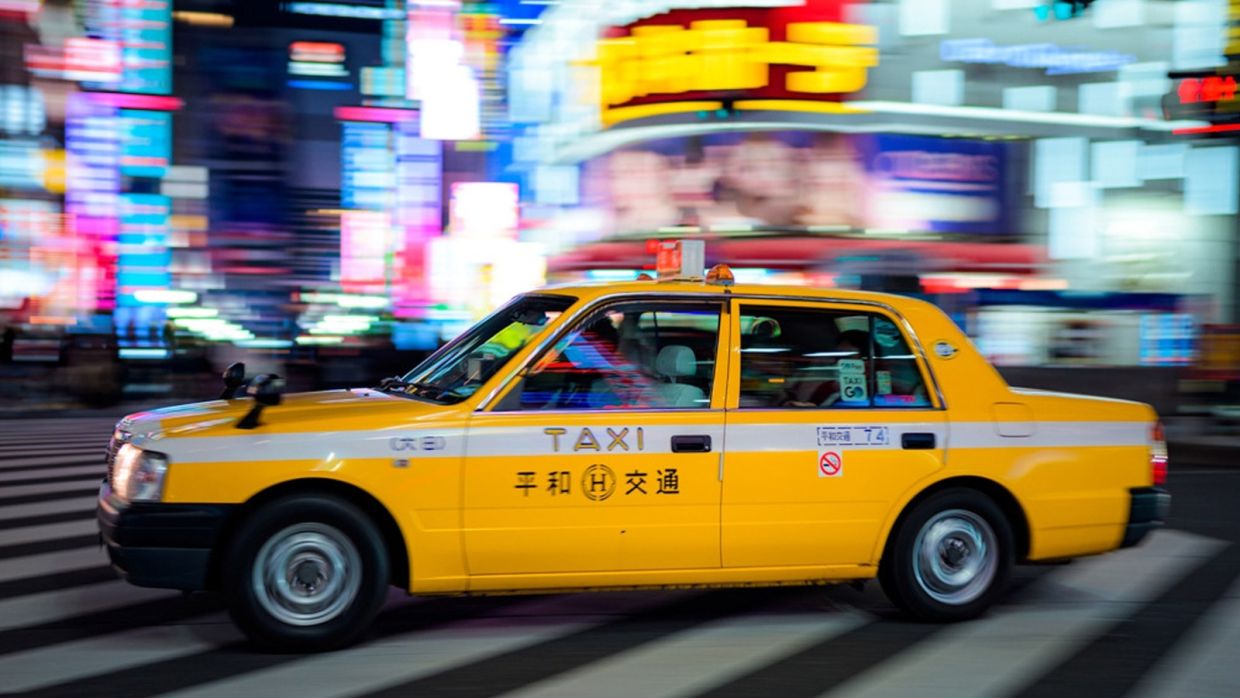
A 41-year-old Chinese national has been arrested in Tokyo on suspicion of orchestrating an illegal taxi service that systematically transported tourists while circumventing Japan's strict transportation regulations. Wang Xiaoyu stands accused of breaching the Road Transportation Act by leasing vehicles registered to Phoenix Kokusai, a chauffeur service company that he effectively controlled, to individuals who were not employees and then deployed them to offer ride services to visitors. The scheme operated between February and April of this year, with police alleging that Wang collected approximately 38 million yen—equivalent to around 233,000 US dollars—from 18 drivers who paid fees in exchange for using the company's credentials to operate what amounted to unlicensed taxis.
The Tokyo Metropolitan Police Department launched their investigation following mounting complaints from licensed taxi operators, who reported witnessing urban hire vehicles illegally soliciting passengers directly at Haneda Airport, Tokyo's primary international gateway. This brazen conduct at one of Asia's busiest travel hubs exposed a vulnerability in Japan's transportation regulatory framework that has become increasingly exploited as tourist arrivals surge across the country. The illegal activities specifically targeted Chinese tourists and other visitors, leveraging linguistic and cultural connections to build a client base that relied on informal networks rather than official booking channels.
At the core of this operation lies Japan's urban hire vehicle category, a transportation classification introduced in 2014 as a regulatory middle ground between traditional taxis and casual ridesharing. These vehicles are distinguished by green licence plates, a visual marker intended to identify legitimate commercial transportation. However, the Road Transportation Act stipulates that urban hire services operate under strict conditions: customers must reserve transportation in advance, and all engagements require formal charter contracts with a minimum duration of two hours. This framework was designed to maintain standards and protect consumer safety while accommodating emerging transportation models. Yet the regulatory system contains inherent weaknesses that opportunistic operators like Wang exploited with relative ease.
The vulnerability centres on the green licence plate system itself, which law enforcement agencies have long recognised as susceptible to abuse. Officials acknowledge that these plates are so easily exploitable that distinguishing between legitimate and illegal operations through visual inspection alone proves nearly impossible. A green-plated vehicle parked at an airport terminal or cruising near a train station offers no obvious indication whether it is genuinely operating under proper contracts or functioning as an unlicensed taxi. This opacity creates space for entrepreneurs willing to circumvent regulations by lending vehicles to drivers who then operate them as conventional taxis, undercutting licensed competitors and generating substantial cash flows.
Wang's operation appears to have been systematic and financially lucrative. Between November 2024 and May 2026, police believe he functioned as a middleman, collecting service fees from drivers who sought to operate taxis without obtaining proper licences. The drivers, all Chinese nationals, would use the Phoenix Kokusai corporate name and green plates as cover, transforming ordinary commercial vehicles into de facto unlicensed cabs. Each driver paid fees to Wang for this arrangement, creating a business model that required minimal capital investment beyond the initial vehicle leases while generating substantial returns. Three of the drivers involved in the scheme have also been arrested and face charges under the Road Transportation Act.
Wang has partially disputed the allegations against him, suggesting that the prosecution's case may face some complexity in proving his direct operational control and knowledge of how vehicles were being deployed. Nevertheless, the evidence accumulated by Tokyo police—including the pattern of complaints, the systematic fee collection, and his managerial role at Phoenix Kokusai—presents a compelling narrative of deliberate regulatory evasion. His arrest represents a significant enforcement action against tourism-related transportation fraud, a category of crime that has become increasingly visible as Japan experiences record visitor numbers.
The expansion of urban hire vehicles reflects broader trends in Japan's transportation sector responding to tourism growth. Ministry of Land, Infrastructure, Transport and Tourism data reveals the registered urban hire fleet nearly tripled from 3,868 vehicles in fiscal 2013 to 8,850 in fiscal 2024. This expansion occurred alongside Japan's concerted efforts to boost inbound tourism, which has generated extraordinary economic benefits but also created regulatory challenges. The proliferation of transportation options, combined with regulatory ambiguities and weak enforcement capacity, has created fertile conditions for schemes like Wang's. Licensed taxi operators, facing revenue pressures from both legitimate competition and illegal alternatives, initiated complaints that ultimately triggered the police investigation.
For Malaysian and Southeast Asian readers, this case illustrates how rapid tourism growth can outpace regulatory capacity, particularly in transportation sectors where multiple legal categories exist. The urban hire category was intended as a modern regulatory approach, yet it has become a loophole exploited by operators who recognise that authorities struggle to monitor compliance in real-time. Wang's arrest signals Tokyo's determination to address these violations, but the underlying systemic vulnerabilities remain. The ease with which he allegedly collected millions in fees suggests that similar operations may persist elsewhere in Japan and potentially across the region's major tourist destinations.
The incident also highlights the role of informal immigrant communities in facilitating transnational commerce, both legitimate and unlawful. Wang's ability to recruit Chinese drivers and target Chinese tourists leveraged cultural and linguistic connections that enabled rapid scaling of his operation. This dimension reflects broader patterns of how migrant networks sometimes facilitate regulatory arbitrage, particularly in service sectors where consumers value convenience and cultural familiarity. The Tokyo case demonstrates that authorities must develop more sophisticated monitoring tools and international cooperation mechanisms to address such activities, particularly as tourism recovers and intensifies across Asia.
Looking forward, the Wang case will likely prompt Japan's transportation regulators to examine whether urban hire regulations require tightening. Potential reforms might include enhanced background checks for corporate operators, more rigorous vehicle monitoring systems, and stronger penalties for regulatory violations. The case also suggests that licensing systems in tourist-dependent economies must anticipate that regulatory gaps—whether technical or enforcement-related—will be systematically exploited by profit-motivated actors. For Malaysia and other Southeast Asian nations experiencing tourism booms, the Tokyo case offers cautionary lessons about the importance of building regulatory capacity proportionate to growth in tourist arrivals.

