Malaysia's Deputy Communications Minister Teo Nie Ching has issued a pointed reminder to government officials and the broader public sector that inflammatory and disrespectful language has no place in official communications, whether during election periods or in routine governance. Speaking in Putrajaya on June 15, Teo emphasised that public statements demand a level of professionalism and sensitivity that goes beyond mere factual accuracy, extending to the tone and implications of how messages are conveyed to the Malaysian public.
The deputy minister's advisory specifically addresses the need for officials to steer clear of remarks that could trigger sensitivities around Malaysia's three traditionally sensitive pillars: race, religion, and royalty. Collectively known as 3R issues, these matters sit at the heart of Malaysia's constitutional framework and social compact. The caution reflects a broader government concern about the potential for divisive language to undermine social cohesion, particularly in an era where public statements can rapidly amplify across digital platforms and reach far wider audiences than traditional media channels would allow.
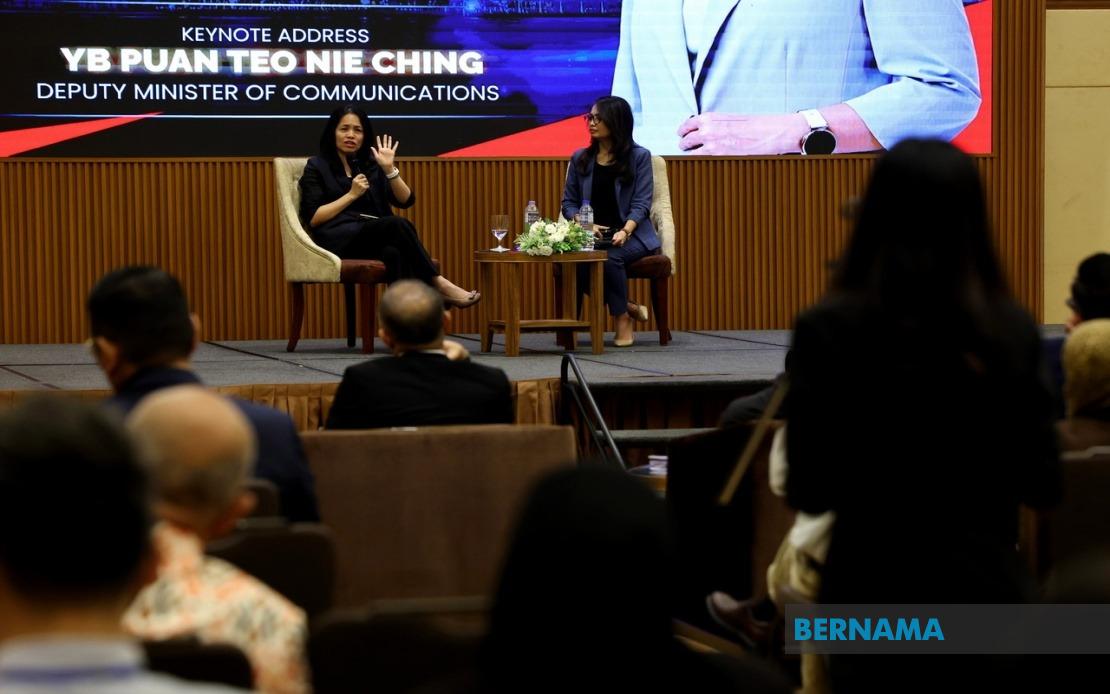
Teo's comments came as she addressed a professional development forum focused on responsible journalism practices in an increasingly fast-paced media environment. The timing and venue of her remarks—an industry dialogue centred on balancing viral content with journalistic responsibility—suggest the government views the challenge of measured public discourse as a shared responsibility between government communicators and the media institutions that amplify their messages. This framing acknowledges that both sectors must work together to maintain public trust while avoiding the pitfalls of sensationalism or incendiary rhetoric.
The deputy minister's intervention follows scrutiny directed at Mohd Hisyamuddin Ghazali, who recently assumed the position of director-general at the Department of Community Communications, commonly known as J-KOM. Since taking office on June 9, replacing predecessor Datuk Ismail Yusop, Mohd Hisyamuddin has reportedly faced criticism over language used in various public communications. The allegations suggest that some of his statements may have strayed into territory that could be perceived as insensitive or disrespectful, whether intentionally or through careless phrasing.
J-KOM occupies a critical position within Malaysia's government communications apparatus. As the primary agency responsible for crafting and disseminating official messaging across multiple platforms, the department's director-general serves as a key figure in shaping how the government communicates with citizens. The quality and tone of statements emanating from this office therefore carry amplified significance, potentially setting the standard for communication standards across other agencies and departments. When criticism emerges about language used by such a high-profile official, it raises broader questions about institutional culture and accountability within government communications.
Teo indicated that she has not yet personally engaged with Mohd Hisyamuddin to discuss her concerns, suggesting that her public statement serves partly as a preliminary signal of expected standards. This approach—communicating expectations through media comments rather than private channels—carries its own message about the seriousness with which the government views the matter. The deputy minister's public framing allows her to address not just the individual director-general but to reinforce broader norms across the civil service regarding appropriate professional conduct in a communications role.
The emphasis on avoiding 3R sensitivities extends beyond mere legal compliance with constitutional provisions protecting these areas. Malaysia's experience with communal tensions and the high stakes involved in managing discussions around race, religion, and institutions of state have created a cultural understanding that even inadvertent remarks touching on these themes require particular care. Government officials, whose words carry the weight of state authority, operate under especially stringent expectations in this regard. A casual comment by a private citizen might generate limited concern, but identical language from a senior government communicator carries vastly different implications for national discourse and community relations.
The broader context for Teo's warning reflects ongoing concerns about the quality of public discourse in Malaysia during a period marked by intense political competition and rapid technological change. Social media platforms have fundamentally altered how official statements reach audiences, removing traditional editorial filters and creating opportunities for misinterpretation or weaponisation of careless language. Government communicators must now operate with awareness that their words can be instantly shared, screenshotted, recontextualised, and amplified in ways that earlier generations of civil servants never faced. This evolving communications landscape demands not merely accuracy but genuine sensitivity to how statements might be received and interpreted across diverse constituencies.
Teo's call for restraint also implicitly acknowledges the tension between free expression and social responsibility. While she is not suggesting that civil servants should self-censor legitimate viewpoints, her framing emphasises that certain topics demand heightened awareness and careful language choices. The distinction between discussing an issue substantively and using inflammatory framing remains central to this concern. Officials can address legitimate policy matters touching on any topic while maintaining standards of professionalism that demonstrate respect for different communities and constituencies.
Moving forward, Teo's public intervention may prompt broader institutional reflection within J-KOM and other government agencies about communication standards and training. Whether formal directives emerge regarding language expectations or whether the matter resolves through informal consultation remains to be seen. However, the deputy minister's public stance signals that the government takes seriously how its officials present themselves to the public. For Malaysian civil servants across all departments, the message is unambiguous: the era of government communication without guardrails has passed, replaced by expectations of professionalism that extend to the careful selection of language, particularly on matters touching Malaysia's delicate social and institutional sensitivities.