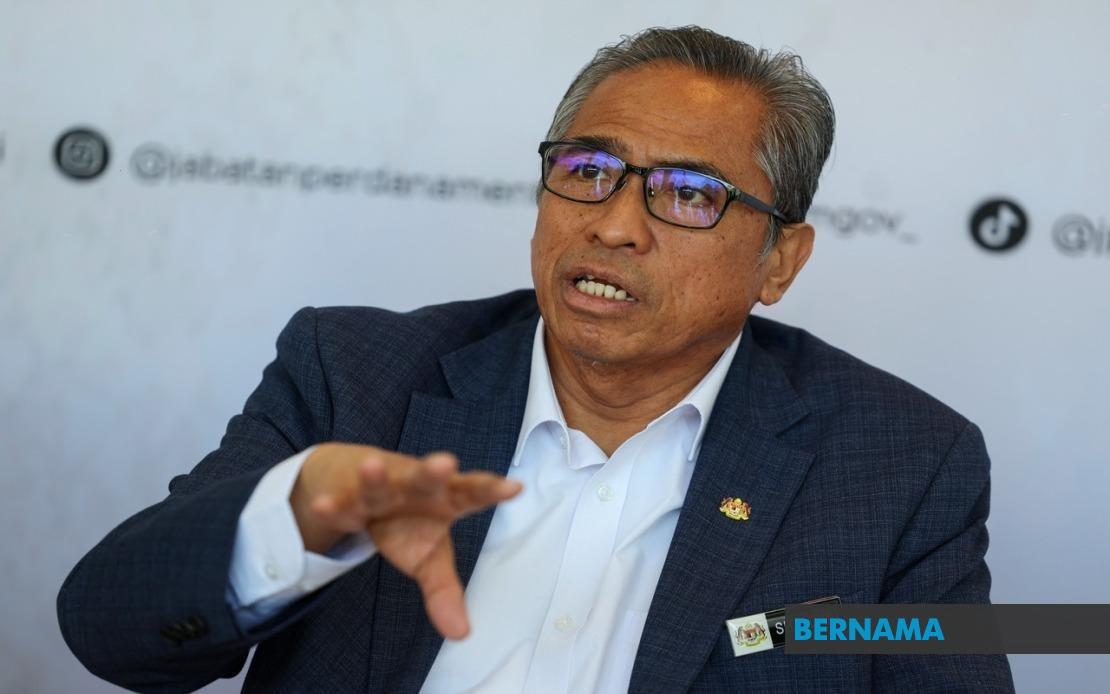
The machinery of government cannot afford to remain passive observers of Malaysia's increasingly active role on the world stage. Instead, Tan Sri Shamsul Azri Abu Bakar, the Chief Secretary to the Government, has called upon the entire public service to become active participants in converting the nation's diplomatic achievements into concrete economic gains that reach ordinary Malaysians. Speaking in Kuala Lumpur, he framed the civil service as the critical link between high-level statecraft and ground-level implementation, emphasizing that strategic positioning alone is insufficient without institutional follow-through.
Prime Minister Datuk Seri Anwar Ibrahim's recent working visits to Russia and Turkmenistan represent more than symbolic gestures or relationship-building exercises. According to Shamsul Azri, these missions have repositioned Malaysia within the complex geopolitical and economic systems that will shape regional prosperity over the coming years. The diplomatic approach adopted demonstrates an intentional strategy to identify emerging markets and deepen engagement with established trading partners, moves that carry particular significance given Malaysia's historical reliance on a narrow range of trade relationships. The Chief Secretary's message suggests that the government views these visits not as isolated foreign policy achievements but as catalysts for a broader recalibration of Malaysia's economic orientation.
However, diplomatic success and economic reality operate in different registers, a tension the Chief Secretary directly addressed. The vision articulated by Malaysia's political leadership—one that positions the country as a strategic actor in a rapidly shifting global order—requires institutional capacity that cannot be assumed to exist automatically. Government officials working in trade, investment, and economic regulation must undergo a fundamental shift in mindset and operational tempo. This extends beyond traditional competencies in administrative management to encompass what Shamsul Azri termed a "global mindset," one that recognizes how decisions made in Kuala Lumpur must align with and respond to transformations occurring across multiple international markets simultaneously.
The Chief Secretary's emphasis on agility and continuous capacity-building reflects a recognition that Malaysia's bureaucracy has historically moved at a pace determined by local circumstances rather than international market rhythms. In an environment where investment decisions can shift rapidly and competing nations actively recruit foreign capital, sluggish response times translate directly into lost opportunities. Government ministries and agencies must internalize what Shamsul Azri described as the ability to "act with agility" and "establish strategic cooperation networks that go beyond conventional boundaries." This language suggests a deliberate departure from hierarchical, compartmentalized governance structures toward more fluid, responsive mechanisms that can operate at the speed demanded by international commerce.
Critical to this transformation is what the government frames as MADANI Diplomacy, a diplomatic philosophy presumably centered on dignity, stability, and shared prosperity. Rather than treating this as merely a foreign ministry concern, Shamsul Azri has positioned it as a guiding principle that should permeate all governance activities. Coupled with a "Whole-of-Government" approach, this framework envisages the entire state apparatus as an integrated unit working toward common objectives rather than a collection of siloed departments pursuing narrow mandates. For Malaysian readers familiar with bureaucratic fragmentation and inter-agency coordination challenges, this represents an ambitious reimagining of how government should function. The extent to which this vision translates into practical reforms will likely determine whether diplomatic gains materialize into economic outcomes.
The Ease of Doing Business initiative represents the most concrete manifestation of these principles. Malaysia has invested considerable effort in streamlining regulatory procedures and reducing impediments to entrepreneurship, yet remains in competition with other Southeast Asian nations offering comparable advantages. Shamsul Azri's insistence that government officials function as "investment facilitators" rather than gatekeepers suggests recognition that bureaucratic procedures often inadvertently obstruct rather than enable economic activity. Every international agreement negotiated at the diplomatic level requires subsequent implementation through dozens of administrative decisions and approvals. When these processes move slowly or inconsistently, foreign investors experience unpredictability that discourages long-term commitment. The Chief Secretary's framing positions the civil service as central to either enabling or frustrating Malaysia's attractiveness as an investment destination.
For Malaysia's position within the evolving Asian economic order, the stakes extend beyond individual investment projects. The Chief Secretary explicitly noted that the primary objective involves translating diplomatic and strategic achievements into "tangible benefits for the people," a formulation that moves the conversation beyond elite-level foreign relations toward distributional outcomes. This includes generation of high-income employment opportunities for Malaysians, security of commodity supply chains, and maintenance of competitive positioning in global markets. These objectives represent legitimate aspirations widely shared among the Malaysian public, yet their achievement requires that government officials actually possess the knowledge, networks, and institutional flexibility to execute them. A skills gap between diplomatic positioning and administrative capability would represent a critical vulnerability.
The reference to the Public Service Reform Agenda (ARPA) and its "internationalisation" enabler indicates that the government possesses a documented framework for the transformation Shamsul Azri is advocating. Rather than exhorting officials to change without institutional support, the existence of a formal reform agenda suggests accompanying training, recruitment strategies, and performance metrics. Whether implementation of ARPA has proceeded at adequate pace remains an open question, particularly given Malaysia's history of launching comprehensive reform initiatives that encounter implementation bottlenecks. The Chief Secretary's urgent tone in June 2024 suggests impatience with the pace of progress and a recognition that Malaysia's diplomatic opportunities have a time-limited character.
The emphasis on public servants developing "a global mindset and the capability to act as international-class strategic partners" carries particular implications for Malaysia's competitive position within Southeast Asia. Thailand, Vietnam, and Indonesia have each pursued different strategies for attracting foreign investment and developing global partnerships. Malaysia's traditional advantages in regulatory sophistication and institutional capacity face erosion as competitors upgrade their own systems. The civil service must therefore operate not merely at current international standards but must anticipate and exceed them. This forward-looking posture requires personnel who actively monitor developments in global commerce, understand how other nations structure their regulatory and investment environments, and can benchmark Malaysian performance against international best practice rather than merely local precedent.
The broader strategic implication involves Malaysia's role during a period of significant power redistribution in Asia. The working visits to Russia and Turkmenistan signal interest in relationships beyond the traditional Western-aligned posture that has characterized much of Malaysia's diplomatic orientation. These visits suggest a deliberate effort to develop diversified partnerships that provide economic and strategic flexibility. From a Southeast Asian perspective, Malaysia's success in pursuing this multi-alignment approach without alienating existing partners depends substantially on civilian institutional capacity to manage complex relationships simultaneously. The civil service must therefore develop expertise in navigating situations where different economic partners have competing interests and where decisions with one nation carry implications for others.
Implementation of Shamsul Azri's vision requires that recruitment, training, and promotion practices within the Malaysian civil service increasingly emphasize international experience, language capacity, and cross-cultural competency. Historical promotion criteria within Malaysia's bureaucracy have often prioritized seniority and technical credentials within narrow specializations. A genuinely transformed civil service would recognize that officers with demonstrated capacity to work effectively across national boundaries, languages, and business cultures represent essential assets. This raises questions about whether existing civil service compensation and career structures can retain talent against competition from private sector organizations and international bodies. Malaysia faces a particular challenge in retaining talented officials who develop expertise relevant to international engagement, as they become attractive to multinational corporations and international organizations operating throughout the region.
The Chief Secretary's call for the civil service to emulate MADANI Diplomacy's values suggests that governing effectively in an increasingly multipolar world requires not merely technical competence but also adherence to principles emphasizing dignity, sustainability, and equitable benefit distribution. This philosophical dimension distinguishes Malaysia's approach from purely transactional deal-making and positions the nation as committed to partnerships with mutual respect and shared prosperity. For the civil service, this translates into expecting officials to evaluate proposed investments and partnerships not solely on immediate financial metrics but also on broader impacts regarding employment quality, environmental sustainability, and technology transfer. This layered evaluation requires civil servants with both technical expertise and ethical grounding.
Ultimately, the Chief Secretary's message addresses a fundamental challenge confronting Malaysia as it attempts to elevate its position in global systems: the gap between strategic vision articulated at the highest political levels and organizational capacity to execute that vision across the sprawling machinery of government. Shamsul Azri's emphasis on civil service reform, capacity building, and institutional modernization acknowledges this gap explicitly and positions the bureaucracy as the essential site where diplomatic promise either translates into realized prosperity or dissipates through implementation failures. The months and years ahead will reveal whether the transformation he describes becomes embedded institutional practice or remains aspirational rhetoric.

