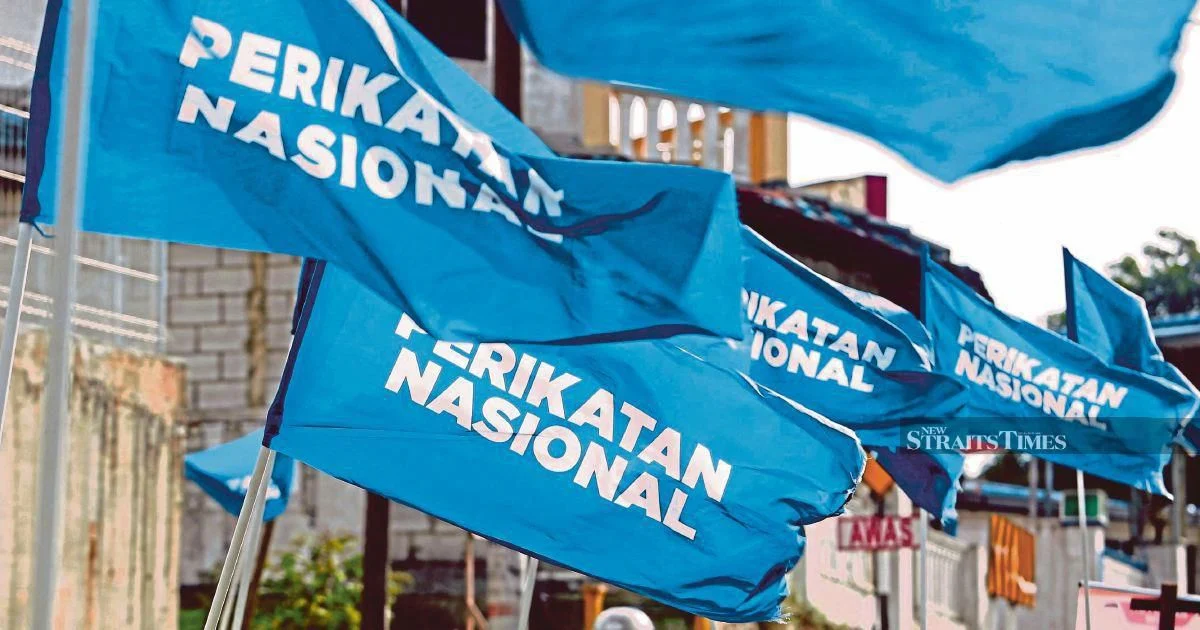
Divisions within the Perikatan Nasional coalition have intensified following disputes over which parties can legitimately use the bloc's official logo in electoral campaigns. The controversy surfaced in Kota Baru yesterday as PAS leadership publicly questioned whether Bersatu possesses the authority to display the PN emblem during canvassing operations for the forthcoming state elections scheduled in Johor and Negri Sembilan, signalling growing unease about the coalition's internal governance structures and decision-making processes.
According to PAS officials, the coalition's constitutional framework reserves logo authorisation exclusively to the chairman, a position that carries significant symbolic and practical weight within the alliance. This assertion reflects a broader concern that individual member parties may be circumventing established protocols to advance their own electoral interests, potentially fragmenting the unified image the bloc aims to project to voters. The timing of this dispute is particularly sensitive, as both states represent battlegrounds where PN's showing could influence the broader national political landscape and the coalition's bargaining position within the federal government.
The tension between PAS and Bersatu represents a deeper fault line within Perikatan Nasional that has periodically surfaced since the coalition's formation. Both parties bring substantial grassroots networks and voter bases to the partnership, yet their competing interests and organisational cultures have occasionally created friction over resource allocation, campaign strategy, and party autonomy. The logo dispute exemplifies how technical governance questions become proxies for more fundamental disagreements about coalition hierarchy and member-party equality within the structure.
Bersatu's apparent readiness to utilise the PN logo without explicit centralised approval suggests confidence in its standing within the coalition, or perhaps reflects calculation that electoral momentum in these states justifies independent action. The party has consistently positioned itself as a modernising force within PN, and its approach to branding decisions may reflect a broader willingness to operate with operational flexibility rather than rigid adherence to formal procedures. However, this stance directly contradicts PAS's understanding of how coalition governance should function, creating the potential for lasting discord.
For Malaysian voters in Johor and Negri Sembilan, these internal disagreements carry practical implications. Coalition coherence typically translates to clearer campaign messaging, unified candidate selection, and coordinated ground operations—advantages that fragmented coalitions struggle to maintain. If PN's constituent parties operate independently on matters like branding and campaign presentation, voters may receive conflicting signals about the coalition's actual unity and preparedness to govern, potentially undermining electoral appeal across both states.
The wider significance of this dispute extends beyond the immediate state contests. Perikatan Nasional entered federal government through the backdoor, with its MPs providing critical supply-and-demand support to Anwar Ibrahim's administration. The coalition's internal stability directly affects whether that arrangement remains tenable. If member parties cannot maintain coherence on basic procedural matters like logo usage, questions inevitably arise about their capacity to coordinate on substantive policy issues affecting national governance. The federal government's legislative agenda and ability to pass budgets and key legislation depends partly on PN's internal stability.
Historically, Malaysian coalitions have struggled with similar governance disputes, particularly during periods when different components pursued divergent strategies. The Barisan Nasional, despite decades of experience, faced recurring tensions over resource distribution and party autonomy that occasionally erupted into public disputes. Pakatan Harapan's relatively brief tenure illustrated how quickly governance frameworks can become contested when parties feel their contributions are undervalued or their prerogatives infringed. Perikatan Nasional, being newer and smaller, may lack the institutionalised mechanisms to absorb and manage such disagreements smoothly.
PAS's invocation of the chairman's authority represents an effort to reassert procedural governance and prevent a slide toward coalition factionalism. By emphasising the constitutional route through the chairman, PAS attempts to establish that coalition governance operates through established structures rather than through individual party initiative. This approach potentially strengthens the coalition's institutional framework, but only if other parties accept the authority structure and abide by its decisions. If Bersatu pushes back or proceeds with logo usage regardless, the dispute could escalate into a more serious constitutional challenge.
The resolution of this dispute will likely reveal the coalition's actual power dynamics. If the chairman's office moves decisively to enforce the established protocol, it signals that Perikatan Nasional possesses sufficient institutional strength to regulate member-party conduct. Conversely, if Bersatu proceeds without permission and faces no meaningful consequences, the ruling suggests that the coalition functions more as a loose alliance of independent operators than as a coherent political structure. Either outcome carries implications for how PN functions within federal government and the broader trajectory of Malaysian coalition politics.

