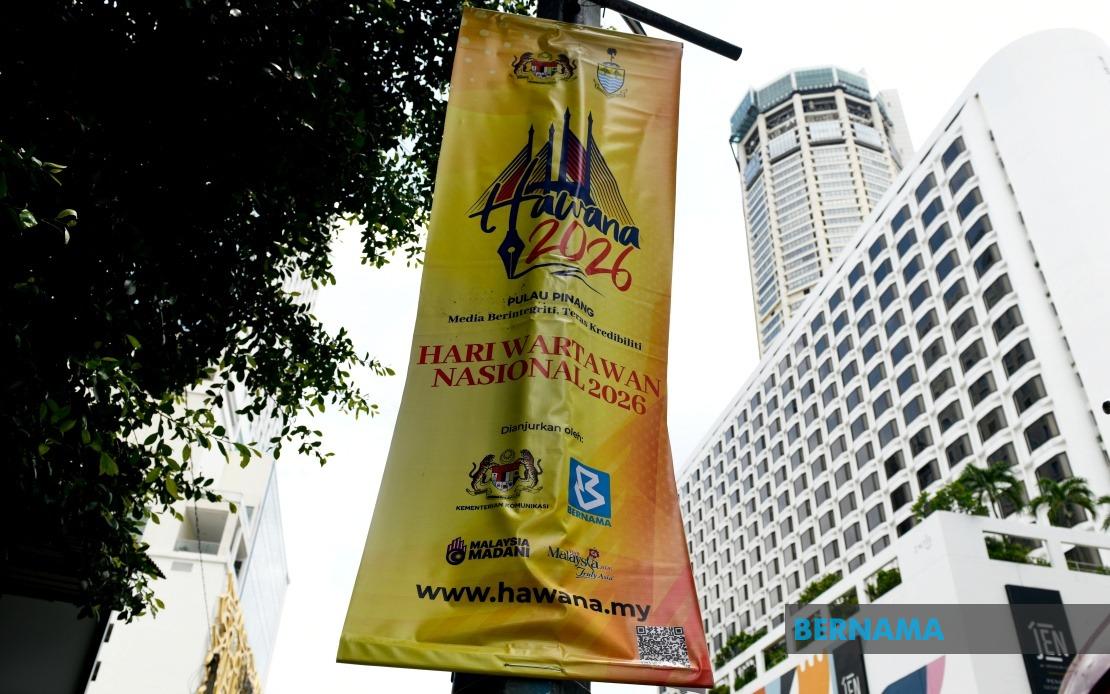
Communications Minister Datuk Fahmi Fadzil is in Penang for a two-day working visit anchored around the National Journalists' Day celebration, HAWANA 2026, which will culminate in a grand finale bringing together media professionals from across Malaysia and abroad. The minister's itinerary demonstrates the significance the government places on recognising the media sector's role in driving national progress and fostering public discourse on contemporary journalism challenges.
Fahmi began his visit by attending the Malaysia Media Retreat Programme 2.0 in Seberang Jaya on Thursday afternoon, establishing the professional tone for the government's engagement with media leadership. This was followed by a formal state dinner hosted by Penang Yang Dipertua Negeri Tun Ramli Ngah Talib, underscoring the collaborative relationship between federal and state administrations in honouring the contributions of journalists and media organisations. Such ceremonies are designed to reinforce government support for the media industry while providing opportunities for dialogue between policymakers and industry stakeholders.
The retreat programme serves a dual purpose: it demonstrates appreciation for the media's instrumental role in shaping national narratives and development discourse, while simultaneously creating networking opportunities for editors-in-chief and senior management from both domestic and international media organisations. This inclusive approach reflects growing recognition that Malaysia's media landscape increasingly operates within a globalised context, requiring sustained engagement between government, local newsrooms, and international communications players.
Fahmi's evening engagement at the RIUH Pi HAWANA Carnival extended the celebration beyond traditional journalism circles into the broader creative economy. Held at PICCA Convention Centre @ Butterworth Arena, the three-day carnival represents an innovative fusion of media industry recognition with celebration of Malaysia's creative sectors. By bringing together players from the creative industry, entrepreneurs, and residents of Penang, organisers positioned journalism not as a siloed profession but as part of the wider cultural and entrepreneurial ecosystem that contributes to national wealth creation.
The carnival programme itself reflects contemporary approaches to cultural engagement. Beyond traditional speeches and ceremonies, the event incorporated hands-on creative workshops including cyanotype printmaking, albumen printing, and stone-carving techniques, offering participants tangible insights into artistic production methods. This experiential dimension distinguishes HAWANA 2026 from conventional government recognition programmes, appealing to younger audiences and demonstrating that journalism operates within a broader landscape of creative expression and knowledge production.
The carnival's commercial dimension—featuring over 24 local creative product brands, 20 food and beverage vendors, and 16 stage performances by artists including Sakura Band, Kaka Azraff, Budak Nakal Hujung Simpang and Chelsea Ng—transforms the event into a community celebration. Offering free admission broadens accessibility and signals government commitment to making journalism recognition a public rather than insular affair. This approach aligns with recent global trends emphasising journalist engagement and media literacy at the community level.
On the second day, Fahmi's schedule maintained momentum through grassroots engagement. His participation in the Jiwa@Sembang Santai Special World Cup Edition programme at Seberang Jaya Public Market Food Court positioned the Communications Minister in a casual, accessible setting conducive to informal conversations with residents and journalists alike. Rather than confining ministerial engagement to formal conference halls, this venue choice democratises access to government leadership and demonstrates receptiveness to conversations occurring in ordinary community spaces.
The centrepiece of Fahmi's visit remains the HAWANA 2026 Grand Finale, scheduled to take place at PICCA Convention Centre @ Butterworth Arena under the theme "Media Integrity Strengthens Credibility." The expected attendance of approximately 1,000 media practitioners from Malaysia and abroad provides an unusually large platform for discussions about journalism's contemporary challenges and future directions. The presence of Prime Minister Datuk Seri Anwar Ibrahim as the officiating dignitary elevates the event's significance within Malaysia's political calendar, signalling that media sector development constitutes a priority concern for the highest levels of government.
The theme itself reflects pressing concerns across Southeast Asian journalism. Questions of media credibility and integrity have become increasingly fraught as digital platforms fragment information landscapes, misinformation spreads at unprecedented speeds, and public trust in institutions continues to fluctuate. By positioning integrity as central to journalism's role in a digital age, HAWANA 2026 acknowledges that the sector must evolve beyond traditional reporting practices to address structural challenges threatening journalistic authority and public confidence.
HAWANA, organised by the Ministry of Communications with the Malaysian National News Agency (Bernama) as implementing agent, represents the premier national platform for recognising journalism contributions. The event's annual staging reflects government commitment to institutionalising recognition of media professionalism within formal structures. However, the event also serves a broader strategic purpose: by convening large assemblies of journalists, editors, and international media representatives, it enables government engagement with professional standards-setters while monitoring evolving concerns within the sector.
For Malaysian journalists and media organisations, HAWANA 2026 offers validation at a moment when the profession faces multiple pressures: declining advertising revenue from digital transformation, audience fragmentation across social media platforms, and complex regulatory environments. International participation in the grand finale introduces comparative perspectives on how other democracies support journalism, potentially inspiring institutional innovations and best-practice exchanges that strengthen Malaysian media capacity.
Fahmi's two-day engagement demonstrates that government support for journalism extends beyond rhetorical affirmation to sustained institutional commitment. The curated schedule—blending formal recognition ceremonies, creative industry connections, grassroots engagement, and high-level policy dialogue—illustrates deliberate efforts to position journalism within broader narratives of creative economy development and democratic institutional health. As Malaysia navigates complex information environments and evolving media consumption patterns, such initiatives may shape journalism's trajectory across the region.

%22%2F%3E%3C%2Fpattern%3E%3C%2Fdefs%3E%3Crect%20width%3D%22100%25%22%20height%3D%22100%25%22%20fill%3D%22url(%23ph3xuh4g)%22%2F%3E%3Crect%20width%3D%22100%25%22%20height%3D%22100%25%22%20fill%3D%22url(%23ph3xuh4p)%22%2F%3E%3Ctext%20x%3D%2250%25%22%20y%3D%2250%25%22%20text-anchor%3D%22middle%22%20dominant-baseline%3D%22central%22%20fill%3D%22rgba(255%2C255%2C255%2C0.95)%22%20font-family%3D%22Georgia%2C%20'Times%20New%20Roman'%2C%20serif%22%20font-weight%3D%22700%22%20font-size%3D%22272%22%20letter-spacing%3D%22-0.02em%22%3EAnwar%3C%2Ftext%3E%3C%2Fsvg%3E)