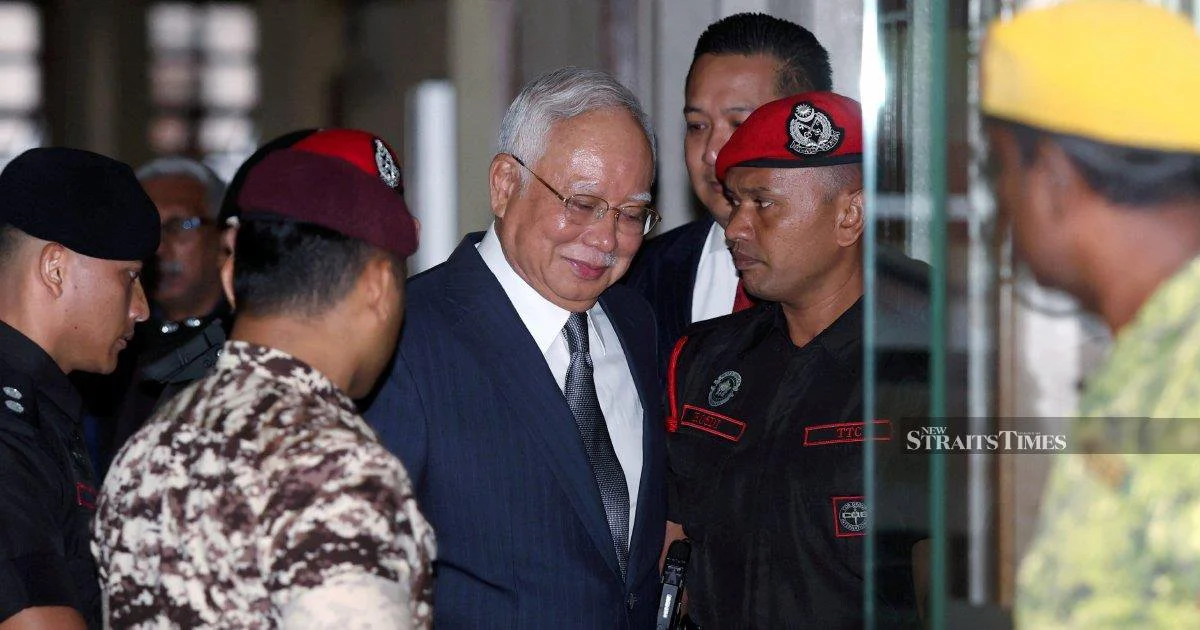
A judge has determined that Datuk Seri Najib Razak and fugitive businessman Low Taek Jho operated as coordinated partners in systematically extracting billions of ringgit from 1Malaysia Development Bhd (1MDB), the state investment vehicle that became synonymous with one of the globe's most significant financial scandals. The judicial finding establishes a direct operational link between Malaysia's former Prime Minister and the controversial financier who orchestrated much of the fund's misappropriation before fleeing the country.
The ruling represents a critical turning point in ongoing legal proceedings surrounding the sprawling corruption case that has captivated public attention since investigations commenced in 2015. Rather than characterising the relationship as one of passive knowledge or tacit approval, the court's assessment portrays an active, deliberately coordinated conspiracy in which both parties maintained consistent alignment toward a shared objective: transferring substantial portions of 1MDB's resources into private accounts and shell entities across international jurisdictions.
This judicial conclusion carries profound implications for the Malaysian legal system's approach to holding powerful political figures accountable for financial malfeasance. The determination that Najib functioned as a willing participant rather than a figurehead who was exploited by Jho Low establishes personal culpability, potentially strengthening the prosecution's position in pursuing convictions on related charges. The emphasis on coordinated action between the two men underscores that 1MDB's mismanagement was not incidental or isolated but rather followed a deliberate strategic blueprint.
Jho Low's absence from Malaysian territory for years has complicated the legal process, allowing him to evade direct accountability while investigators and prosecutors pursued cases against remaining suspects. His fugitive status has not diminished the court's ability to document his central organisational role, however. The judicial analysis of communications, financial transactions, and structural arrangements reveals how systematically the fund's mechanisms were repurposed to facilitate unauthorised transfers, with both principals functioning as essential nodes in the apparatus.
The implications extend beyond the immediate parties involved. The 1MDB affair exposed vulnerabilities in Malaysia's oversight mechanisms, regulatory frameworks, and institutional checks designed to prevent such large-scale financial manipulation. Sovereign wealth funds operate under heightened scrutiny globally, and Malaysia's experience illustrated how inadequate governance, insufficient board independence, and compromised regulatory bodies can create environments enabling fraud at enormous scale. The ruling reinforces arguments that systemic reform remains essential to prevent recurrence.
Najib's conviction history already includes guilty verdicts in multiple court proceedings related to 1MDB-linked charges, though legal appeals continue through higher courts. The specific finding regarding coordination with Jho Low may influence sentencing considerations, public perception of the former Prime Minister's role, and ongoing international efforts to recover misappropriated funds. Various countries maintain proceedings against individuals and entities implicated in moving 1MDB monies through their jurisdictions.
Jho Low's international profile underwent dramatic transformation following the scandal's emergence. Once celebrated in certain Malaysian business circles and international financial networks, he became the subject of Interpol red notices and multiple countries' law enforcement investigations. His continued evasion, reportedly sheltered in jurisdictions lacking extradition agreements with Malaysia, highlights the complexities of pursuing cross-border financial crime when suspects possess resources to disappear into legal grey zones.
The sums involved in 1MDB's misappropriation remain staggering when contextualised against Malaysia's development priorities. Billions that might have supported infrastructure projects, educational expansion, or healthcare infrastructure instead enriched individuals through luxury acquisitions, entertainment ventures, and overseas investments. The opportunity cost represents not merely numerical losses but foregone national development capacity.
Malaysia's approach to the 1MDB recovery process has involved cooperation with multiple international jurisdictions, including the United States, where parallel investigations proceeded. American authorities secured guilty pleas and convictions against individuals involved in laundering 1MDB funds through American financial systems. These parallel proceedings reinforce that the scandal's repercussions transcended Malaysian borders, requiring multilateral coordination to address the full scope of misconduct.
The ruling also illuminates how sophisticated financial schemes depend upon multiple institutional failures occurring simultaneously. Auditors failed to identify irregularities, oversight boards proved insufficiently vigilant, banking relationships were inadequately scrutinised, and political pressure discouraged investigative persistence before scandal erupted publicly. Reconstructing how safeguards deteriorated provides cautionary lessons for Malaysia and other nations attempting to strengthen governance frameworks protecting state assets.
Moving forward, the determination that Najib and Jho Low operated in deliberate concert may influence proceedings in other jurisdictions pursuing related cases or asset recovery efforts. The coordinated nature of their conspiracy may strengthen arguments for extended civil remedies and international cooperation in locating and repatriating misappropriated resources. Financial forensics specialists continue analysing transaction chains and ownership structures that concealed 1MDB's diverted funds within layers of international commerce.
The judicial narrative of calculated coordination between a sitting Prime Minister and a private financier continues reshaping Malaysian political discourse years after the initial exposures. Whether viewed as a cautionary episode demanding institutional overhaul or a singular aberration attributable to individual malfeasance, the 1MDB episode remains Malaysia's most consequential financial scandal, with implications extending across governance, international relations, and public trust in institutional integrity.

