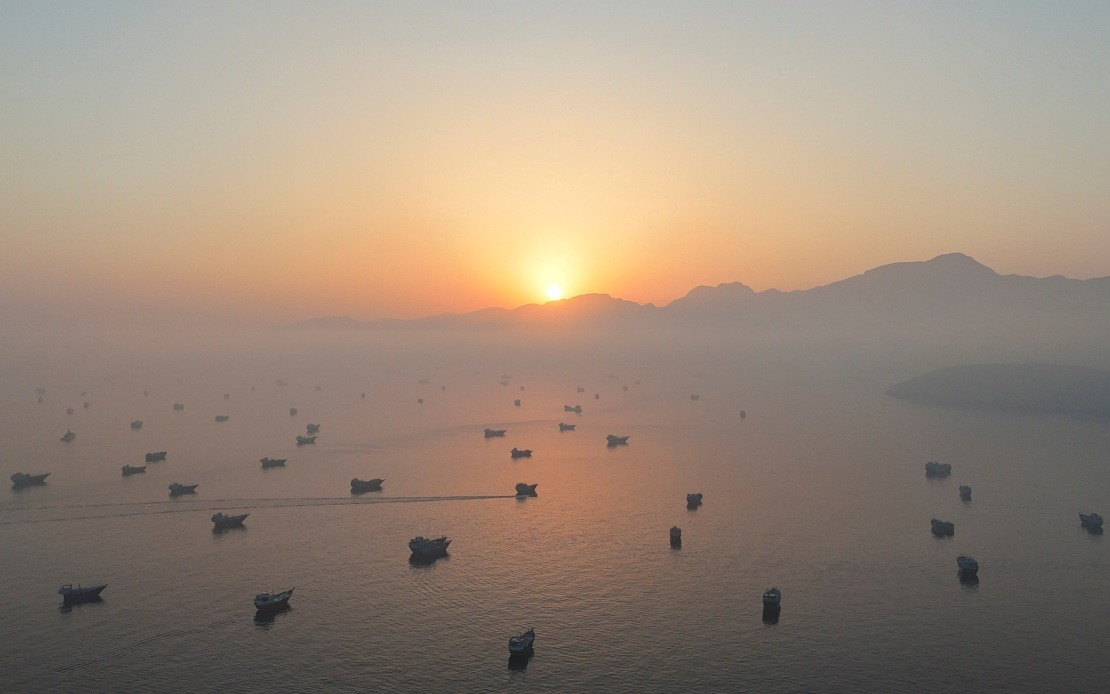
The Comprehensive and Progressive Agreement for Trans-Pacific Partnership (CPTPP) has thrown its weight behind the recent accord between the United States and Iran, signalling broad support among major trading nations for steps that would restore stability to one of the world's most strategically vital waterways. Following a virtual meeting on Friday, the 12-member bloc issued a joint ministerial statement affirming its commitment to ensuring free passage through the Strait of Hormuz, a chokepoint through which roughly one-third of globally traded petroleum passes daily. The endorsement reflects mounting concerns among leading economies about the fragility of global supply chains and the vulnerability of energy markets to further disruption.
The statement explicitly acknowledged the paramount importance of maintaining open and secure sea lanes, with particular emphasis on guaranteeing freedom of navigation and overflight through the Strait of Hormuz. This language underscores the bloc's recognition that any sustained closure or threat to transit through these waters could have cascading effects across interconnected global markets. Member nations stressed their commitment to upholding the principle of safe, unimpeded and continuous transit passage, anchoring this position firmly within the framework of international maritime law as established by the United Nations Convention on the Law of the Sea (UNCLOS).
For Malaysia and other Southeast Asian members of the bloc, the reaffirmation carries particular significance. The region's own maritime commerce and energy security depend substantially on predictable access to these global shipping corridors. Any extended disruption to Hormuz passage would inevitably increase shipping costs, lengthen supply chains and introduce volatility into fuel prices that directly impact domestic economies throughout Southeast Asia. The CPTPP statement therefore reflects the shared interests of diverse economies—spanning from Canada and Chile to Vietnam and Australia—in maintaining a stable, rules-based international trading system.
The joint declaration paid specific attention to the breadth of products affected by potential supply chain disruptions, ranging from crude oil and refined petroleum products such as diesel to natural gas, petrochemical derivatives and fertilisers. This comprehensive framing highlights how any sustained instability in the region extends far beyond energy markets alone. Agricultural economies across Southeast Asia rely heavily on imported fertilisers, making them particularly vulnerable to disruptions affecting Hormuz passage. The CPTPP ministers signalled that they view the reopening of secure transit as essential not merely to energy traders but to food security and broader economic stability across their member nations.
Minimising disruptions to energy trade flows while adhering to international law emerged as a central theme of the statement. The ministers explicitly committed themselves to maintaining free and open markets in energy and other affected commodities, framing these as foundational to the long-term security and prosperity of their economies. This stance implicitly rejects protectionist or unilateral approaches to energy security, instead endorsing cooperative frameworks and respect for established international conventions. Such positioning places the CPTPP squarely on the side of a multilateral, rules-based order—a message particularly relevant given current tensions that had threatened to destabilise global markets.
Crucially, the bloc reaffirmed its collective commitment to refrain from imposing unjustified trade-restrictive measures and called upon other nations to do likewise. This language carries implicit weight, signalling to all trading partners that CPTPP members view escalating protectionism as counterproductive and destabilising. In an era of mounting geopolitical tensions and supply chain fragmentation, such declarations serve to buttress confidence among traders and investors that major economies remain committed to predictable, rules-based commerce.
The statement also acknowledged emerging regional frameworks aimed at building more resilient energy supply chains, specifically referencing the Partnership On Wide Energy and Resources Resilience Asia (POWERR Asia). This initiative, which emphasises close coordination between energy-producing and energy-consuming nations, represents an important step toward reducing systemic vulnerabilities within Asia-Pacific supply networks. For Malaysia—a nation that bridges both roles as an energy producer and a consumer—participation in such frameworks offers opportunities to strengthen bilateral relationships and enhance regional stability.
Pictured in the statement was an explicit recognition of the distinct vulnerabilities facing small island developing states, particularly those in the Pacific region, whose geographic isolation and limited energy alternatives expose them disproportionately to supply disruptions. The ministers welcomed continued cooperation on trade diversification aimed at reducing such vulnerabilities, acknowledging that while all CPTPP members benefit from stable global energy markets, some members face especially acute risks from any sustained disruption. This emphasis reflects the bloc's commitment to ensuring that economic gains from free trade are distributed equitably across all members, including the most vulnerable.
The statement itself functioned as both a practical policy commitment and a political signal. By uniting around support for the US-Iran agreement and Hormuz passage, the CPTPP members conveyed to global markets their determination to work collectively toward restoring normal trading conditions and supply chain resilience. This collective action carries weight beyond the statement's formal language—it reassures businesses that major trading partners remain aligned on fundamental principles of open commerce and rules-based order, even amid broader geopolitical divisions.
Attending the virtual meeting were ministerial representatives and officials from Australia, Brunei, Canada, Chile, Japan, Malaysia, Mexico, New Zealand, Peru, Singapore, the United Kingdom and Vietnam. The geographic spread of this membership—spanning the Americas, Europe, Asia and the Pacific—underscores how disruptions to Middle Eastern maritime routes reverberate across truly global trading networks. The consensus reached during the meeting reflects a shared understanding that economic interdependence creates mutual interests in stability and that even nations with competing strategic interests must cooperate to preserve the rules-based trading system from which all derive substantial benefits.
Looking forward, the CPTPP's position places considerable diplomatic weight behind efforts to sustain the US-Iran agreement and ensure that the Strait of Hormuz remains open to international commerce. For Malaysia and other Southeast Asian economies increasingly integrated into global supply chains, this collective stance offers reassurance that major trading powers recognise the stakes involved in allowing any further deterioration of regional stability. The statement thus serves as both a concrete commitment to particular policies and a broader affirmation of the multilateral trading order upon which regional prosperity fundamentally depends.

