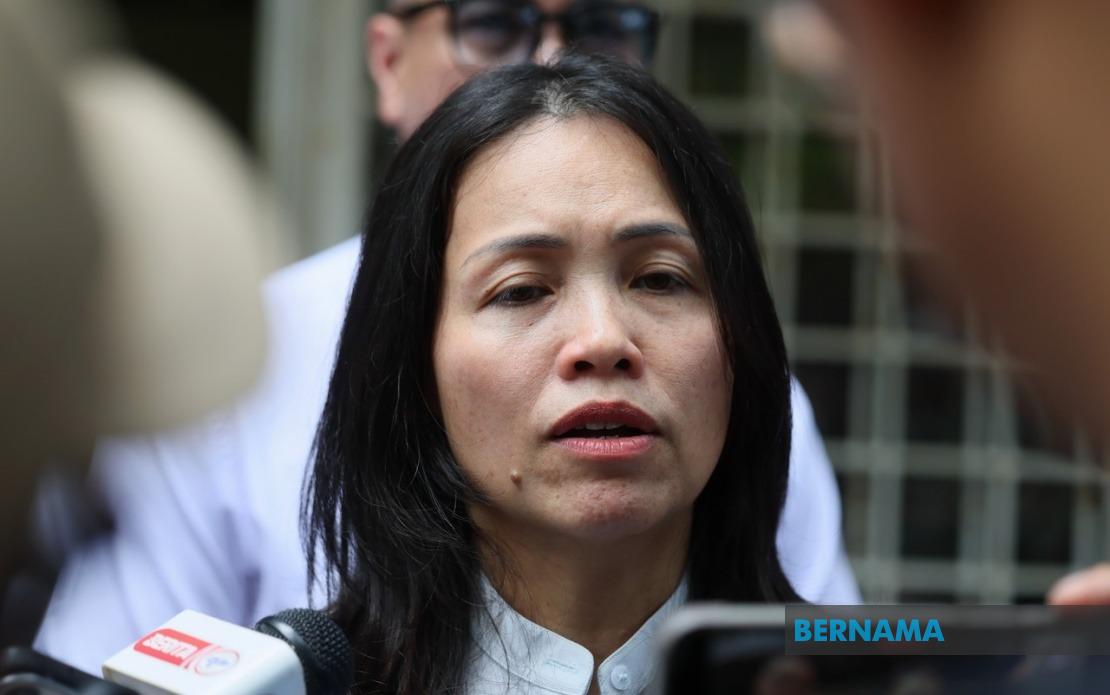
Political tensions in Johor are escalating as the state gears up for fresh elections, with the Democratic Action Party raising the alarm over what it characterises as a calculated disinformation strategy. Johor DAP chairman Teo Nie Ching, who also serves as Deputy Communications Minister, has publicly denounced opponents for deliberately manipulating party promotional materials to misrepresent potential candidates, alleging that altered images falsely depict them wearing headscarves incorrectly.
The controversy centres on a coordinated effort by unnamed parties to weaponise religious and cultural sensitivities during the campaign period. According to Teo, the doctored posters are designed specifically to sow discord among the diverse electorate, with particular emphasis on fracturing support within the Chinese community and non-Malay voter blocs. The strategy appears calculated to exploit anxieties about religious identity and governance approaches, using visual manipulation as the primary tool.
Teo's response underscores a deepening concern within Pakatan Harapan about the methods being deployed by political rivals ahead of polling day on July 11. Her statement represents an unusual public intervention by a senior minister directly into state-level campaign dynamics, suggesting the party views these tactics as sufficiently serious to warrant high-level attention. The DAP's formal complaint mechanisms and public messaging indicate this represents more than isolated incidents—rather, a pattern the party believes merits voter awareness.
The party has sought to reframe the conversation around principles and integrity rather than engaging with the substantive claims within the altered imagery. Teo's emphasis on DAP's track record of championing plural values across all communities serves as a counter-narrative, positioning the party as a defender of religious respect and minority rights. This framing attempts to neutralise what opponents may intend as a wedge issue by claiming the moral high ground on both religious sensitivity and democratic fairness.
From a broader strategic perspective, the incident reveals the sophistication of modern political warfare in Malaysia, where digital tools enable rapid dissemination of misleading content across social networks. The ease with which images can be manipulated and circulated creates an asymmetry of advantage for those willing to operate outside ethical campaign practices. Teo's public call for voters to remain discerning reflects an implicit acknowledgment that traditional fact-checking mechanisms may prove insufficient in combating viral misinformation during election cycles.
The timing of these allegations carries particular weight given the compressed campaign schedule. The Election Commission set June 27 as nomination day, leaving relatively narrow windows for candidates to introduce themselves and counter hostile narratives. In this constrained timeframe, early poisoning of the information environment through smear tactics can inflict disproportionate damage, potentially shifting perceptions before candidates can mount organised responses through conventional channels.
Johor's electoral landscape presents a complex picture of competition across multiple parties. Before the dissolution of the State Legislative Assembly on June 1, Barisan Nasional controlled 40 of the 56 available seats, with Pakatan Harapan holding 12, Perikatan Nasional claiming three, and MUDA occupying one. This distribution suggests a competitive but ultimately BN-dominated political environment where smaller coalitions must fight for visibility and credibility. The poster manipulation allegations may reflect anxiety among rival factions concerning DAP's potential electoral performance and organisational capacity.
The incident also illuminates broader questions about digital literacy and information verification among Malaysian voters. Teo's appeal for the public to resist being swayed by false information presumes a degree of critical assessment capability that may not be uniformly distributed across the electorate. For urban, digitally native voters, identifying manipulated images may prove straightforward; for others, distinguishing authentic campaign materials from fabrications requires greater effort and scepticism.
Religious sensitivities remain a potent electoral lever in Malaysian politics, particularly when intertwined with questions of community representation and cultural respect. The alleged use of hijab imagery as a vehicle for casting aspersions on DAP candidates touches precisely these vulnerabilities. By suggesting that the party might field candidates who disrespect Islamic practice, opponents attempt to undermine DAP's credentials with Muslim voters while simultaneously implying the party is ethically untrustworthy.
Teo's dual role as both Johor DAP chairman and Deputy Communications Minister positions her as a significant institutional voice against disinformation. Her intervention carries weight beyond typical party rhetoric, implicitly lending the weight of ministerial responsibility to the accusation. However, this raises questions about appropriate boundaries between party political activity and government office—a recurring tension in Malaysian politics where senior figures often juggle multiple leadership roles simultaneously.
The broader implications for Malaysian democracy centre on whether electoral competition will increasingly depend on sophistication in digital manipulation and information warfare. If such tactics prove effective without meaningful consequences, they establish precedent for their expanded deployment in future campaigns. Conversely, if voters and electoral authorities demonstrate resilience against such efforts, it may deter their use. Teo's public campaign represents an attempt to preemptively shift the calculation by mobilising public awareness and framing the tactics as beneath the dignity of responsible democratic engagement.
As Johor heads toward nomination day on June 27 and polling on July 11, the state offers a testing ground for how Malaysian electoral politics adapts to digital-age challenges. The contest between information integrity and manipulative tactics will likely intensify across the campaign period, with implications extending far beyond Johor's boundaries toward understanding how technology is reshaping the broader Southeast Asian political landscape.

