Kuala Lumpur City Hall (DBKL) has committed RM200 million towards a comprehensive overhaul of hawker operations across the city, targeting 287 locations under the Lestari Niaga @ Kuala Lumpur 2026 programme. The initiative addresses longstanding concerns about trading conditions and infrastructure at informal food vending sites, positioning it as a pivotal intervention in the informal economy sector that sustains thousands of families and constitutes a significant pillar of the city's cultural and commercial landscape.
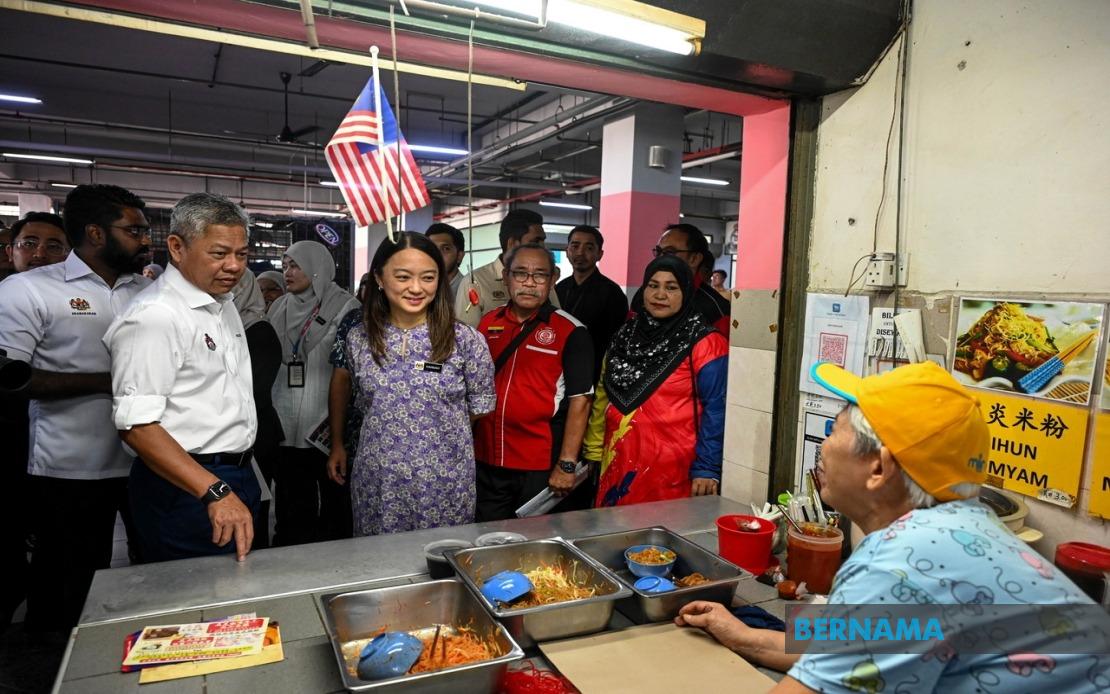
The modernisation push will directly impact more than 11,000 small traders and hawkers, fundamentally reshaping how and where food vendors operate throughout the federal territory. Minister in the Prime Minister's Department (Federal Territories) Hannah Yeoh outlined the scope during an inspection at upgraded hawker stalls near UTC Sentul, emphasising that the programme seeks to establish safer, more organised trading environments that meet contemporary urban standards. This represents one of the largest coordinated efforts by local government to formalise and improve conditions within the hawker sector, signalling a shift toward structured management of informal commerce.
The governance approach underpinning this initiative reflects a commitment to inclusive stakeholder engagement. Rather than imposing top-down solutions, DBKL has committed to balancing the interests of multiple constituencies including residents seeking traffic relief, traders requiring viable livelihoods, and building operators with commercial aspirations. Hannah Yeoh stressed that fairness across all parties remains paramount, particularly when contentious relocation decisions arise. This consultation-driven methodology acknowledges that hawker modernisation inevitably creates friction between competing urban priorities, requiring sensitivity to the concerns of communities, entrepreneurs, and property owners alike.
The UTC Sentul project exemplifies the practical implementation of this philosophy. With a dedicated allocation of RM1.6 million, the redevelopment replaces conventional stall structures with twenty modern modular kiosks designed for completion within three months, targeted for October delivery. Significantly, DBKL is introducing a pioneering financial assistance mechanism to ease the burden on the twenty active traders during construction disruption. A monthly stipend of RM1,500 per trader represents a departure from conventional approaches and reflects learning from previous upgrading exercises where temporary trading sites proved costly and ineffective at maintaining customer bases.
Kuala Lumpur Mayor Datuk Seri Fadlun Mak Ujud elaborated on the rationale for direct financial support over relocation alternatives. Temporary sites frequently suffer from poor accessibility and limited foot traffic, ultimately damaging vendor earnings and complicating recovery once permanent facilities become operational. By providing direct cash support, DBKL reduces the financial squeeze that traders experience during construction phases, potentially preventing business failures and preserving employment. This pragmatic approach signals institutional learning from previous hawker upgrading experiences across Southeast Asia, where trader welfare during transition periods has often been overlooked.
The programme's geographical expansion extends beyond UTC Sentul to multiple concurrent locations. Jalan Dato Senu, Pudu Ulu, and Bandar Tun Razak feature prominently in the rollout schedule, each supported by similar financial incentive mechanisms. The simultaneous implementation across multiple sites suggests DBKL has developed sufficient operational capacity and funding certainty to execute a coordinated transformation rather than sequential, incremental improvements. This scale of ambition indicates that hawker modernisation has become a strategic priority within city management, reflecting both political commitment and resource allocation aligned with urban development objectives.
The broader Lestari Niaga framework encompasses diverse hawker categories under DBKL supervision, structured in phases to manage implementation complexity. The initial phase focuses on 224 locations encompassing varied trading formats, including approximately 4,000 street hawkers operating outside formal structures, roughly 5,000 traders utilising DBKL-owned infrastructure, and approximately 1,000 individuals in the reapplication category seeking formalisation. This segmentation recognises that different vendor groups face distinct operational challenges and regulatory requirements, necessitating tailored solutions rather than uniform standardisation.
The classification framework reflects the heterogeneous nature of Kuala Lumpur's hawker ecosystem. Street hawkers, typically mobile vendors with minimal fixed assets, require distinct support mechanisms from those already occupying municipal facilities or seeking formal registration. By disaggregating the 11,000 traders into these categories, DBKL can calibrate interventions appropriately, ensuring that programme benefits and transition support align with each group's circumstances. This differentiation prevents marginalisation of the most vulnerable traders while streamlining processes for those already integrated into formal municipal systems.
For Malaysian readers and regional observers, this initiative carries implications extending beyond Kuala Lumpur's boundaries. Informal food vending sustains millions across Southeast Asia, yet systematic government investment in upgrading remains sporadic and underfunded. DBKL's RM200 million commitment, while substantial, represents an acknowledgment that informal economy operators merit public infrastructure investment comparable to formal retail sectors. If successfully implemented with genuine trader benefit, the Lestari Niaga model could establish precedent for comparable initiatives throughout Malaysia and the region, influencing how cities conceptualise their obligations toward informal commerce.
The hawker sector constitutes not merely an economic necessity but a cultural institution embedded within Malaysian urban life. Food stalls generate employment, facilitate entrepreneurship for individuals lacking capital for formal businesses, and sustain neighbourhood identities. Modernisation efforts risk sanitising or commercialising these spaces if pursued without trader input and welfare consideration. DBKL's emphasis on stakeholder consultation and trader support during transition suggests institutional awareness of these cultural dimensions, moving beyond purely infrastructural or regulatory concerns.
The financial mechanics underlying this programme also merit scrutiny. RM200 million across 287 sites averages roughly RM696,000 per location, sufficient for substantial infrastructure improvement but dependent on efficient execution and minimal cost overruns. Whether this budget translates into tangible benefits—improved safety, better sanitation, enhanced customer facilities, or adequate workspace—depends heavily on implementation quality and trader satisfaction with final designs. Early transparency regarding project timelines, cost management, and trader compensation frameworks will be essential for maintaining credibility and encouraging cooperation from traders at subsequently targeted locations.
Looking forward, the Lestari Niaga initiative represents a critical juncture for informal economy formalisation in Kuala Lumpur. Success would demonstrate that coordinated public investment, coupled with trader support mechanisms, can upgrade informal commercial infrastructure without displacing vulnerable entrepreneurs. Conversely, implementation shortcomings could reinforce trader scepticism toward government upgrading programmes, reducing cooperation for future initiatives. The stakes extend beyond bricks and mortar to encompass the viability of informal livelihoods within increasingly formalised urban spaces, making this modernisation effort consequential for Kuala Lumpur's social and economic fabric.