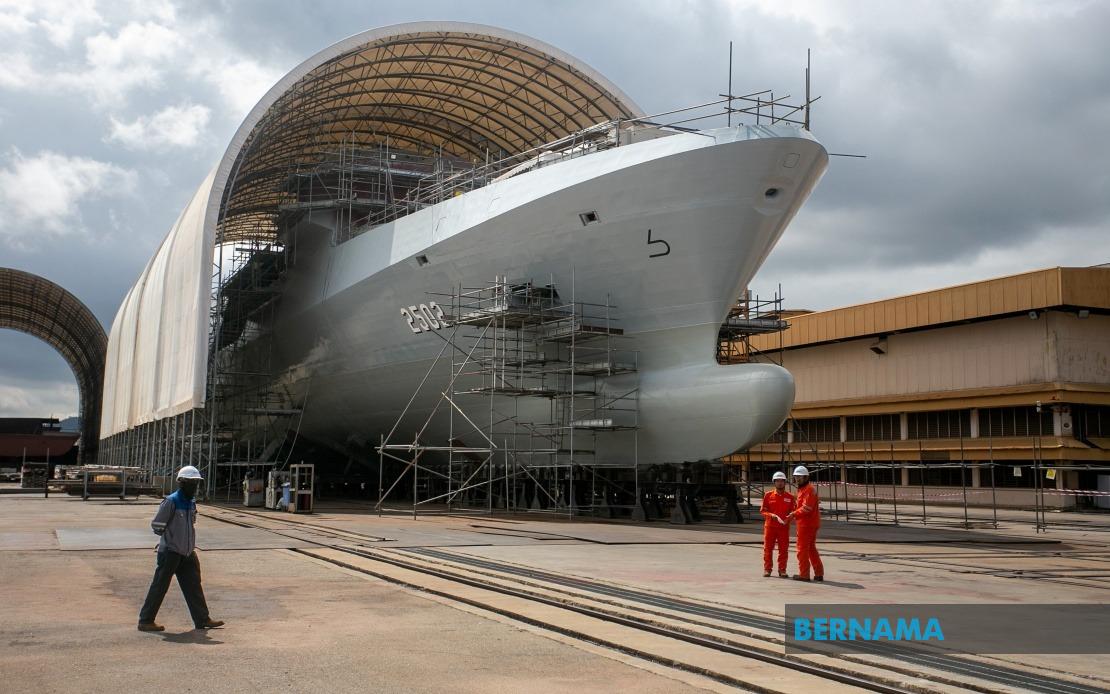
The Malaysian Defence Ministry has moved to defend the RM571.9 million payment made to Norway's missile supplier as a legitimate contractual transaction rather than an improper advance, addressing concerns raised in Parliament about the procurement of anti-ship systems for the nation's Littoral Combat Ship fleet.
MINDEF clarified in its parliamentary response that the payment aligned precisely with contractual terms and the actual progress of work. The funds were released only after the Norwegian supplier had completed manufacturing all Naval Strike Missile systems, subjected them to rigorous testing protocols established by the Royal Malaysian Navy, and positioned them ready for shipment to Malaysia. This chronology directly contradicts suggestions that the government had disbursed funds prematurely or without corresponding physical deliverables.
The ministry further addressed allegations that the procurement agreement lacked adequate protective mechanisms for Malaysia's financial interests. Officials firmly rejected this characterisation, asserting that the contract contained robust provisions designed to shield the government from non-performance or breach of obligations. These safeguards provide a legal foundation for the ministry to pursue recovery actions and claim damages should circumstances warrant such intervention, giving Malaysia recourse options that are not uncommon in complex defence procurement arrangements.
The underlying catalyst for parliamentary scrutiny centres on Norway's decision to revoke the export licence for the systems already paid for and manufactured. MINDEF emphasised that this governmental action by the Norwegian administration occurred beyond the sphere of influence of both the Malaysian government and the commercial supplier. Neither party could have anticipated or controlled this diplomatic-administrative development, which represents an external constraint rather than a contractual failure or mismanagement on Malaysia's side.
In response to this export licence revocation, MINDEF has activated the contractual provisions available to protect national interests. The ministry is now pursuing formal claims to recover the RM571.9 million payment and seeking compensation for associated damages and losses incurred as a result of the Norwegian government's decision. This reactive posture demonstrates that Malaysia retained leverage through the original contract architecture, validating the ministry's assertion that protective clauses were indeed embedded in the procurement agreement.
Parliamentary concern about the transaction originated from Hassan Abdul Karim, the Pasir Gudang representative from the opposition Pakatan Harapan coalition, who questioned whether the government had premature disbursed the full contract value and whether protective clauses existed in the agreement. Similarly, Mohd Kurniawan Naim Moktar, the Kinabatangan member representing the government coalition Barisan Nasional, sought clarification on the implications of the licence revocation for the Royal Malaysian Navy's combat readiness and operational capacity.
MINDEF's response to the second line of inquiry acknowledged the operational challenge but provided reassurance about immediate military capability. The ministry stated that the licence revocation has not compromised the current operational readiness of Malaysia's armed forces, as the Royal Malaysian Navy maintains an existing inventory of assets and weapon systems sufficient to discharge its constitutional responsibility of protecting the nation's maritime sovereignty and territorial waters. This operational continuity means Malaysia is not in an immediate defensive disadvantage despite the procurement disruption.
Looking forward, the Royal Malaysian Navy is actively engaged in evaluating and assessing alternative missile systems that could feasibly replace the Norwegian Naval Strike Missile platform. This proactive search for substitutes addresses the operational gap created by the export licence revocation and reflects military planning that anticipates various procurement contingencies. The assessment process likely involves technical compatibility with the LCS platform, available inventory within acceptable timeframes, cost considerations relative to the original contract value, and geopolitical implications of supplier selection.
The NSM controversy illustrates the complexities and vulnerabilities inherent in Malaysia's reliance on foreign defence suppliers, particularly when those suppliers operate within political systems that may prioritise diplomatic considerations over commercial obligations. Norway's decision to revoke the export licence, likely motivated by concerns regarding end-use or geopolitical alignment, highlights how Malaysia's military modernisation programmes can become exposed to external policy shifts beyond contractual frameworks.
From a Malaysian defence procurement perspective, the incident underscores the importance of negotiating contracts with robust dispute resolution mechanisms, force majeure provisions that appropriately allocate risk, and potentially diversifying supplier bases to mitigate dependency. The LCS project itself, a cornerstone of maritime modernisation, now faces extended timelines as alternative systems are evaluated, potentially delaying the Royal Malaysian Navy's ability to operate at full intended capability across its fleet of ships.
The ministry's defence of its payment practices and contractual protections appears intended to preempt broader criticism about defence spending oversight and procurement governance. By demonstrating that the transaction followed contractual requirements and that protective mechanisms existed, MINDEF seeks to establish that the payment decision was administratively sound, even though subsequent events have created an unfavourable outcome. The political context matters here, as parliamentary scrutiny of defence contracts reflects broader concerns about transparency and accountability in military expenditure across Southeast Asia.

