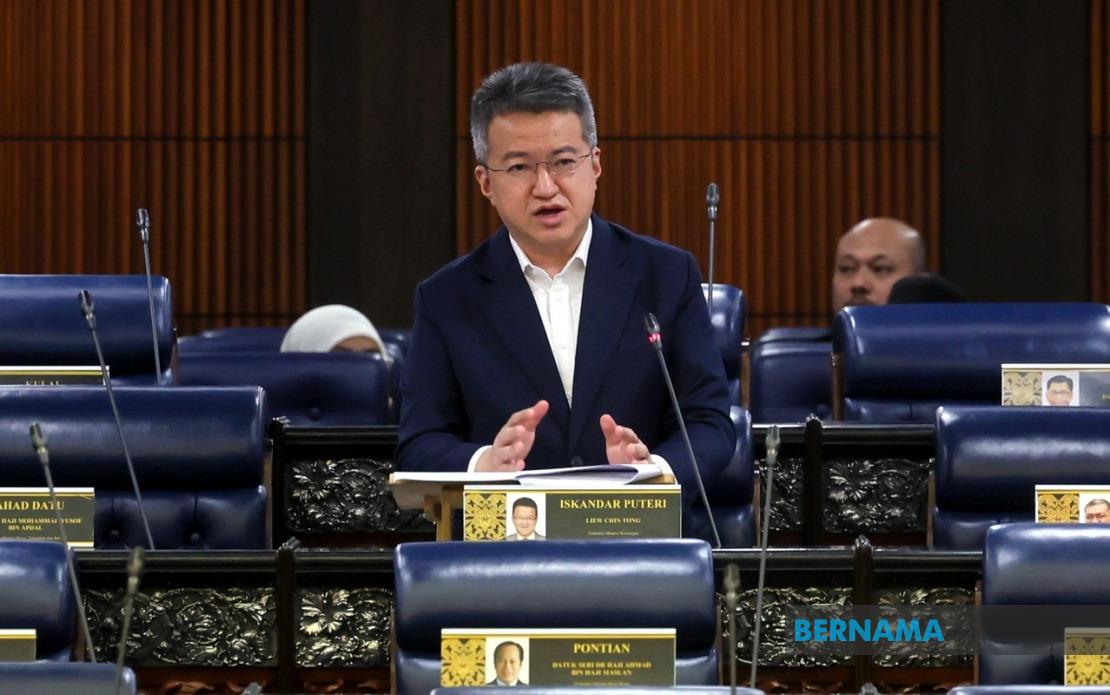
Deputy Finance Minister Liew Chin Tong categorically rejected allegations during parliamentary Question Time that fugitive businessman Low Taek Jho, commonly referred to as Jho Low, entered Malaysia alongside a Chinese delegation in the past year to conduct confidential discussions regarding the sprawling 1Malaysia Development Berhad scandal. His terse denial came in response to a supplementary inquiry from Syed Saddiq Syed Abdul Rahman, the MUDA representative for Muar, who had referenced multiple media publications carrying claims of such a covert meeting.
The exchange centred on unconfirmed reports suggesting that Jho Low had allegedly participated in secret negotiations in Malaysia toward the end of the previous year, supposedly to arrange a settlement package for outstanding 1MDB liabilities. The alleged negotiations purportedly involved discussions with the Ministry of Finance, according to the media accounts that prompted Syed Saddiq's parliamentary question. This forms part of an ongoing pattern whereby various claims and allegations continue to surface regarding the efforts to resolve one of Malaysia's most significant financial scandals.
Liew's parliamentary statement addressed a broader inquiry from Chong Chieng Jen, the Stampin representative from Pakatan Harapan, concerning the scale of 1MDB's outstanding debt obligations and the government's strategy for retrieving funds that were misappropriated during the scheme's operations. In his substantive response, the Deputy Minister outlined the government's comprehensive approach to asset recovery, which operates through multiple legal channels encompassing both criminal prosecution and civil litigation frameworks.
A landmark judicial decision reinforced the gravity of the scandal's consequences. In December 2025, Malaysia's High Court delivered a guilty verdict against former Prime Minister Datuk Seri Najib Tun Razak following a trial involving 25 distinct charges related to money laundering and the unlawful exercise of power to solicit bribes connected to 1MDB. The court imposed a substantial sentence of 15 years' imprisonment alongside a financial penalty of RM11.38 billion, underscoring the serious legal and financial repercussions for those at the apex of the scheme.
Beyond Najib's conviction, the government has pursued parallel legal action targeting other figures implicated in the misappropriation of 1MDB funds. Liew highlighted an ongoing civil action against Datin Seri Rosmah Mansor, the former Prime Minister's spouse, which seeks to recover approximately US$380 million, equivalent to roughly RM1.56 billion, in compensation for 1MDB assets allegedly diverted toward acquiring luxury commodities such as designer handbags and precious jewellery. This dimension of the scandal, which became particularly notorious during international media coverage, represents the intersection between the financial crime and the lifestyle funded by stolen state wealth.
Jho Low himself, identified as the alleged orchestrator and principal architect of the 1MDB misappropriation scheme, remains the subject of aggressive legal pursuit. The government has initiated both criminal investigations and civil claims against the fugitive businessman, with the civil component valued at US$3.78 billion, translating to approximately RM15.4 billion. These proceedings represent perhaps the most substantial financial claim directed against any individual connected to the scandal, reflecting the scale of losses attributed to Low's operations.
The cumulative toll of the 1MDB debacle extends far beyond the individual financial recoveries being pursued through the courts. Liew characterised the scandal as having inflicted four distinct categories of damage to Malaysia's national interests. Direct financial losses constitute the most immediately quantifiable harm, representing funds that were siphoned from state coffers. However, equally significant are opportunity costs—the foregone economic benefits and developmental investments that could have been undertaken with capital that instead was misappropriated. A third category encompasses irrecoverable losses, sums that may prove impossible to retrieve despite legal action. Perhaps most intangible yet consequential is the damage sustained to Malaysia's international reputation, which continues to influence perceptions of governance, institutional integrity, and investor confidence in Southeast Asia's third-largest economy.
The reappearance of claims regarding Jho Low's alleged entry into Malaysia underscores the persistent complexity surrounding efforts to resolve the scandal entirely. For nearly a decade, the 1MDB affair has dominated Malaysia's political landscape, prompting changes in government, international sanctions, and fundamental questions about institutional accountability. The government's multi-pronged recovery strategy—combining criminal prosecutions, asset seizures, and international cooperation—reflects recognition that a single legal avenue cannot adequately address the scandal's scope. Liew's parliamentary denial, while emphatic, implicitly acknowledges the continued speculation and investigative interest surrounding potential negotiations or back-channel communications involving those implicated in the scheme.
The recovery of 1MDB funds has emerged as both a practical challenge and a symbolic test of Malaysia's commitment to financial transparency and accountability. The High Court's sentencing of Najib provided validation of the prosecution case but represented merely one chapter in what appears to be an extended legal process. With Jho Low remaining a fugitive beyond Malaysian jurisdiction and multiple civil suits progressing through the courts, the resolution of the scandal's financial dimensions remains incomplete. The Deputy Minister's categorical denial of the latest allegations regarding Jho Low's entry to Malaysia reflects the government's attempt to maintain control over the official narrative whilst the underlying recovery efforts proceed through formal legal channels.

