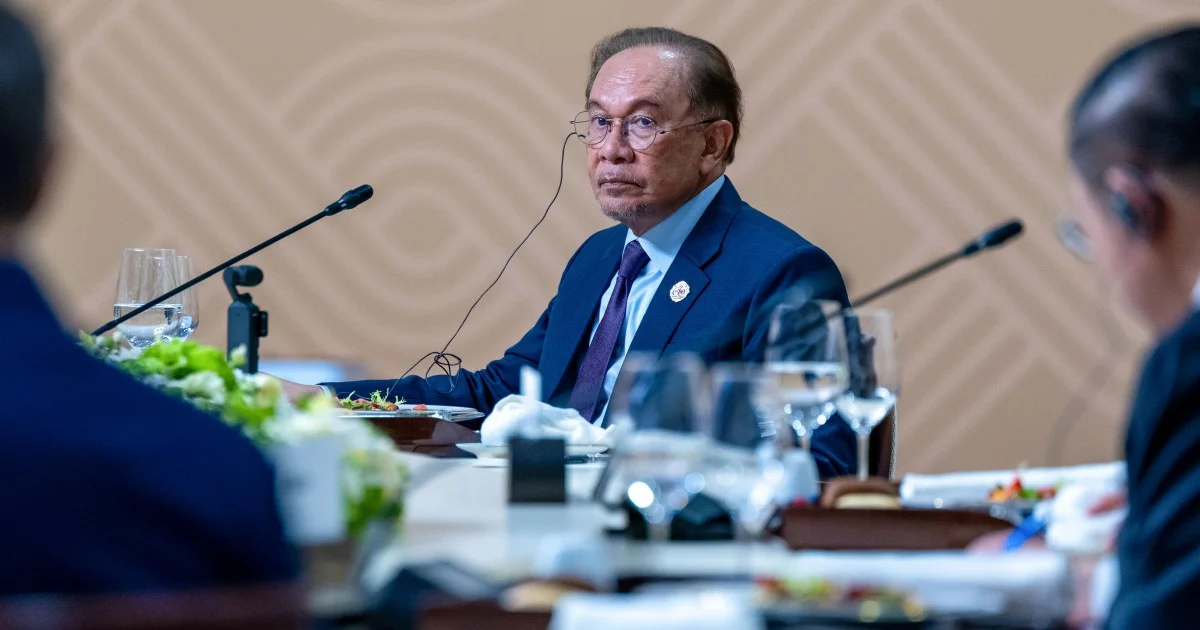
Prime Minister Datuk Seri Anwar Ibrahim has issued a pointed warning that developing countries throughout the Global South risk reorienting their international partnerships if they continue to experience discriminatory treatment from European nations. The cautionary statement emerged amid escalating tensions with Norway over defence-related matters, underscoring broader frustrations about the imbalanced dynamics that characterise relations between industrialised Western powers and the developing world.
The intervention by Malaysia's leader reflects deepening concerns within developing nations about what many perceive as a pattern of conditionality and double standards in their dealings with European counterparts. Rather than accepting predetermined terms or accepting diplomatic pressure without resistance, countries increasingly recognise they possess leverage and alternatives in the multipolar international environment. Anwar's remarks signal that the traditional deference once afforded to European positions has substantially eroded, particularly among emerging economies seeking greater autonomy in crafting their foreign policies.
The dispute involving Norway exemplifies the types of conflicts that have proven corrosive to relations between developing and developed nations. Defence-related disagreements often touch upon sensitive questions of sovereignty, territorial integrity, and the right of nations to conduct independent security policies without external interference or judgment. When European nations impose conditions or express disapproval of developing countries' defence choices, it frequently generates resentment and accusations of neo-colonial attitudes that fail to respect the agency of smaller or less economically powerful states.
For Malaysia specifically, such tensions carry particular significance given its position as a significant defence purchaser and a nation with substantial maritime interests in one of the world's most strategically important regions. The country has long navigated between different power blocs and maintained relationships with nations across the ideological and geopolitical spectrum. Anwar's statement reinforces Malaysia's conviction that it will not be pressured into alignment with any single bloc or forced to accept unfavourable terms imposed by distant powers, regardless of their economic development levels.
The broader context involves a fundamental recalibration of global power dynamics over the past two decades. Countries like Malaysia, Indonesia, Vietnam, and India have emerged as increasingly consequential economic and political actors, reducing their dependency on European markets and capital. Simultaneously, alternative sources of investment, technology, and strategic partnership have proliferated, fundamentally altering the negotiating dynamics that prevailed during previous eras when the Global North maintained overwhelming structural advantages.
European nations, having long assumed their values and preferences would prove sufficiently attractive to secure compliance, now confront assertive developing countries unwilling to accept subordinate roles in international negotiations. This shift reflects not hostility toward Europe per se, but rather the normalisation of expectations that relationships should be conducted on terms of mutual respect and reciprocal benefit. When European capitals attempt to impose political conditions, lecture developing nations about governance standards, or restrict transactions on political grounds, they frequently discover these tactics backfire by accelerating shifts toward alternative partners.
The reference to Norway specifically merits closer examination, as the Scandinavian nation has positioned itself as a principled actor advocating human rights and environmental protections globally. However, from the perspective of developing countries, such advocacy often appears selective, applied more rigorously to the Global South while overlooking comparable concerns in allied Western nations. This perceived inconsistency generates scepticism about the genuine motivations behind European stances, leading developing nations to interpret such positions as attempts to constrain their sovereign choices rather than genuine principled commitments.
Anwar's intervention additionally speaks to the growing assertiveness of the Malaysian leadership in articulating the perspectives and interests of the developing world on international platforms. Malaysia, as a middle-income nation with substantial influence within regional organisations like ASEAN, possesses both the standing and the inclination to voice grievances that resonate across the Global South. Such statements carry beyond their immediate bilateral context to signal to other developing nations that resistance to perceived unfair treatment carries no prohibitive costs.
The trajectory of developing nations' relationships with Europe appears increasingly determined by reciprocal behaviour. Nations that experience transparency, respect for their autonomous decision-making, and genuine partnership frameworks tend to maintain closer ties with European counterparts. Conversely, those subjected to pressure, conditionality, or perceived discrimination increasingly redirect their diplomatic and economic engagement toward partners offering more compatible terms. This gravitational shift presents European policymakers with a clear choice: adapt their approach to reflect genuine mutuality or accept diminishing influence and access in the developing world.
For Southeast Asia and Malaysia in particular, such dynamics underscore the region's enhanced bargaining capacity in international negotiations. The ability to credibly threaten reorientation toward alternative partners—whether Russia, China, India, or others—fundamentally restructures bilateral conversations with Europe. This emerging equilibrium suggests that the era of European presumption regarding developing nations' compliance has conclusively terminated, requiring fundamental recalibration of diplomatic methodologies and a genuine commitment to partnership rather than hierarchical relationships.

