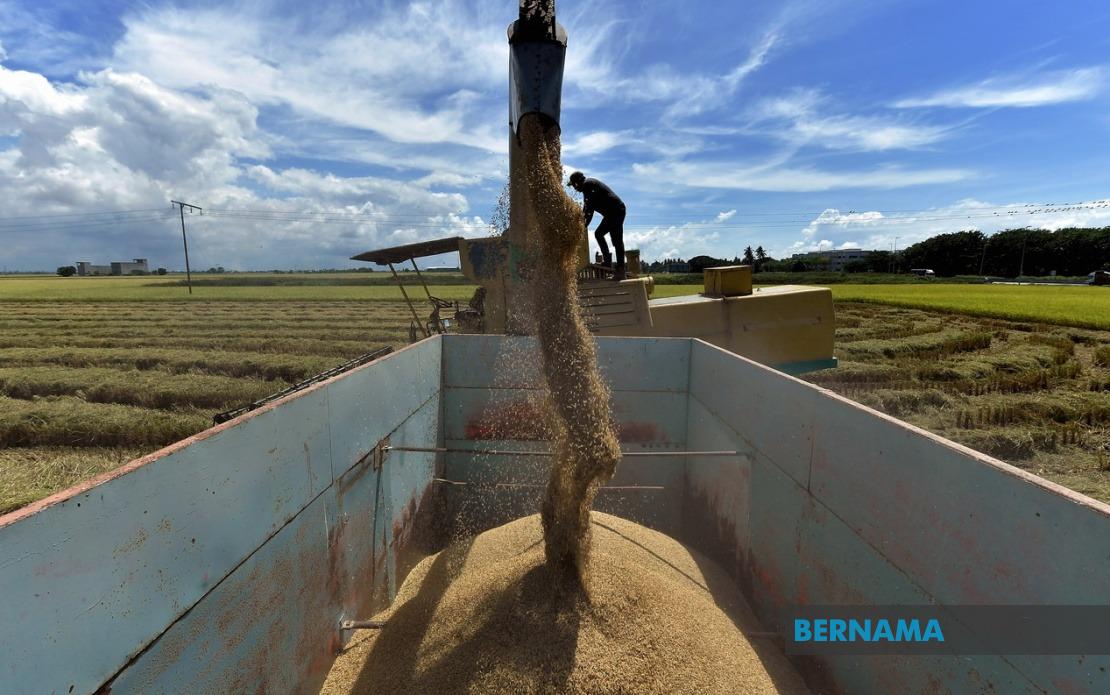
The Dewan Rakyat has given final approval to the Control of Padi and Rice (Amendment) Bill 2026, a legislative overhaul designed to fortify the nation's rice supply chain and tighten regulatory controls over an industry critical to Malaysia's food security. Lawmakers from across both government and opposition benches supported the measure through a voice vote following comprehensive parliamentary debate, signalling broad consensus on the need for stronger protections in this strategically important agricultural domain.
At the heart of the amendments lies a significant recalibration of the penalty structure governing violations under Act 522, the original legislation that has governed rice industry conduct since 1994. Individual offenders now face maximum fines of RM250,000, while companies and corporate entities confront potential penalties reaching RM1 million—dramatic increases that represent the first comprehensive review of punishment levels in more than three decades. Deputy Minister of Agriculture and Food Security Datuk Chan Foong Hin explained that these escalated sanctions reflect the stark inadequacy of penalties that have remained frozen since the Act's inception, failing to evolve as the industry itself has grown exponentially in scale and profitability.
The legislative imperative behind these reforms stems from enforcement realities on the ground. Government data consistently reveals substantial losses through rice smuggling operations and the illegal diversion of domestically produced white rice, yet the perpetrators have faced punishment levels bearing little relationship to their illicit gains. The padi and rice sector, valued in the billions of ringgit annually, has attracted criminal enterprises willing to absorb modest fines as merely a cost of doing business. By substantially raising the financial consequences of illegal activity, Parliament aims to fundamentally alter the risk-reward calculus that incentivises such misconduct, ensuring that penalties now proportionally reflect both the seriousness of these offences and the considerable profits they generate.
Beyond financial penalties, the legislation serves a deeper protective function for Malaysia's farming community. Padi farmers, who form the foundation of domestic rice production, remain vulnerable to market manipulation and predatory commercial practices from better-capitalised actors further up the supply chain. By strengthening enforcement mechanisms and imposing credible consequences for misconduct, the amendments provide farmers with enhanced security for their livelihoods and greater certainty that fair market conditions will prevail. This protective dimension addresses longstanding concerns about farmer welfare that have resonated across parliamentary constituencies.
The parliamentary debate revealed consensus on the direction of reform while surfacing important implementation questions. Datuk Idris Ahmad, representing Bagan Serai under the Perikatan Nasional banner, advocated for prosecutorial clarity, arguing that enforcement effectiveness depends not merely on penalty levels but equally on robust guidelines directing how these laws are applied in practice. He recommended specialised training for prosecutors handling rice-related cases, ensuring they possess the technical expertise and institutional knowledge to pursue appropriate sentences that genuinely deter future violations.
Tan Hong Pin of Bakri advanced a complementary concern, urging the agriculture ministry to conduct deeper analysis of the penalty structure before implementation. More significantly, he proposed establishing an independent committee tasked with regular assessment of Padiberas Nasional Berhad (BERNAS), the national rice authority, particularly concerning its effectiveness in combating cartel behaviour and coordinated market manipulation. This suggestion reflects broader parliamentary unease about concentration of power within agricultural institutions and the need for external accountability mechanisms.
Technology emerged as a central theme throughout parliamentary discussion, with members recognising that enforcement alone cannot solve structural supply chain vulnerabilities. Azli Yusof of Shah Alam advocated for comprehensive digital traceability systems spanning the entire padi and rice supply chain, enabling real-time tracking of product movement and rapid identification of leakages or suspicious diversions. Such technological infrastructure would provide enforcement authorities with visibility previously impossible to achieve through manual monitoring.
Manndzri Nasib of Tenggara proposed a more granular approach, suggesting that individual rice bags be fitted with QR codes allowing consumers and authorities to track specific batches through distribution networks. This innovation would expose mislabelling schemes, detect hoarding by unscrupulous traders, and empower ordinary Malaysians to participate in supply chain transparency. QR code systems represent low-cost, scalable solutions particularly suited to Malaysia's retail environment, enabling detection of counterfeits and illegal repackaging that currently undermine consumer confidence.
These technological proposals reflect recognition that contemporary food security challenges demand modern solutions. The rice industry's complexity—spanning production, milling, storage, distribution, and retail—creates numerous points where diversion, adulteration, or smuggling can occur. Digital systems creating an immutable record of product movement would shrink the shadows where illegal activity currently flourishes. Implementation would require coordination between BERNAS, enforcement agencies, retailers, and farmers, but the parliamentary consensus suggests willingness to invest in such coordination.
For Malaysian consumers, these amendments carry direct implications. Rice prices remain sensitive to both actual supply disruptions and market manipulation, making reliable enforcement crucial to stable household food costs. By deterring smuggling operations that divert Malaysian rice to neighbouring countries where prices command premium values, tighter enforcement helps preserve domestic supply and supports price stability. Consumers also benefit from enhanced authenticity assurances, as harsher penalties make mislabelling and counterfeiting economically unattractive for would-be perpetrators.
Regionally, Malaysia's rice industry reforms signal commitment to food security resilience at a time when supply chain vulnerabilities have become increasingly apparent across Southeast Asia. Cross-border rice smuggling remains a persistent problem affecting multiple nations, with Malaysian rice commanding prices sufficient to incentivise illegal export. Stronger domestic enforcement, combined with potential diplomatic coordination on cross-border tracking, could contribute to regional stability in rice availability and pricing—matters of significance to every Southeast Asian nation dependent on functioning grain markets.
The amendments also reflect broader governance philosophy emphasising graduated enforcement responses. Rather than relying solely on penalties to deter misconduct, the legislation incorporates protective measures for farmers, transparency mechanisms through digital systems, and institutional accountability requirements. This multifaceted approach acknowledges that food security depends not on punishing violations alone but on creating systemic conditions making violations economically irrational and practically difficult to conceal.
Implementation timelines and resource allocation remain critical questions as these amendments move toward enforcement. The agriculture ministry must develop prosecution guidelines, establish prosecutorial training programmes, coordinate with BERNAS on cartel monitoring, and facilitate technological adoption across the supply chain. Success depends on adequate institutional capacity and sustained political commitment to enforcement rather than symbolic law-making. Parliament has established the legal framework; translating it into tangible supply chain improvements remains the substantive challenge ahead.

