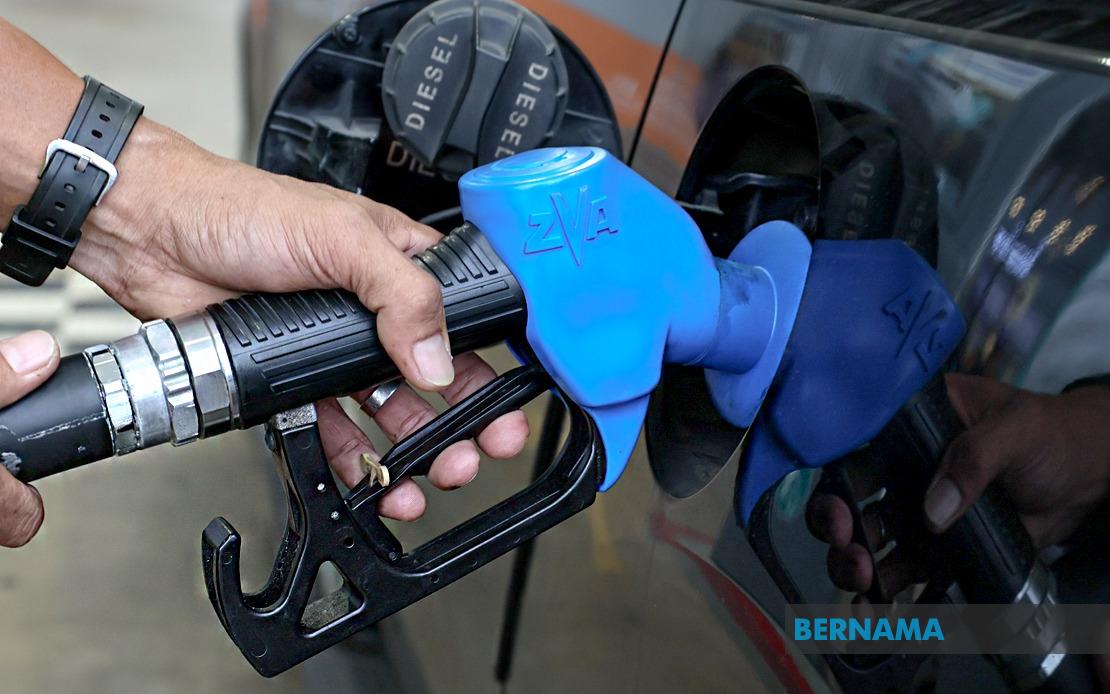
Prime Minister Datuk Seri Anwar Ibrahim's announcement of a reduction in subsidised diesel to RM2.10 per litre starting July represents a significant shift in Malaysia's fuel subsidy strategy, with economists predicting meaningful downstream effects for businesses and households nationwide. The pricing change, to be administered through the BUDI95 programme using MyKad verification, aims to address long-standing regional disparities while managing the government's fiscal obligations in an uncertain global energy market.
Dr Nanthakumar Loganathan, a professor of economics at Universiti Teknologi Malaysia, emphasises that the reduction addresses a core concern across multiple economic sectors. He notes that fuel expenditure constitutes a substantial portion of operational costs for businesses involved in food supply chains and general logistics. The professor points out that companies throughout the distribution network have repeatedly cited fuel expenses as a primary justification for raising consumer prices, making any reduction in diesel costs potentially transformative for retail pricing.
The practical implications extend throughout the consumer economy in tangible ways. Agricultural products transported via diesel-powered vehicles—from fresh vegetables delivered by pickup trucks to perishable goods moving between regional markets—should experience lower transport surcharges. This benefit depends, however, on traders' associations and logistics operators choosing to pass savings to consumers rather than absorb them into profit margins. Dr Loganathan expresses optimism that industry bodies will recognise the broader economic benefits of maintaining competitive pricing in the current cost environment.
A critical vulnerability in maintaining the RM2.10 price point relates to global petroleum market fluctuations. Dr Loganathan acknowledges the government faces a genuine dilemma: should international crude prices surge again, sustaining the announced diesel rate would require additional budgetary allocations. He suggests that securing supply arrangements with non-traditional partners, potentially including Russian sources or producers outside conventional Middle Eastern suppliers, might provide Malaysia with greater pricing flexibility and protection against geopolitical supply disruptions. The professor's observation underscores the tension between domestic price stability and international market realities that policymakers must navigate.
The geographical dimensions of this policy merit particular attention in the Malaysian context. Previously, Sabah and Sarawak benefited from lower subsidised diesel prices—RM2.15 per litre—compared to Peninsular Malaysia's RM4.37 per litre unsubsidised rate, reflecting those states' unique logistics challenges, remoteness, and reliance on terrestrial and river transport infrastructure. Dr Novel Lyndon, a political sociology professor at Universiti Kebangsaan Malaysia, frames the nationwide standardisation as addressing structural inefficiencies while signalling governmental commitment to uniform national policies rather than regionally fragmented approaches.
From a governance perspective, Lyndon identifies the policy as part of a broader effort to curtail subsidy leakages and ensure that government support reaches intended beneficiaries. The previous regional price variations had created operational cost disparities that ultimately filtered through to consumers, effectively creating invisible regional subsidies. Standardisation potentially reduces such distortions while presenting a unified subsidy framework grounded in actual need rather than geographic accident. However, Lyndon cautions that implementation requires careful calibration, particularly in East Malaysia where economic structures and development profiles differ substantially from the Peninsula.
Rural communities across Sabah and Sarawak warrant specific consideration given their dependence on diesel transport for agricultural activities, fishing operations, and commodity distribution. Lyndon warns that without effective targeted assistance mechanisms alongside the subsidy restructuring, rural small businesses and farming communities could face meaningful cost pressures. The risk exists that higher operating expenses, inadequately offset by subsidy savings, could increase living costs for populations already facing infrastructure and service delivery challenges. The policy's success thus hinges on implementation quality and complementary support programmes.
Lyndon emphasises a crucial psychological and political dimension: public perception of government action extends beyond specific price changes. Citizens evaluate policies not merely by their immediate economic impact but by how visible savings from subsidy rationalisation translate into tangible improvements in infrastructure, education, healthcare, and living standards. Transparent communication about how fiscal resources released through subsidy efficiency improvements will be redirected toward public benefit becomes essential for maintaining political legitimacy and public trust. Without such clarity, even economically sound policies risk generating public scepticism about governmental commitment to people's welfare.
The MyKad verification mechanism, meanwhile, addresses a technical challenge that has hampered previous subsidy programmes. Dr Mohd Afzanizam Abdul Rashid, chief economist at Bank Muamalat Malaysia, regards the identification system as a significant innovation in Malaysian subsidy administration. The RON95 petrol subsidy programme's implementation demonstrated that MyKad-based verification can effectively target assistance while maintaining operational efficiency. Extending this mechanism to diesel subsidies potentially strengthens the entire subsidy architecture by enabling precise beneficiary tracking and comprehensive fuel consumption data collection.
Beyond economic efficiency, the MyKad system offers secondary benefits related to broader governance challenges. The verified distribution mechanism can help authorities combat fuel smuggling and black-market diversion, problems that previously eroded subsidy effectiveness and represented significant revenue losses. By ensuring subsidised diesel reaches legitimate Malaysian consumers rather than neighbouring markets or unofficial channels, the verification approach addresses a persistent policy implementation gap that had complicated previous subsidy programmes.
For Malaysian businesses and households, the July implementation timeline provides a brief adjustment window. Supply chain managers can begin recalibrating transport cost assumptions, while retailers can evaluate pricing strategies in anticipation of lower input costs. The policy's ultimate economic impact will depend on whether competitive pressures encourage businesses to reduce final consumer prices, whether international oil markets remain stable, and whether complementary government policies adequately support rural and remote communities experiencing transition costs.
The broader significance of this policy extends beyond immediate diesel pricing considerations. It demonstrates governmental willingness to restructure subsidy mechanisms toward greater efficiency and equity, though implementation quality will ultimately determine whether the initiative succeeds in delivering broad-based economic benefits. For Malaysia's regional partners, the approach offers a potential model for balancing fiscal sustainability with social protection in commodity-dependent economies facing persistent global price volatility.

