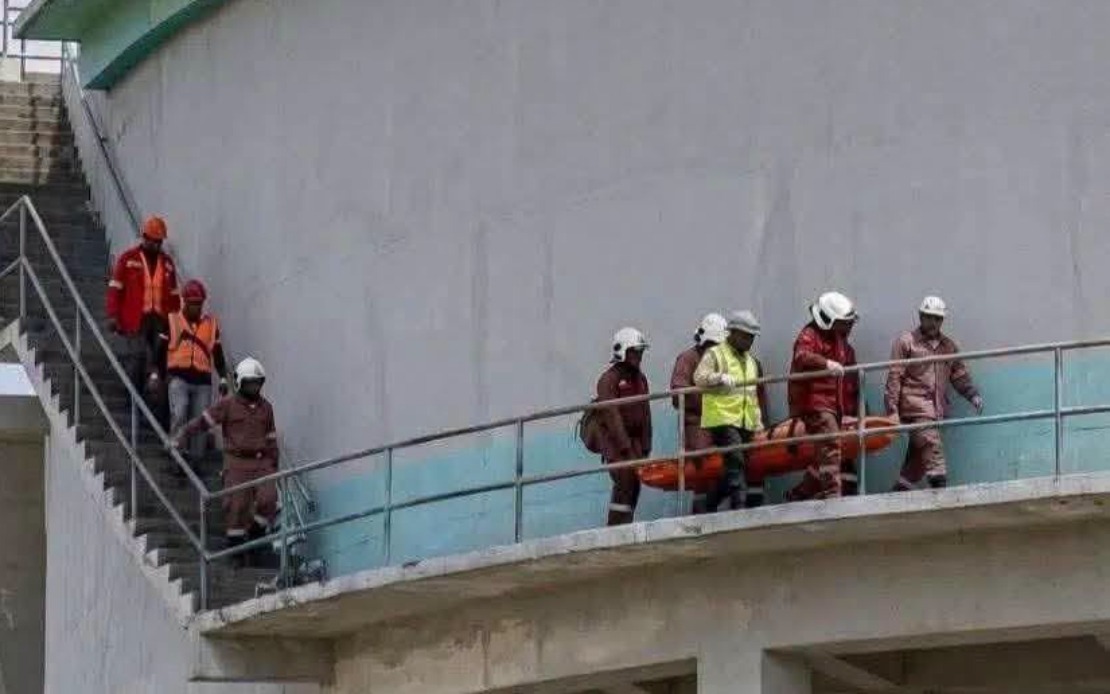
The Department of Occupational Safety and Health (DOSH) has launched a formal investigation into a workplace fatality that claimed the life of an industrial trainee at Menara Saujana Perdana 1 in Sungai Buloh, Selangor, during routine water tank maintenance operations on June 16. The incident has reignited concerns about safety protocols in confined space work—one of Malaysia's most hazardous occupational categories—and triggered fresh scrutiny of employer compliance with established workplace protection standards.
Director-general Hazlina Yon confirmed that investigators from DOSH's Selangor branch have already conducted site inspections and implemented immediate restrictions on any further disturbance to the accident location. The regulatory body is now undertaking comprehensive fact-finding work that encompasses detailed interviews with witnesses and other parties present or involved in the cleaning operation. Officials have signalled that enforcement measures will follow if the investigation uncovers breaches of occupational safety and health legislation.
The investigation operates under Sections 15, 17 and 18 of the Occupational Safety and Health Act 1994, which delineate the legal obligations incumbent upon employers, self-employed operators and all relevant stakeholders to maintain safe working conditions and protect the wellbeing of employees and any other persons whose safety may be jeopardised by work-related activities. This legislative framework forms the backbone of Malaysia's workplace safety regime and carries substantial penalties for violation.
Hazlina's remarks underscore a critical vulnerability in Malaysia's industrial operations: the particular risks associated with confined space work. She issued a pointed reminder to all employers and workers that activities involving enclosed or restricted areas demand scrupulous adherence to occupational safety regulations. Before any personnel enter confined spaces, organisations must first secure appropriate work authorisations, establish documented safe work procedures, and put in place comprehensive control mechanisms designed to eliminate or minimise identified hazards.
The regulatory framework places considerable responsibility on employers to conduct thorough risk evaluation exercises prior to commencing any work activity, with particular emphasis on high-risk operations such as tank cleaning, entry into storage vessels, or maintenance within restricted environments. This assessment phase is foundational; without accurate hazard identification and risk analysis, subsequent control measures cannot be properly calibrated. The gap between regulatory requirement and actual workplace practice remains a persistent challenge across Malaysian industry, particularly in smaller operations and those relying on contracted labour.
A concerning aspect highlighted in DOSH's statement involves the supervision and training of industrial trainees and junior workers assigned to high-risk tasks. Employers bear a statutory obligation to ensure that personnel, especially those new to such work, receive comprehensive occupational safety and health instruction, proper induction briefings tailored to their specific role, and ongoing oversight from supervisors who themselves possess sufficient competence and authority to manage workplace hazards. The death of a trainee raises uncomfortable questions about whether these safeguarding measures were adequately implemented at the Sungai Buloh site.
Hazlina stressed that workers themselves must comprehend the specific risks inherent in their assigned duties and demonstrate genuine understanding of—and commitment to—the established procedural safeguards. Knowledge alone is insufficient; workers must actively comply with prescribed procedures and demonstrate safe work practices in real-world operations. This requires a workplace culture where safety is genuinely prioritised rather than treated as a bureaucratic checkbox, and where workers feel empowered to raise concerns without fear of repercussion.
The investigative focus also extends to the chain of responsibility involving vendors and contractors, not merely direct employees. In Malaysia's increasingly complex subcontracting arrangements, oversight gaps frequently emerge where principal contractors assume limited accountability for the safety practices of their labour suppliers. Hazlina's explicit statement that employers must prioritise the safety of all individuals involved in work activities—including those engaged through third-party arrangements—reflects growing regulatory recognition that accident liability cannot be outsourced alongside the work itself.
The Sungai Buloh incident arrives amid sustained international concern regarding occupational safety standards across Southeast Asia. Water tank cleaning, whilst routine, presents genuine hazards including confined space asphyxiation, chemical exposure, and falls from height. Malaysia's relatively comprehensive legal framework for workplace safety remains undermined by inconsistent enforcement, resource constraints within DOSH, and continued resistance from some employers toward comprehensive safety investment. The department's investigation carries significance beyond this single fatality; it will likely inform enforcement priorities and may prompt policy recalibration.
Regional observers note that Malaysia's occupational safety performance remains uneven. Whilst large multinational enterprises operating in manufacturing and petrochemicals typically maintain stringent internal safety cultures, smaller and medium enterprises—particularly those in facilities management, construction, and maintenance sectors—frequently demonstrate weaker compliance. The industrial trainee workforce, often young and inexperienced, occupies an especially vulnerable position within this landscape. Their deaths and injuries frequently reflect systemic gaps rather than individual carelessness.
The implications for Malaysian employers are now starkly apparent. DOSH will continue broadening its investigative remit and enforcement activities. Organisations engaged in water tank maintenance, confined space entry, or similar high-hazard operations should anticipate heightened regulatory attention. Compliance departments must verify that comprehensive risk assessments are genuinely current, that work permit systems function effectively, that training records are meticulous and demonstrable, and that supervision arrangements provide real-time oversight rather than nominal coverage.
Looking forward, workplace safety advocates argue that Malaysia requires enhanced legislative penalties for breaches involving trainee workers, mandatory third-party auditing of safety systems in high-risk sectors, and expanded DOSH resources to conduct more frequent inspections across industries. The current investigation will provide critical evidence regarding what, precisely, failed at Menara Saujana Perdana 1—whether inadequate training, absent work permits, missing safety equipment, incompetent supervision, or some combination thereof. That determination will shape DOSH's next enforcement cycle and potentially inform amendments to occupational safety guidance.

